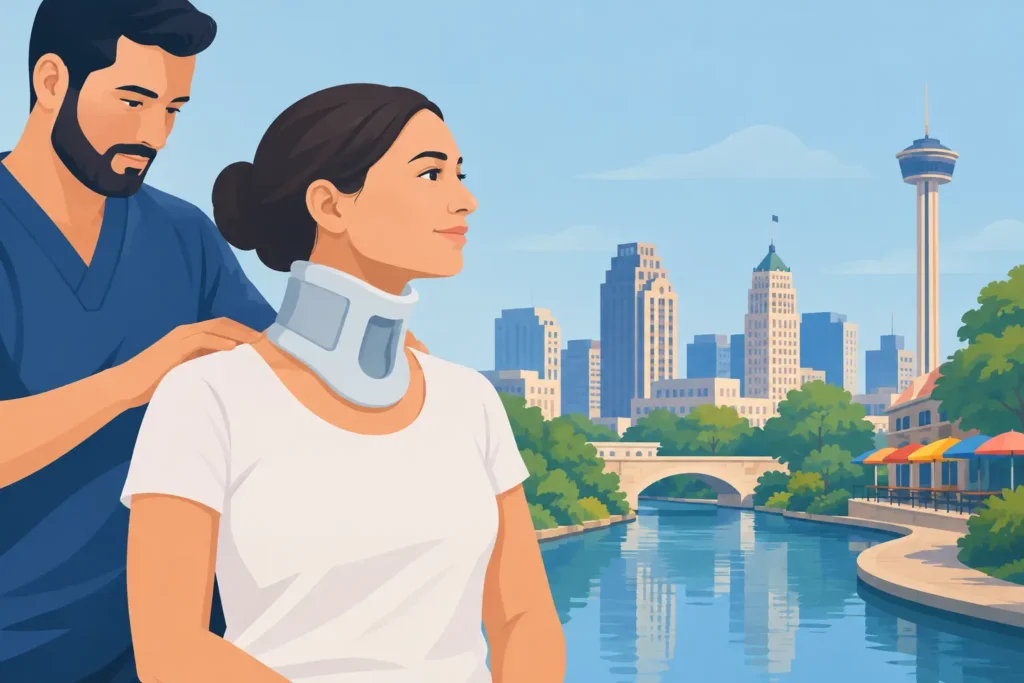
The force of a car accident can change how your neck, shoulders, and upper back feel in a matter of seconds. This whiplash recovery case study follows a representative patient scenario to show why pain after a collision deserves thoughtful assessment, not simply a wait-and-see approach. Every injury and recovery timeline is different, but the patterns below reflect concerns commonly seen after auto accidents.
Whiplash can affect much more than the neck. A person may initially feel stiff and sore, then develop headaches, shoulder tension, disrupted sleep, trouble concentrating, or discomfort while driving and working at a computer. The goal of care is not only to reduce pain. It is to help restore healthy movement, support injured tissues, improve posture, and give the patient a clear path back to normal daily life.
Whiplash Recovery Case Study: The First Weeks After a Crash
“Maria,” a 38-year-old San Antonio professional and parent, was rear-ended while stopped at a traffic light. Her vehicle had visible damage, but she did not seek emergency care immediately because she was able to walk away from the accident and expected the soreness to pass.
The next morning, she woke with neck stiffness, aching across the tops of her shoulders, and a headache that seemed to begin at the base of her skull. By the end of the workday, sitting at her desk made the pain worse. She was also turning her whole body to check traffic because rotating her head felt limited and uncomfortable.
This is a common experience with whiplash. During a collision, the head and neck can move suddenly forward and backward or side to side. That rapid motion may strain muscles and ligaments, irritate joints, and create protective muscle guarding. Symptoms can be delayed, which is one reason an early evaluation can be helpful even when pain initially feels manageable.
At her first appointment, Maria explained that her immediate priorities were driving without fear, sleeping through the night, working more comfortably, and keeping up with her children. Those goals shaped her care plan.
Looking Beyond Where It Hurts
A meaningful whiplash assessment starts with listening closely. Maria’s provider reviewed the details of the accident, the timing of her symptoms, her health history, and any changes in headaches, dizziness, numbness, weakness, or daily function. Symptoms such as progressive weakness, severe dizziness, loss of balance, confusion, or significant numbness may require urgent medical evaluation, and patients should not ignore them.
Her chiropractic examination included posture observation, range-of-motion testing, muscle and joint assessment, and orthopedic and neurologic screening. The findings showed restricted movement through her cervical spine, pronounced tightness in the upper trapezius and chest muscles, tenderness around the upper neck, and a forward-head posture that became more noticeable as her muscles guarded against movement.
Her low back was also assessed. Although her neck was her main concern, collisions can affect the entire spine. When the body braces for impact, force may travel through the mid-back, low back, shoulders, and hips. Treating only the most painful area can miss movement patterns that are slowing recovery.
The assessment did not point to a one-size-fits-all solution. Maria needed gentle care at first, not aggressive treatment that exceeded her tolerance. Her plan also needed to account for long workdays, family responsibilities, and her understandable anxiety about moving her neck.
A Personalized Plan for Whiplash Recovery
Maria began with conservative, hands-on chiropractic care focused on improving joint motion and reducing the tension surrounding her neck and upper back. Treatment was adjusted to her comfort level. Rather than forcing range of motion, the early visits supported gradual movement and helped calm the protective stiffness that had taken over after the accident.
Her care plan included targeted spinal and extremity adjustments where appropriate, soft-tissue work, and posture-focused rehabilitation exercises. The purpose of rehabilitation was not simply to stretch sore muscles. It was to retrain the neck, shoulder blades, and upper back to work together with better control.
At home, Maria was given simple instructions that fit into her routine. These included brief movement breaks during computer work, gentle mobility exercises, and practical changes to reduce sustained strain while sitting and sleeping. She was encouraged to stay active within a comfortable range rather than becoming completely still, because prolonged guarding can reinforce stiffness and sensitivity.
Acupuncture or other supportive services may also be considered for some patients, depending on their symptoms, preferences, and clinical needs. For others, nutrition and supplementation guidance can support broader recovery habits, especially when stress, poor sleep, or inflammation-related lifestyle factors are affecting how they feel. The right combination depends on the person in front of us, not a preset package.
Progress Requires Re-Evaluation, Not Guesswork
By the end of Maria’s first two weeks of care, she reported that her constant neck ache had eased and that she was sleeping more comfortably. Her headaches were less frequent, though not fully gone. She could look over her shoulder more easily while driving, but long hours at the computer still triggered shoulder tension.
That progress mattered, but it was not treated as a reason to stop assessing. Her range of motion, pain response, posture, and ability to tolerate daily activities were reviewed regularly. As acute soreness improved, her exercises progressed from gentle mobility to more active work for postural endurance and shoulder blade stability.
This phase is where many people benefit from consistent follow-through. Feeling better does not always mean the body has regained normal function. A patient may have less pain but still avoid turning their head fully, hold their shoulders high, or fatigue quickly at work. Those patterns can leave the neck vulnerable to recurring discomfort.
At approximately six weeks, Maria was driving more confidently, completing full workdays with fewer breaks for pain, and sleeping without waking from neck discomfort. She still noticed tightness after stressful days, but she knew which home exercises helped and had a better understanding of how her desk posture, stress level, and activity habits affected her symptoms.
Her recovery was not a straight line. A busy weekend, a poor night of sleep, or extra screen time could briefly flare symptoms. That does not necessarily mean treatment has failed. It may mean the body needs a temporary adjustment in activity, support, and recovery habits. Clear communication during care helps distinguish a normal fluctuation from a problem that needs further evaluation.
Why Early, Individualized Care Matters
Whiplash recovery depends on several factors: the force and direction of the collision, pre-existing neck or back concerns, the patient’s overall health, stress levels, work demands, and consistency with care recommendations. Some people improve quickly. Others need a longer period of treatment and rehabilitation, particularly if headaches, reduced mobility, or postural strain continue.
The value of personalized chiropractic care is not that it promises the same outcome for everyone. It is that care can be built around objective findings, the patient’s response to treatment, and the activities they need to return to. Regular re-evaluations help guide the next step instead of relying on assumptions.
For an auto accident injury, documentation and timely assessment can also be practical considerations. Pain may evolve over several days, and recording symptoms, limitations, and progress can help create a clearer picture of what the body has experienced. Patients should also follow medical and insurance guidance relevant to their situation.
Moving Forward With Confidence
At Align Chiropractic and Wellness, we believe recovery after an accident should include more than chasing temporary relief. It should give you the support, education, and practical tools to move with greater comfort and confidence in your everyday life.
If neck pain, headaches, stiffness, or shoulder tension appeared after a collision, do not feel pressured to simply push through it. A thorough evaluation can help identify what is limiting your movement and create a care plan that respects both your symptoms and your goals. The next helpful step may be as simple as scheduling an appointment, sharing the full story of your accident, and giving your body the attention it needs to recover well.