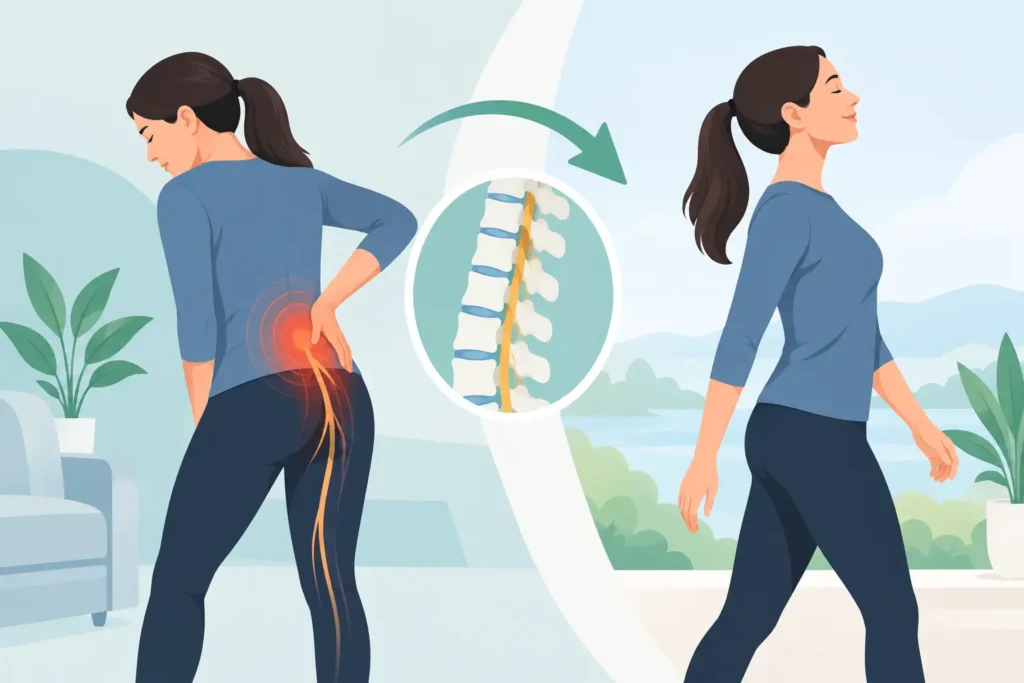
The hardest part of sciatica is often not the pain itself. It is the way pain changes ordinary moments: getting out of the car after work, standing through a child’s game, sleeping without waking up with a burning leg, or bending carefully because you do not trust your back. A sciatica decompression success story is rarely about one dramatic appointment. More often, it is about identifying what is irritating the nerve, creating a plan that fits the person, and helping them return to the movements and routines that matter most.
At Align Chiropractic and Wellness, we view sciatic pain as a signal worth understanding. Pain that travels from the low back into the hip, buttock, thigh, calf, or foot can have several contributing factors. Disc pressure, joint restriction, posture, muscle imbalance, previous injury, and repetitive daily stress may all play a role. That is why meaningful improvement begins with a careful assessment rather than a one-size-fits-all treatment.
A Sciatica Decompression Success Story Begins With Listening
Consider a representative patient experience. A San Antonio professional in her early 40s came in after several months of low back pain that had progressed into sharp pain down one leg. Sitting through meetings became difficult. Driving aggravated her symptoms, and she had stopped taking her usual evening walks because even a short distance could trigger tingling in her calf.
She had tried resting more, stretching when she could, and relying on over-the-counter pain relievers. Those measures offered occasional short-term relief, but the pattern kept returning. Her goal was not simply to have a better pain day. She wanted to sit comfortably, walk without fear of a flare-up, and get through a workday without planning every movement around her back.
Her first visits focused on understanding the full picture. We discussed when the symptoms began, which positions made them worse, how her work setup affected her posture, and whether she had noticed weakness or changes in sensation. An examination included movement testing, posture assessment, orthopedic and neurologic screening, and evaluation of the spine and surrounding joints.
This process matters because sciatica is a description of symptoms, not a complete diagnosis. Some patients are good candidates for spinal decompression; others may need a different emphasis, further imaging, co-management, or prompt medical referral. Severe or worsening weakness, loss of bowel or bladder control, saddle-area numbness, fever, or significant trauma require urgent medical evaluation.
Why Spinal Decompression Was Part of Her Plan
For this patient, the findings suggested that nerve irritation and disc-related pressure could be contributing to her symptoms. Her care plan included spinal decompression, gentle chiropractic care as appropriate, targeted rehabilitation exercises, and practical guidance for sitting, lifting, and managing symptoms between visits.
Spinal decompression uses controlled, gentle traction to create cycles of unloading and relaxation in the spine. The goal is to reduce mechanical stress in the affected area and support a more comfortable environment for irritated tissues. It is not a forceful treatment, and patients remain positioned comfortably while the table moves through a programmed sequence.
Decompression is not a universal answer for every case of sciatic pain. Its value depends on the source of symptoms, the patient’s health history, tolerance, and goals. A thoughtful plan may also include adjustments to improve joint motion, soft tissue work, acupuncture, postural rehabilitation, or referrals when another type of care is more appropriate.
In this case, the patient appreciated that treatment was paired with an explanation. She understood why long periods of slumped sitting could aggravate her symptoms and why simply avoiding all movement was not a sustainable solution. Instead of pushing through painful activity, she was given manageable ways to stay active without repeatedly provoking the nerve.
Progress Was Measured, Not Assumed
During the first few weeks, her changes were gradual. The leg pain did not disappear overnight, and there were still moments when prolonged sitting increased her symptoms. But she began noticing smaller wins: fewer sharp pain episodes during the drive home, less tingling after standing, and an improved ability to sleep in one position.
Those details were tracked alongside reassessments of movement, posture, and symptom patterns. Regular re-evaluations help determine whether a care plan is moving in the right direction. If symptoms are not responding as expected, the plan should change. Continuing the same approach without examining progress does not serve the patient.
As her tolerance improved, rehabilitation became increasingly important. Her exercises focused on controlled movement, core support, hip mobility, and better awareness of positions that increased strain on her low back. The purpose was not to hand her a generic exercise sheet. It was to help her rebuild confidence in movement and give her tools to use outside the clinic.
By the end of her initial care plan, she could sit through longer meetings with planned posture breaks, return to regular walks, and handle daily activities with far less guarding. She still needed to pay attention to her ergonomics and exercise routine, but sciatic pain was no longer directing every decision she made.
What Made This Sciatica Decompression Success Story Different
The decompression table was one component of her progress, not the entire story. Better outcomes are often supported by several pieces working together: an accurate assessment, a treatment plan based on the individual, consistent follow-through, and adjustments when the body’s response calls for a change.
It also helped that her goals were functional and personal. “I want to move without fear” is more useful than chasing a number on a pain scale alone. Pain levels matter, but so do sleep, work tolerance, walking distance, ability to care for family, and confidence in everyday movement.
There are trade-offs to consider. A person with recent symptoms and a clear mechanical trigger may respond differently than someone with years of recurring pain, prior surgery, extensive degeneration, or a physically demanding job. Recovery timelines vary, and some people need additional medical evaluation or another type of treatment. Responsible care means being honest about those differences while still offering a clear path forward.
Supporting Results Between Visits
The habits outside the office can either reinforce or challenge progress. For many people with sciatic symptoms, small changes make a meaningful difference. Taking brief movement breaks during desk work, using supportive sitting positions, avoiding repeated bending and twisting during a flare-up, and following prescribed home exercises can reduce unnecessary irritation.
Nutrition, hydration, sleep, and stress management also deserve attention. These factors do not replace treatment for a mechanical problem, but they can influence inflammation, muscle tension, healing capacity, and the nervous system’s sensitivity to pain. Whole-person care recognizes that a back problem does not exist separately from the person living with it.
If your pain is traveling into the leg, becoming more frequent, or limiting the activities you enjoy, you do not have to wait until it becomes unbearable. A personalized evaluation can help clarify whether spinal decompression or another conservative approach may fit your needs. The most encouraging success story is not a promise of identical results. It is the moment you begin taking informed, supported steps toward moving comfortably and living more fully again.