A heavy grocery bag twists unexpectedly. A child asks to be picked up when you are already tired. A box at work is just awkward enough to make you reach and rotate at the same time. Most lifting injuries do not happen because someone is careless or weak. They happen when an ordinary task exceeds what the body can comfortably manage in that moment. Learning how to prevent lifting injuries means preparing your body, changing the way you approach the load, and responding early when pain or stiffness begins.
For many people, a sore back after lifting is not only about that one movement. It can reflect poor posture, limited hip mobility, reduced core endurance, previous injuries, repetitive work demands, or a spine that is already under stress. The goal is not to be afraid of lifting. It is to move with better awareness so you can keep working, parenting, exercising, and enjoying daily life with greater confidence.
Start by Assessing the Load and the Task
Before you lift, take a few seconds to decide whether the object is manageable. Check its approximate weight, whether the contents can shift, where you need to carry it, and whether you have a clear path. A compact box can be heavier than it looks, while a long or bulky item may be difficult to control even when it is relatively light.
This brief pause is one of the most practical ways to prevent lifting injuries. If an item is too heavy, too wide to hold close, or needs to be moved up stairs or around corners, get help or use a cart, dolly, or hand truck. Splitting one large load into two smaller loads may take longer, but it is often the better trade-off for your back, shoulders, and knees.
The environment matters, too. Clear cords, loose rugs, toys, and clutter from your path. Wear shoes with stable traction, particularly if you are lifting in a garage, warehouse, yard, or wet area. A safe lifting technique cannot fully compensate for a slippery floor or an object that blocks your view.
How to Prevent Lifting Injuries With Better Body Mechanics
The safest technique is not a rigid pose you must force your body into. It is a coordinated pattern that keeps the load close, limits unnecessary twisting, and allows your legs and hips to share the work.
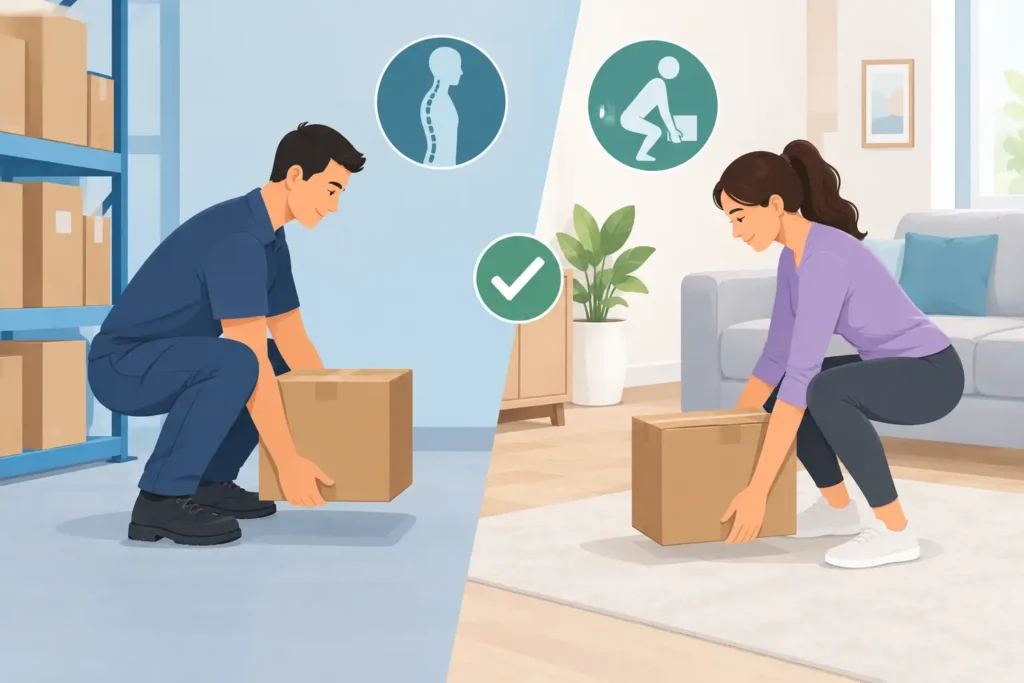
Stand close to the object with your feet about hip-width apart. Position one foot slightly ahead of the other if that feels more stable. Bend at your hips and knees, keeping your chest comfortably lifted and your spine in a neutral, supported position. Tighten your abdominal muscles gently as if preparing for a light cough, then grip the item securely.
As you stand, push through your feet and let your hips and legs drive the movement. Keep the load close to your body, ideally around waist level. The farther an object sits from your center of gravity, the more strain it can place on your low back and shoulders.
Avoid twisting while holding weight. Instead, turn with your feet and move your whole body in the direction you need to go. This detail is especially important when unloading a car, moving laundry baskets, lifting a child from a car seat, or handling boxes at work. Bending, reaching, and rotating under load can be a difficult combination for the spine.
When setting an item down, use the same care you used to lift it. Bend through your hips and knees rather than reaching forward with straight legs. Many strains occur at the end of the task, when attention fades and the body is already fatigued.
Do Not Let Fatigue Make the Decisions
Even good form becomes harder to maintain when you are tired, rushed, dehydrated, or in pain. Repetitive lifting can gradually wear down your ability to stabilize your trunk and control your movement, especially during a long shift, a move, yard work, or a weekend of home projects.
Build short pauses into physically demanding tasks. A minute to stand tall, walk, drink water, and reset your posture can be more useful than pushing through until your back feels tight. If you have a job that requires frequent lifting, alternate tasks when possible and avoid saving every heavy item for the end of the day.
Fatigue also changes judgment. You may be more likely to carry too much at once, skip asking for help, or twist quickly to save time. Slowing down is not a sign that you are incapable. It is a practical way to protect your ability to keep doing the things that matter to you.
Build Strength and Mobility for Everyday Lifting
Your body is better prepared for lifting when your hips, legs, core, and upper back can work together. This does not require an extreme workout plan. Consistent movement and appropriately progressed strengthening can improve your capacity for daily tasks.
Exercises that support lifting often include squats, hip hinges, step-ups, rows, carries, and core-stability movements. The right starting point depends on your health history, current pain level, mobility, and activity goals. Someone returning from a back flare-up may need a different approach than someone training for a physically demanding job or caring for young children.
Mobility deserves attention as well. Stiff hips, restricted upper-back motion, or limited ankle mobility can cause the lower back and neck to compensate during a lift. Gentle mobility work, regular walking, and posture-focused rehabilitation exercises can help your body move more efficiently. The goal is not perfect flexibility. It is comfortable, controlled movement where you need it.
Pay Attention to Recurring Pain or Warning Signs
A brief muscle ache after an unfamiliar activity may improve with rest and gentle movement. But recurring pain is useful information, not something to ignore. If lifting regularly triggers low-back pain, neck tension, shoulder discomfort, numbness, tingling, or pain that travels into an arm or leg, it is worth having the underlying movement patterns assessed.
Seek prompt medical attention for severe pain after a fall or accident, new weakness, loss of bowel or bladder control, numbness in the groin area, fever with back pain, or pain that is rapidly worsening. These symptoms need timely evaluation.
For less urgent but persistent concerns, a personalized assessment can identify factors that are easy to miss on your own. At Align Chiropractic and Wellness, care may include objective testing, spinal and extremity assessments, postural rehabilitation, hands-on care, and home exercise instruction based on your specific needs. Regular re-evaluations help make sure your plan continues to match your progress rather than relying on a one-size-fits-all approach.
Make Safer Lifting Part of Your Routine
The best lifting habits are usually simple enough to repeat: size up the load, get close, use your hips and legs, turn with your feet, and ask for help when the task is beyond your safe capacity. Practice these habits with light objects first, especially if you are recovering from pain or returning to activity after time away.
If lifting has become something you brace yourself for, you do not have to keep guessing about what your body needs. A thoughtful evaluation can help connect your symptoms with posture, mobility, strength, and daily demands, then give you a practical path forward. Protecting your back is not about avoiding life’s heavy moments. It is about building a body that feels supported enough to meet them.