A rib that hurts when you take a full breath, reach overhead, turn in the car, or roll over in bed can make ordinary movements feel guarded and exhausting. So, can chiropractors treat rib pain? When the discomfort comes from a mechanical issue involving the ribs, spine, muscles, or posture, chiropractic care may be a helpful part of recovery. The first step, however, is determining what is actually causing the pain.
Rib pain is not always a rib problem. It can be connected to the joints where the ribs meet the spine, irritation in the cartilage near the breastbone, strained muscles between the ribs, poor thoracic posture, or an injury from a fall, workout, cough, or auto accident. Because chest and rib symptoms can occasionally signal a more serious medical condition, a careful evaluation matters.
Can Chiropractors Treat Rib Pain Safely?
Chiropractors can often help treat musculoskeletal rib pain by improving movement in restricted joints, reducing strain in surrounding tissues, and addressing the postural or movement patterns that keep the area irritated. Care should never begin with assumptions. A thorough consultation and examination help identify whether chiropractic treatment is appropriate or whether you need medical evaluation first.
The ribs are designed to move. Each breath requires subtle motion through the rib cage, upper back, and diaphragm. When a rib joint becomes restricted or the muscles around it become tight and protective, breathing deeply, twisting, coughing, and lifting can become painful. This is sometimes described as a “stuck” rib, though the issue is usually more complex than a bone being out of place.
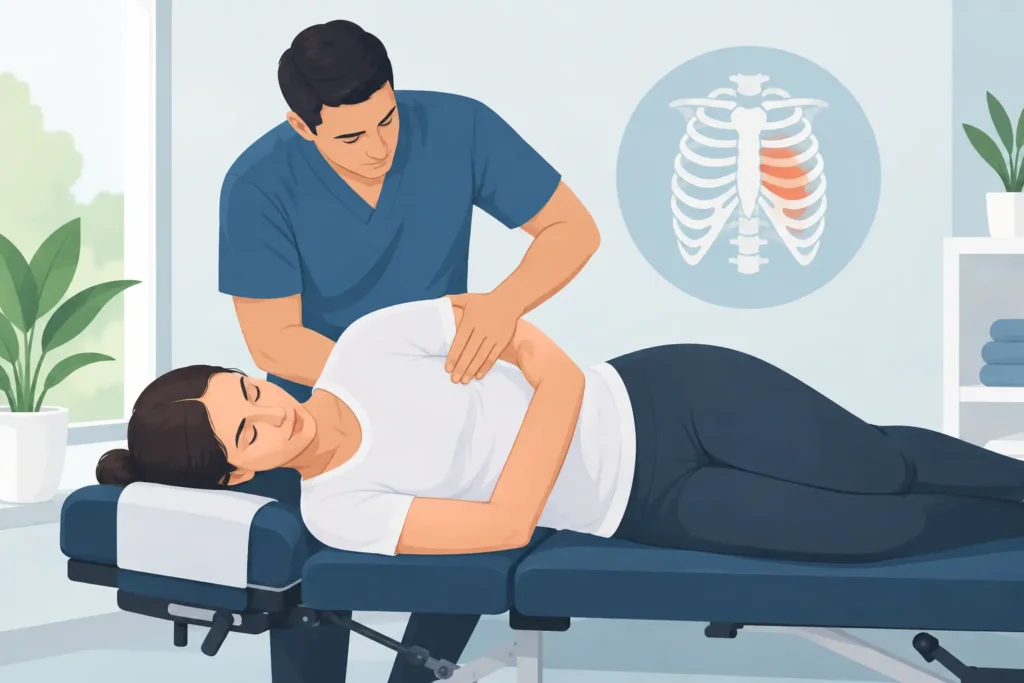
A chiropractor may use gentle, specific adjustments to the thoracic spine or rib joints when indicated. Treatment can also include soft-tissue work, mobility exercises, postural rehabilitation, and home-care recommendations. The right approach depends on your symptoms, exam findings, health history, and tolerance for care. Forceful treatment is not necessary for every patient or every rib complaint.
What Can Cause Rib Pain?
The location and behavior of pain offer useful clues. Pain near the spine or under the shoulder blade may involve a rib joint, upper-back stiffness, or muscle tension. Pain near the front of the chest can be related to irritated rib cartilage, known as costochondral irritation, especially if it is tender to touch or worsens with certain movements.
Strained intercostal muscles, which run between the ribs, are another common source of discomfort. A hard workout, repetitive reaching, a sudden twist, prolonged coughing, or even an awkward sleeping position can irritate these tissues. In San Antonio, many people also spend long hours driving or working at a desk. A rounded upper back and forward-head posture can place ongoing stress on the mid-back, shoulders, and rib cage.
Trauma deserves special attention. Rib pain after a car crash, fall, sports collision, or direct blow may involve bruising, fracture, joint irritation, or other injury. Even when X-rays do not show a fracture, pain and movement restrictions can still need thoughtful care. A chiropractor can help assess the musculoskeletal effects of an injury and coordinate appropriate next steps when imaging or medical referral is needed.
When Rib Pain Needs Medical Attention First
Not every pain around the ribs should be treated as a chiropractic concern. Chest discomfort can overlap with symptoms involving the heart, lungs, digestive system, or other internal structures. Seeking urgent medical care is the safest choice if rib or chest pain is accompanied by shortness of breath, sweating, nausea, dizziness, fainting, confusion, fever, coughing up blood, or pain that spreads to the arm, jaw, neck, or back.
You should also be evaluated promptly after significant trauma, if there is visible deformity, severe or worsening pain, trouble breathing, or a concern for a broken rib. New pain without a clear mechanical trigger, especially if you have a history of heart or lung disease, should not be self-diagnosed.
A patient-centered chiropractic office will screen for these warning signs rather than trying to treat through them. Your safety comes before any adjustment.
What Chiropractic Care for Rib Pain May Include
An effective plan looks beyond the painful spot. During an assessment, your chiropractor may evaluate rib and thoracic spine motion, posture, shoulder movement, breathing mechanics, muscle tenderness, and the way your symptoms change with movement. They may also review your daily activities, workstation setup, exercise routine, sleeping habits, and recent injuries.
If the exam supports a mechanical cause, care may include targeted chiropractic adjustments to improve motion in the upper back or rib joints. Soft-tissue techniques can help calm irritated muscles and reduce guarding. Therapeutic exercises may restore mobility through the chest and upper back while building support around the shoulder blades and core.
For some patients, acupuncture may be considered as part of an integrated approach to muscle tension and pain management. Others may benefit from guidance on anti-inflammatory nutrition, hydration, recovery habits, or ergonomics. At Align Chiropractic and Wellness, care plans are individualized and regularly re-evaluated so treatment can change as your body responds.
Home care is often just as important as what happens in the office. Depending on the cause of your pain, your provider may recommend temporary activity changes, gentle breathing drills, heat or ice, mobility work, or strategies to avoid repeatedly aggravating the area. Rest can be useful early on, but prolonged avoidance of all movement may increase stiffness. The goal is to return to comfortable, confident movement at the right pace.
How Long Does Rib Pain Take to Improve?
Recovery varies. A mild muscle strain or joint irritation may begin improving within days to a few weeks. Symptoms that have been present for months, stem from poor posture, or follow an accident may take longer and usually require a more complete rehabilitation plan.
Consistency matters more than a quick fix. If the same desk posture, lifting pattern, breathing habit, or training error continues to overload the area, the pain may return even after temporary relief. That is why a whole-person plan focuses on both reducing symptoms and correcting contributing factors.
Progress should be measurable. You may notice that you can take a deeper breath, sleep more comfortably, rotate farther, work without guarding, or return to exercise with less soreness. Regular re-evaluations help confirm that care is moving in the right direction and identify when the plan needs to be adjusted.
Is It Okay to Pop Your Own Ribs?
Many people try to twist, stretch, or press into the area until they feel a pop. While an occasional pop is not automatically harmful, repeatedly forcing the rib cage to crack can irritate already sensitive tissues and may not address the reason the area feels restricted. It can also delay an appropriate evaluation after an injury.
Gentle movement is generally a better starting point than aggressive self-manipulation. If your ribs feel stuck, painful with breathing, or repeatedly tight, an exam can help distinguish between joint restriction, muscle strain, cartilage irritation, and other causes.
A Clear Path Forward for Rib Pain
Rib pain can be surprisingly disruptive, but you do not have to guess your way through it. If your symptoms appear movement-related and you have no warning signs, a chiropractic evaluation may help identify the structural, muscular, and postural factors involved. And if your exam suggests a different concern, the right provider will guide you toward the care you need.
The most helpful next step is a personalized assessment that listens to your story, checks how your body is moving, and builds a plan around getting you back to deeper breaths, easier movement, and the activities that make your life feel like your own.