
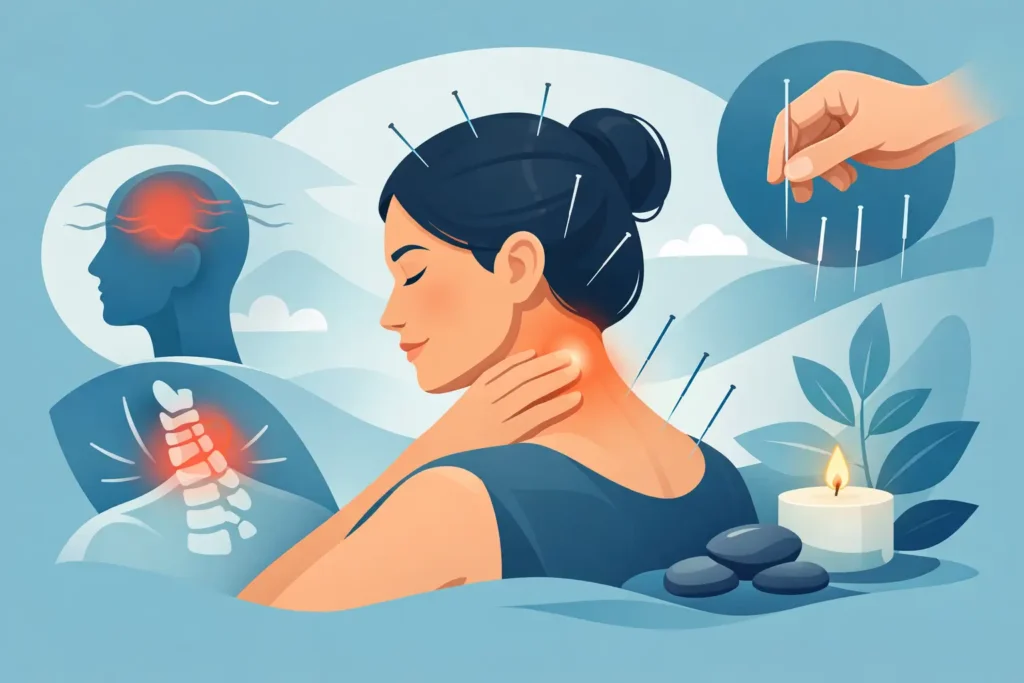
A headache that starts at the base of your skull after a long workday can feel very different from a throbbing migraine that sends you searching for a dark, quiet room. Yet both can be disruptive enough to affect your work, family time, sleep, and ability to stay active. Understanding how acupuncture relieves headaches can help you decide whether this non-invasive therapy belongs in your care plan.
Acupuncture is not a one-size-fits-all answer, and it should not replace medical evaluation for new, severe, or unusual headache symptoms. For many people, however, it can be a valuable part of a whole-person approach that addresses muscle tension, nervous system stress, posture, movement habits, and other factors that may be contributing to recurring pain.
How Acupuncture Relieves Headaches
Acupuncture uses very thin, sterile needles placed at specific points on the body. Although people often think treatment is limited to the head, headache care may also include points in the neck, shoulders, upper back, hands, arms, legs, or feet. The point selection depends on your symptoms, health history, physical findings, and the type of headache you experience.
One way acupuncture may help is by reducing overactive pain signaling. Needling can stimulate sensory nerves and encourage the body to release naturally occurring chemicals involved in pain modulation, including endorphins. This does not mean pain disappears instantly for every patient. It means acupuncture may help the nervous system become less reactive, which can reduce the intensity or frequency of headaches over time.
Acupuncture may also help improve local circulation and ease tight, irritated muscles. Tension in the upper trapezius, jaw, neck, and muscles at the base of the skull can contribute to tension-type and cervicogenic headaches. When these tissues remain guarded for days or weeks, they can place ongoing stress on sensitive structures and make a headache easier to trigger.
For some patients, the calming effect is just as meaningful. Chronic stress, poor sleep, shallow breathing, and a constantly demanding schedule can keep the body in a heightened state. Acupuncture may support a shift toward relaxation, helping some people sleep better, recover more effectively, and feel less physically wound up between appointments.
The Type of Headache Matters
Headache is a symptom, not a diagnosis. Before recommending care, a provider should look at the pattern behind your pain. The location, quality, timing, triggers, associated symptoms, medications, posture, and neck function all matter.
Tension headaches
Tension headaches often feel like pressure, tightness, or a band around the head. They may be linked with long hours at a desk, forward-head posture, shoulder tension, jaw clenching, stress, or insufficient recovery. Acupuncture may be helpful when muscle tightness and nervous system stress are major contributors.
Cervicogenic headaches
A cervicogenic headache begins with a problem in the neck but is felt in the head. It may start near the upper neck or base of the skull and travel toward the temple, forehead, or behind one eye. Restricted neck movement, poor posture, old injuries, and irritated joints or muscles can play a role.
Because the source is often musculoskeletal, acupuncture may work especially well as part of a broader plan that includes chiropractic care, postural rehabilitation, mobility work, and home exercises. Treating only the head may overlook the neck and upper-back dysfunction driving the pattern.
Migraines
Migraines are more than severe headaches. They may involve throbbing pain, nausea, light or sound sensitivity, visual changes, or fatigue before and after an episode. Some people find acupuncture helps reduce migraine frequency, severity, or reliance on rescue medication, while others need a more layered care plan that includes medical management, trigger identification, sleep support, hydration, nutrition, and stress reduction.
Acupuncture is not a guarantee, and a migraine pattern deserves an individualized assessment. The goal is to understand what may be lowering your threshold for an attack and build practical strategies around it.
Why the Neck, Posture, and Daily Habits Cannot Be Ignored
Many San Antonio adults spend hours switching between a computer, phone, car, and family responsibilities. That routine can gradually pull the head forward, round the shoulders, and overload the neck muscles that work to hold the head upright. Add limited movement, a poorly positioned workstation, or an old auto accident injury, and headaches may become more frequent.
Acupuncture can help calm irritated tissues, but lasting improvement often requires addressing the habits that keep recreating the irritation. This is where a whole-person approach matters. A thorough assessment can identify restricted neck motion, muscle imbalance, postural strain, jaw tension, or movement patterns that may be contributing to your symptoms.
Your plan may include acupuncture alongside spinal or extremity adjustments, rehabilitative exercises, soft-tissue care, and simple at-home recommendations. For example, a patient who develops headaches after laptop work may benefit from treatment plus ergonomic changes, brief movement breaks, and exercises that strengthen postural support. A patient whose headaches follow stressful nights of poor sleep may need a different plan altogether.
What to Expect During an Acupuncture Visit
Your first visit should begin with a conversation, not a rushed procedure. Your provider may ask when headaches began, how often they occur, where you feel them, what makes them better or worse, and whether you have neck pain, dizziness, jaw symptoms, numbness, sleep issues, or recent injuries.
A physical assessment may include posture evaluation, neck and shoulder movement, muscle tenderness, and other objective findings. This helps determine whether acupuncture is appropriate and how it may fit with other care.
During treatment, most people feel little more than a brief pinch or a dull, heavy, warm, or tingling sensation around certain points. The needles are much thinner than needles used for injections. Many patients find the session relaxing, though individual responses vary.
Some people notice relief after the first visit. Others experience gradual change over several treatments, especially if headaches have been present for months or years. Your response depends on the type of headache, how long it has been occurring, stress load, sleep, posture, prior injuries, and whether contributing factors are addressed outside the treatment room.
Mild temporary soreness, fatigue, or light bruising can occur. A qualified provider will review your health history, medications, and any bleeding concerns before treatment so care can be tailored appropriately.
When Headaches Need Prompt Medical Attention
Natural care and musculoskeletal treatment have an important role, but certain headache symptoms require urgent medical evaluation. Seek immediate care for a sudden, severe headache that feels unlike anything you have had before, a headache after significant head trauma, or headache pain accompanied by fainting, confusion, weakness, numbness, difficulty speaking, vision loss, fever, stiff neck, chest pain, or seizures.
You should also speak with a medical provider about a new or changing headache pattern, particularly during pregnancy, after age 50, or if you have a history of cancer, immune suppression, or uncontrolled high blood pressure. The right care starts with knowing when a headache is likely musculoskeletal and when it needs further investigation.
A Personalized Path Toward Fewer Headache Days
The most useful question is not simply whether acupuncture can help headaches. It is what may be contributing to your headaches. For one person, the answer may be neck tension and posture. For another, it may be migraines worsened by sleep disruption and stress. Often, several factors overlap.
At Align Chiropractic and Wellness, care begins by listening to your experience and assessing the patterns behind it. Acupuncture can be a meaningful tool for easing pain and supporting nervous system balance, especially when paired with personalized rehabilitation, posture support, and realistic home-care guidance.
You do not have to accept frequent headaches as the cost of a busy life. A thoughtful evaluation can help you understand the possible drivers of your symptoms and create a practical plan to help you move, work, rest, and feel more like yourself again.