
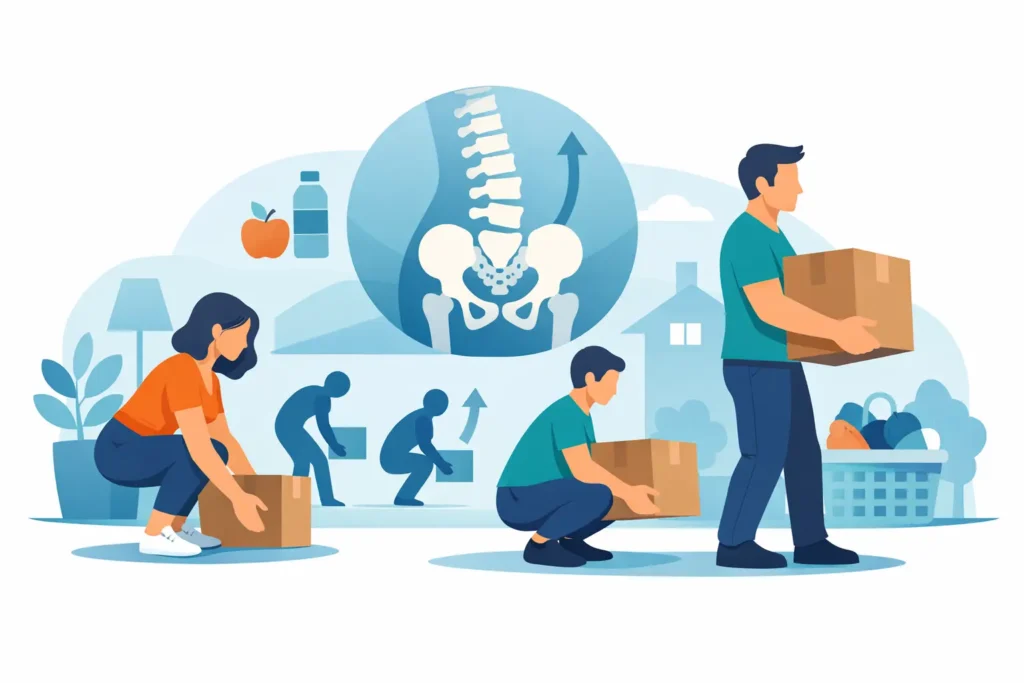
A laundry basket twists out of the trunk, a toddler reaches up to be carried, or a box of holiday decorations needs to come down from the garage shelf. These ordinary moments are when back pain often begins. This guide to safe lifting mechanics can help you move everyday loads with more control, reduce unnecessary strain, and recognize when your body needs more support.
Safe lifting is not about keeping your back perfectly rigid or relying on one “correct” posture for every task. Your body is built to move, bend, and carry. The goal is to distribute the work through your legs, hips, core, arms, and upper back instead of asking one irritated area to handle everything at once.
Why Lifting Can Trigger Back and Neck Pain
Lifting becomes risky when the load, position, speed, or repetition exceeds what your body can currently tolerate. A heavy object held far from your body creates much more demand on your spine than the same object held close. Add a twist, an awkward reach, fatigue, or a slippery surface, and even a familiar task can become a problem.
Many people feel pain after lifting because they were already carrying tension from long hours at a desk, driving, poor sleep, stress, or a previous injury. Stiff hips may force the low back to bend more than it should. Weak or poorly coordinated trunk muscles can make it harder to control the movement. A painful lift is often not just about that one box. It can be a signal that your movement habits, posture, recovery, or underlying musculoskeletal health deserve attention.
The Guide to Safe Lifting Mechanics: Before You Move
The lift begins before your hands touch the object. First, pause and assess the situation. Do you know how heavy the item is? Can you see where you are going? Is the path clear of cords, toys, uneven flooring, or pets? If the load is bulky, unstable, wet, or too heavy to confidently control, get help or use a cart, dolly, or other tool.
Test an unfamiliar object by gently shifting or lifting one edge. This gives you useful information without committing your body to a full lift. It also helps to plan where the item will go before you pick it up. Holding a heavy object while deciding where to set it down is an easy way to lose good positioning.
Footwear matters more than many people realize. Stable, non-slip shoes provide a more secure base, especially when you are lifting outdoors, in a garage, or on a job site. Avoid rushing. A controlled lift takes only a few extra seconds and may save you weeks of discomfort.
How to Lift With More Control
Move close to the object so you do not have to reach for it. Place your feet about shoulder-width apart, with one foot slightly forward if that feels more stable. Position yourself so the load is centered between your feet whenever possible.
Bend at your hips and knees to lower yourself toward the item. Your back does not need to be locked straight, but aim to keep it comfortably aligned rather than deeply rounded or twisted. Let your hips move back as if you are sitting toward a chair. This hip hinge pattern allows your legs and hips to contribute more of the force.
Grip the object firmly, then bring it close to your body before standing. Gently brace your abdomen as if preparing for a light cough, and press through your feet to rise. Keep your chest and shoulders facing the same direction as your hips. Exhale slowly as you stand instead of holding your breath for the entire lift.
Once you are carrying the load, take small, deliberate steps. If you need to change direction, move your feet and turn your whole body. Avoid twisting through your low back while holding weight. To set the item down, reverse the process: get close to the destination, bend through your hips and knees, and lower with control.
This does not mean every lift needs to look identical. Picking up a light shoe requires less preparation than moving a heavy planter. The principle remains the same: keep the load close, keep your balance, and choose a position your body can control.
Common Habits That Add Strain
Several small habits can make a normal lift harder on your body. Reaching forward with straight legs, lifting while twisting, jerking an object off the ground, and carrying weight on one side for a long distance all increase demand on the spine and surrounding muscles.
Another common issue is lifting after sitting for hours. Your hips, mid-back, and hamstrings may feel stiff, and your body may not be ready for a sudden heavy task. A brief reset can help: walk for a minute, gently move your hips and shoulders, and perform a few bodyweight squats or hip hinges before beginning a larger chore.
Not Every Load Should Be Lifted Alone
Good mechanics are valuable, but they cannot make an unsafe load safe. A heavy appliance, large furniture, oversized package, or awkward construction material may require a second person or equipment. Asking for help is a practical decision, not a sign of weakness.
Team lifts also require communication. Agree on the route, the destination, and a simple count before lifting. The stronger person should not unexpectedly take all the weight, and neither person should turn before the other is ready. If you cannot maintain a stable grip or clear vision, stop and rethink the plan.
For parents, carrying children presents its own challenge because the load moves. Whenever possible, bring your child close to your center before standing. Avoid lifting them from a deep reach across a crib rail or twisting from the driver’s seat to pick them up. Frequent, lighter lifts can still irritate the back, shoulders, and neck when recovery is limited.
Build Capacity, Not Just Caution
Avoiding every challenging movement is not the answer to long-term back health. Your body generally becomes more resilient when it is gradually exposed to strength and movement. Walking, controlled squats, hip hinges, lunges, rows, and core stability exercises can improve your ability to lift and carry with confidence.
The right starting point depends on your current health, injury history, pregnancy status, work demands, and symptoms. If you have been inactive or are recovering from pain, begin with light resistance and excellent control. Progressing too quickly can aggravate symptoms, while doing too little may leave you feeling fragile and hesitant.
Posture also plays a role, but not in the way many people think. There is no single perfect posture to hold all day. What matters is having enough movement options. If you sit at a computer, change positions regularly, take short movement breaks, and make room in your day for walking and strengthening. A body that moves often is usually better prepared for the demands of lifting.
When Pain Means You Should Stop and Get Evaluated
Mild muscle soreness after an unfamiliar activity can happen, particularly when you have done more than usual. Sharp pain, pain that worsens with each movement, or symptoms that travel down an arm or leg deserve more caution. Numbness, tingling, weakness, loss of balance, or pain following an auto accident should be evaluated promptly.
Seek urgent medical attention for new loss of bowel or bladder control, numbness in the groin area, severe weakness, fever with significant back pain, or pain after a serious fall or trauma. These symptoms can indicate a condition that needs immediate care.
For recurring back, neck, shoulder, or sciatic pain, an individualized assessment can identify factors that a generic lifting tip cannot. At Align Chiropractic and Wellness, care may include objective assessments, chiropractic and extremity adjustments, rehabilitation exercises, home-care instruction, and other supportive therapies based on your needs and goals. Regular re-evaluations help ensure that your plan is responding to your progress rather than relying on guesswork.
The next time you face a heavy or awkward task, give yourself permission to slow down, set up well, and ask for help when needed. Those few intentional moments can protect more than your back – they can help you keep doing the work, family activities, and movement that make your life feel full.