
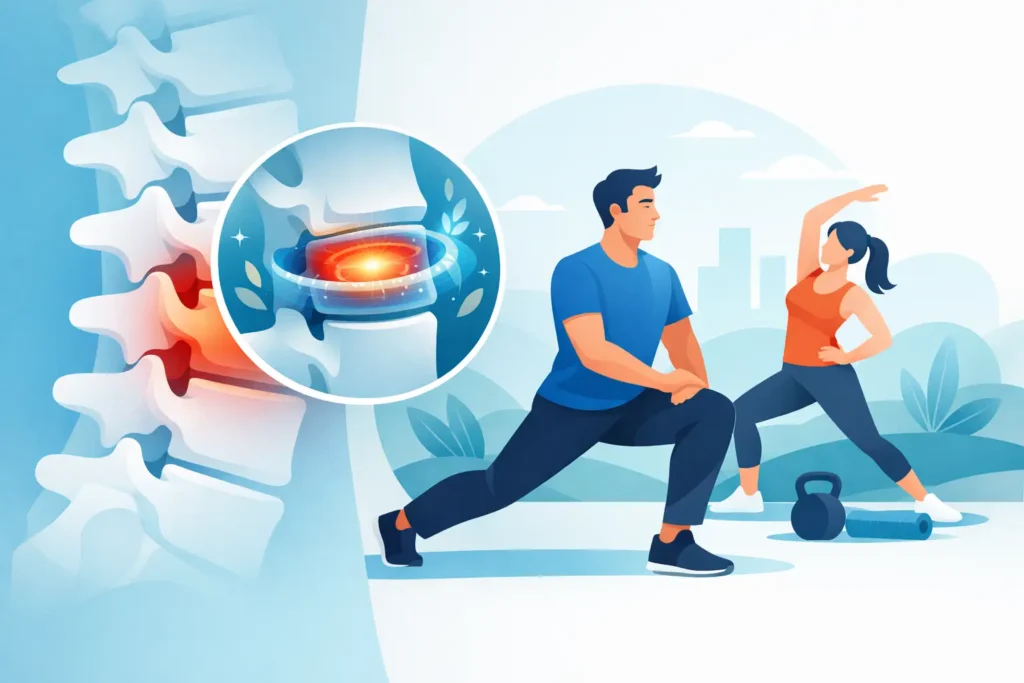
A disc problem can make ordinary moments feel unpredictable. Getting out of bed, sitting through a work meeting, loading the dishwasher, or picking up a child may bring sharp back pain, stiffness, or pain that travels into the hip or leg. When your spine is irritated, the goal is not to force your way through it. Learning how to support disc healing means reducing unnecessary stress on the area while steadily rebuilding the movement, strength, and confidence your body needs.
Intervertebral discs are the soft, cushion-like structures between the bones of your spine. They help absorb force and allow your spine to bend, twist, and move. A disc may become painful because of degeneration, a bulge, a herniation, repetitive strain, poor movement habits, an auto accident, or a combination of factors. Because each situation is different, recovery should be personal too.
Start With a Clear Assessment
Back pain is common, but not all back pain is disc-related. A careful assessment helps identify whether your symptoms may be connected to disc irritation, joint dysfunction, muscle strain, nerve involvement, posture, or another concern. At Align Chiropractic and Wellness, this process includes listening to your history, evaluating movement, checking posture, and using objective findings to guide care recommendations.
Pain that radiates down one leg, numbness, tingling, weakness, or pain that worsens with coughing or sneezing can sometimes point to nerve irritation associated with a disc issue. Those symptoms deserve professional attention, especially if they are new, worsening, or limiting your daily activities.
Seek urgent medical care for loss of bowel or bladder control, numbness in the groin or saddle area, significant or rapidly worsening leg weakness, fever with severe back pain, or back pain after major trauma. These symptoms are not situations to manage with home care alone.
How to Support Disc Healing Without Staying Still
Rest can be useful during a painful flare, but prolonged bed rest often leaves the body stiffer, weaker, and more sensitive to normal movement. The better approach is usually relative rest: temporarily avoiding activities that sharply increase symptoms while keeping the body moving in comfortable, controlled ways.
Short, frequent walks are often a good starting point. Walking promotes circulation, gently challenges the muscles that support your spine, and can help reduce the fear that movement will always cause harm. Start with a distance and pace that do not significantly increase your symptoms during or after the walk. Several five- to ten-minute walks may be more tolerable than one long walk.
Your best movement choices depend on your presentation. Some people with disc irritation feel worse with repeated bending forward but better with gentle extension. Others need a different strategy. This is why generic online exercise routines can be frustrating or counterproductive. A chiropractor or rehabilitation professional can help determine which directions of movement your body tolerates and build an appropriate progression.
Use Exercise to Restore Support, Not Just Stretch
When pain begins to ease, rehabilitation should focus on control as well as flexibility. Your trunk, hips, glutes, and upper back all help share load during daily activities. If these areas are weak, poorly coordinated, or fatigued, the lower back may take on more stress than it should.
A personalized home exercise plan may include gentle spinal mobility, core stabilization, hip strengthening, breathing mechanics, and postural exercises. The right program should feel manageable and specific to your goals, whether that means returning to work, caring for your family, exercising again, or sitting more comfortably at your desk.
Avoid the idea that you must stretch aggressively to recover. If a stretch sends pain farther down the leg, causes tingling, or leaves you noticeably worse afterward, it may not be the right exercise for that stage of healing. Mild muscular effort can be appropriate. Sharp, spreading, or escalating nerve symptoms are a reason to pause and seek guidance.
Make Daily Positions Work Better for Your Back
There is no single perfect posture that must be held all day. Your spine benefits most from variety. Staying in any position too long, even one that looks ideal, can increase stiffness and irritation.
If you work at a desk, set yourself up so your screen is near eye level, your feet are supported, and your chair allows you to sit back rather than perch at the edge. A small lumbar support may feel helpful for some people, although it is not required for everyone. More importantly, stand up, walk, or change positions regularly. A brief movement break every 30 to 60 minutes can make a meaningful difference over a full workday.
Pay attention to the movements that happen outside the gym. When lifting laundry, groceries, or a child, bring the object close to your body, use your hips and legs, and avoid twisting while carrying weight. If you need to turn, move your feet instead of rotating through a loaded lower back. These simple adjustments reduce repeated strain without making you fearful of normal activity.
Sleep positioning can also affect how you feel in the morning. Side sleepers may benefit from a pillow between the knees, while back sleepers may find a pillow under the knees more comfortable. The right mattress is the one that supports restful sleep and does not consistently leave you more painful or stiff. There is no universal brand or firmness level that works for every spine.
Support Recovery With Hands-On, Individualized Care
Disc healing is rarely about one treatment or one appointment. It is about creating the right conditions for recovery, then monitoring how your body responds. Conservative care may include chiropractic adjustments when appropriate, spinal decompression, soft-tissue work, acupuncture, guided rehabilitation, and practical home-care recommendations.
Chiropractic care is not a one-size-fits-all process. During an acute flare, the approach may be gentler and focused on reducing irritation, restoring comfortable motion, and helping you stay active within your tolerance. As symptoms improve, care can shift toward strengthening, posture rehabilitation, and preventing the same movement patterns from repeatedly aggravating your back.
Spinal decompression may be considered for certain patients with disc-related symptoms. This non-surgical approach uses controlled traction to create cycles of unloading and relaxation in the spine. It is not appropriate for every condition, and it works best when it is part of a broader plan that includes assessment, rehabilitation, and lifestyle support.
Regular re-evaluations matter because pain levels alone do not tell the whole story. Improvements in range of motion, strength, walking tolerance, sleep, and daily function can show that your recovery is moving forward, even if occasional soreness remains.
Give Your Body the Basics It Needs
Your discs, muscles, nerves, and connective tissues all depend on the same foundation: consistent sleep, adequate hydration, nourishing food, stress management, and appropriate activity. These habits do not replace clinical care, but they can influence how well your body manages inflammation, tension, fatigue, and recovery.
Aim for meals that include protein, fiber-rich carbohydrates, colorful fruits and vegetables, and healthy fats. If nutrition, supplements, or inflammation-related concerns are part of your health picture, individualized guidance can help you avoid chasing trends or using products that do not fit your needs. Smoking or nicotine use can also interfere with tissue health and recovery, making support to reduce or quit a worthwhile part of a broader wellness plan.
Stress deserves attention as well. When pain is persistent, the nervous system can become more protective, making muscles tighten and normal movements feel threatening. Gentle breathing exercises, regular walks, restorative sleep routines, and realistic pacing can help calm that cycle. This does not mean pain is “all in your head.” It means your nervous system is part of your recovery, just like your muscles and joints.
Know What Progress Can Look Like
Disc recovery is not always linear. You may have a better week followed by a day of increased soreness after a long drive, poor sleep, or an activity your body was not ready for. A flare does not automatically mean you have caused new damage. It may simply mean that your current load exceeded your present capacity.
Meaningful progress often looks like sitting longer before symptoms begin, walking farther, needing fewer activity modifications, sleeping more comfortably, or recovering more quickly after a busy day. Those functional gains are worth tracking. They help guide the next phase of your care and remind you that recovery is built through steady, informed steps.
If back or leg pain is keeping you from living the way you want to live, a personalized assessment can provide clarity and a practical path forward. With the right support, your focus can gradually shift from protecting your back from every movement to trusting it again.