
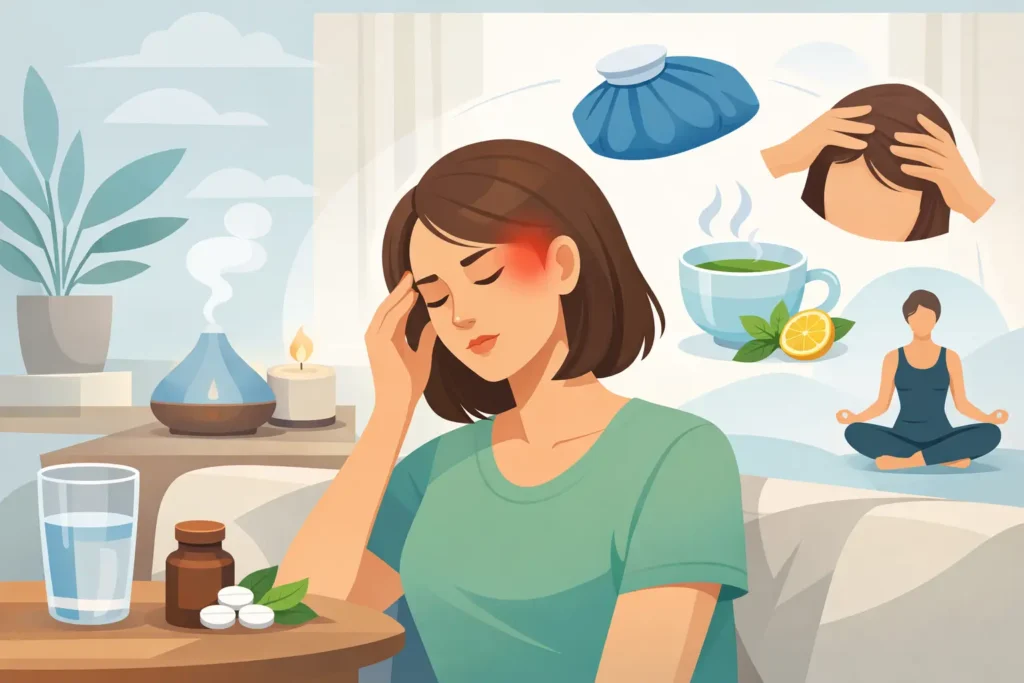
A headache can make a normal workday, family dinner, or workout feel much harder than it should. This guide to natural headache relief is designed to help you look beyond the immediate discomfort and consider the everyday factors that may be contributing to your symptoms – from neck tension and posture to hydration, sleep, and stress.
For many people, headaches are not random. They can be the body’s way of signaling that something needs attention. While medication may have a place in your care, relying on it alone can leave the underlying pattern unaddressed. Gentle, consistent changes and the right professional support can help you pursue relief while supporting your long-term health.
Start by noticing your headache pattern
The location and timing of a headache can provide useful clues. A tight, band-like feeling around the forehead or pressure at the base of the skull may be associated with muscle tension. Headaches that begin after hours at a computer, long drives, or looking down at a phone can point to postural strain in the neck and upper back.
Keeping a simple headache journal for two to three weeks can reveal patterns that are easy to miss in the moment. Note when the headache starts, where you feel it, what you ate and drank, how you slept, your stress level, screen time, and activities leading up to it. You do not need to track every detail perfectly. The goal is to identify repeatable triggers, not create another stressful task.
For example, a working parent may notice headaches after skipping lunch and spending an afternoon switching between a laptop and phone. An active adult may find that headaches appear after a hard workout when recovery, hydration, or neck mobility has been neglected. Those details can guide more effective next steps.
Support your neck, posture, and upper back
Your head is supported by a complex system of muscles and joints in the neck, shoulders, and upper back. When those areas are under constant strain, the muscles can become tight and sensitive. This may contribute to tension-related headaches and, for some people, cervicogenic headaches, which originate from structures in the neck.
Start by adjusting the position you spend the most time in. When working at a desk, keep the top of your monitor near eye level, bring the screen close enough that you are not reaching your chin forward, and let your shoulders relax rather than creep toward your ears. Support your lower back and place both feet on the floor when possible.
Short movement breaks often matter more than one perfect posture. Every 30 to 60 minutes, stand up, take a few slow breaths, roll your shoulders, and gently move your neck through a comfortable range of motion. Avoid forcing a stretch or circling the neck aggressively, especially if movement causes sharp pain, dizziness, or symptoms down an arm.
A warm shower, heating pad, or warm compress over the upper shoulders can also help relax guarded muscles. If your headache is associated with a recent injury or active swelling, a cool compress may feel better. The best choice is usually the one that provides comfortable relief without irritating your symptoms.
Hydration, meals, and sleep can change the picture
Dehydration is a common and often overlooked headache trigger, particularly in San Antonio’s heat. If you are outdoors, exercising, drinking more coffee than usual, or simply busy enough to forget water, your body may feel the effects before you recognize thirst.
Rather than trying to make up for a full day of low fluid intake all at once, keep water accessible and drink regularly throughout the day. If you sweat heavily, have been ill, or are doing prolonged outdoor activity, electrolytes may be helpful for some people. Individual needs vary, particularly for anyone managing kidney, heart, or blood pressure concerns, so ask your healthcare provider for guidance when needed.
Skipped meals can also trigger headaches. A balanced meal or snack with protein, fiber-rich carbohydrates, and healthy fats can support steadier energy than a sugary snack alone. Pay attention to personal food triggers as well. For some people, alcohol, processed meats, aged cheeses, artificial sweeteners, or large changes in caffeine intake can contribute to headaches. There is no universal list that applies to everyone, which is why your journal is useful.
Sleep deserves the same attention. Too little sleep, oversleeping, and inconsistent sleep schedules can all make headaches more likely. Aim for a regular bedtime and wake time, and consider whether your pillow supports your neck in a neutral position. A pillow that is too high, too flat, or worn out can add strain over several hours each night.
Use calming tools that fit your nervous system
Stress is not “all in your head,” but it can increase muscle tension, alter sleep, and make the nervous system more sensitive to pain. A few minutes of intentional downshifting can be a practical part of natural headache care.
Try slow breathing: inhale comfortably through your nose, then exhale a little longer than you inhale. Continue for several minutes while allowing your jaw and shoulders to soften. Some people also benefit from a quiet walk, gentle yoga, guided relaxation, or stepping outside without a screen. The best strategy is one you can repeat consistently, even on a busy day.
If you clench your jaw or wake with facial tension, consider whether teeth grinding may be playing a role. Jaw tension can refer discomfort into the temples and forehead. A dentist can help evaluate significant grinding, while a chiropractor or other qualified provider may assess how jaw, neck, and postural mechanics are interacting.
A guide to natural headache relief needs professional perspective
At-home strategies can be valuable, but recurring headaches deserve a closer look. A thorough assessment can help determine whether spinal movement restrictions, postural dysfunction, muscle imbalance, prior injuries, work habits, or other factors may be contributing to your symptoms.
Chiropractic care is not a one-size-fits-all answer for headaches. The right approach depends on your health history, the type of headache you experience, your examination findings, and your goals. At Align Chiropractic and Wellness, care may include a personalized combination of chiropractic adjustments, postural and rehabilitation exercises, home-care instruction, acupuncture, and lifestyle guidance when appropriate. Regular re-evaluations help ensure that your plan is responding to your progress rather than following a generic routine.
This whole-person approach is especially helpful when headaches occur alongside neck pain, shoulder tightness, poor posture, back discomfort, or symptoms that began after an auto accident. Even a collision that seemed minor at the time can affect the muscles and joints of the neck. Getting evaluated early can help you understand what is going on and what supportive care may be appropriate.
Know when a headache needs urgent care
Natural care should never delay emergency evaluation for warning signs. Seek immediate medical attention for a sudden, severe headache that reaches maximum intensity quickly, often described as the worst headache of your life. Also seek urgent care for a headache after a significant head injury, or one accompanied by fainting, confusion, new weakness or numbness, difficulty speaking, vision changes, seizure, fever with a stiff neck, or persistent vomiting.
Contact a medical professional promptly if your headache pattern is new after age 50, is becoming more frequent or severe, occurs during pregnancy or shortly after delivery, or is different from your usual headaches. These situations need appropriate medical evaluation before assuming the problem is tension or posture related.
For the headaches that build slowly after stress, screen time, poor sleep, or a long day, small changes can create meaningful momentum. Listen to your body, notice the patterns, and give yourself support that addresses more than the symptom. If headaches are becoming a regular part of your life, a personalized assessment can be a constructive next step toward feeling more comfortable, capable, and present in the moments that matter.