
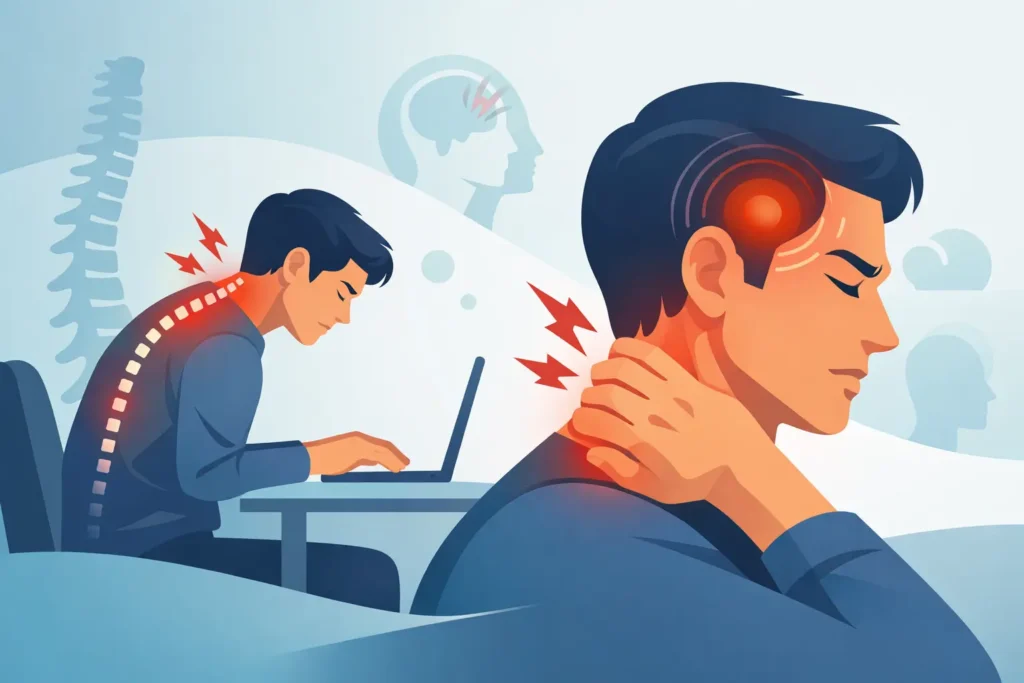
A headache that starts after a long workday, a commute across San Antonio, or an evening spent looking down at a phone is not always just a headache. Understanding how poor posture causes headaches can help explain why pain may begin in the neck, shoulders, or base of the skull before spreading to the temples, forehead, or behind the eyes.
For many people, the issue is not one bad position held for five minutes. It is the cumulative effect of hours spent with the head forward, shoulders rounded, and upper back unsupported. The good news is that posture-related headaches often respond well to a thoughtful plan that addresses the source of the strain, not only the pain itself.
How Poor Posture Causes Headaches
Your head is heavier than it feels. In a neutral position, the muscles, joints, and ligaments of your neck are designed to support it efficiently. When your head drifts forward of your shoulders, those tissues have to work harder to keep your eyes level and your head upright.
This is commonly called forward head posture. It can happen while working at a laptop, scrolling on a phone, driving, reading, caring for children, or even sleeping in an awkward position. As the upper neck and shoulder muscles stay switched on for too long, they can become fatigued, tight, and sensitive.
That tension can irritate structures that refer pain into the head. The small joints of the neck may lose normal motion, while muscles near the base of the skull can develop tender points that send discomfort toward the temples, forehead, jaw, or eyes. A stiff upper back can add to the problem because the neck often has to compensate when the thoracic spine is not moving well.
Poor posture does not cause every headache. Migraine, sinus-related symptoms, medication overuse, high blood pressure, and other conditions need different evaluation and care. Still, when headaches reliably appear alongside neck stiffness, shoulder tension, limited range of motion, or long periods of desk work, posture is worth examining closely.
The Headache Pattern Often Linked to Neck Strain
Posture-related headaches are frequently described as pressure, tightness, or an aching band around the head. They may build gradually through the day rather than arriving suddenly. Some people notice pain at the base of the skull that travels upward, while others feel it behind the eyes or at the temples.
A cervicogenic headache is one type of headache in which pain is referred from the neck. It may be more noticeable on one side and can worsen with certain neck movements or sustained positions. Tension-type headaches can also be influenced by tight muscles, stress, poor sleep, and prolonged screen time.
The patterns can overlap, which is why a personalized assessment matters. A clinician should look at more than your posture in a single moment. Neck mobility, shoulder position, upper-back movement, work setup, muscle endurance, prior injuries, sleep habits, stress levels, and daily activity can all shape what your body is dealing with.
Why Sitting Is Not the Only Problem
Sitting itself is not automatically harmful. The bigger issue is staying in any position long enough that your body begins to compensate. Even an ergonomic workstation cannot fully offset eight hours without movement.
A desk setup that places the monitor too low can encourage the head to tip forward. A laptop used without an external keyboard often leads to a rounded upper back and elevated shoulders. Holding a phone between the shoulder and ear, carrying a heavy bag on one side, and driving with the seat too far back can create similar strain.
Stress can make the cycle stronger. When you are under pressure, you may unconsciously clench your jaw, lift your shoulders, or breathe more shallowly. Those habits can increase muscle tension around the neck and upper back. That does not mean your symptoms are “all stress.” It means stress may be one contributing factor that deserves practical support alongside musculoskeletal care.
Simple Changes That Can Reduce Daily Strain
The goal is not to hold a rigid, military-style posture all day. Trying to force a position can create more tension. Instead, aim for frequent movement, better support, and greater awareness of the positions that trigger symptoms.
Start by bringing your screen closer to eye level and close enough that you do not lean forward to read it. If you work from a laptop, a separate keyboard and mouse can make a meaningful difference. Sit back so your lower back is supported, keep both feet supported when possible, and let your shoulders relax rather than creep toward your ears.
Brief movement breaks are often more realistic and more effective than waiting for one long stretch session at the end of the day. Every 30 to 60 minutes, stand up, walk for a minute, gently roll your shoulders, or change positions. Small resets reduce the time your muscles spend under constant demand.
Gentle neck and upper-back exercises may also help, but the right exercise depends on your specific needs. Some people benefit from improving deep neck muscle endurance; others need to restore upper-back mobility, shoulder strength, or breathing mechanics first. Pushing through sharp pain, dizziness, numbness, or worsening symptoms is not the right approach.
When a Past Injury Is Part of the Picture
Old injuries can make posture more complicated. A previous auto accident, sports injury, fall, or repetitive work strain can change how your neck moves and how your body protects itself. Even after the initial pain fades, stiffness and compensation patterns may remain.
This is one reason generic posture advice does not always solve recurring headaches. Two people may both have forward head posture, but one may need help improving joint motion after a whiplash injury, while another may need better muscle endurance and workstation habits. The visible posture is only one piece of the larger story.
A Whole-Person Approach to Posture-Related Headaches
Effective care begins with listening carefully to your history and assessing the factors that may be contributing to your symptoms. At Align Chiropractic and Wellness, this can include evaluating posture, spinal movement, muscle tension, functional habits, and the way your symptoms respond to daily activities.
Depending on your needs, a care plan may include chiropractic adjustments to support spinal and extremity motion, targeted postural rehabilitation exercises, home exercise instruction, soft-tissue-focused strategies, or acupuncture. Lifestyle guidance can also matter. Hydration, sleep quality, nutrition, stress management, and consistent activity all influence how well the body recovers from recurring tension.
Care should be reassessed as you progress. The aim is not simply to make a headache disappear for a day. It is to help you move better, understand your triggers, build more resilient habits, and reduce the likelihood that neck tension keeps returning as head pain.
When a Headache Needs Prompt Medical Attention
Most posture-related headaches develop gradually, but some headache symptoms require urgent medical evaluation. Seek immediate care for a sudden, severe headache unlike any you have had before, especially if it follows a head injury or occurs with confusion, fainting, fever, stiff neck, vision loss, weakness, numbness, difficulty speaking, facial drooping, or loss of balance.
You should also speak with a qualified healthcare professional if headaches are becoming more frequent, changing in pattern, regularly waking you from sleep, or no longer responding to your usual self-care. A proper diagnosis protects your health and helps ensure you receive the right type of treatment.
You do not have to accept end-of-day headaches as the price of work, parenting, driving, or staying active. With an individualized assessment and consistent support, it is possible to identify the patterns placing extra strain on your neck and create a practical path toward more comfortable, confident movement.