
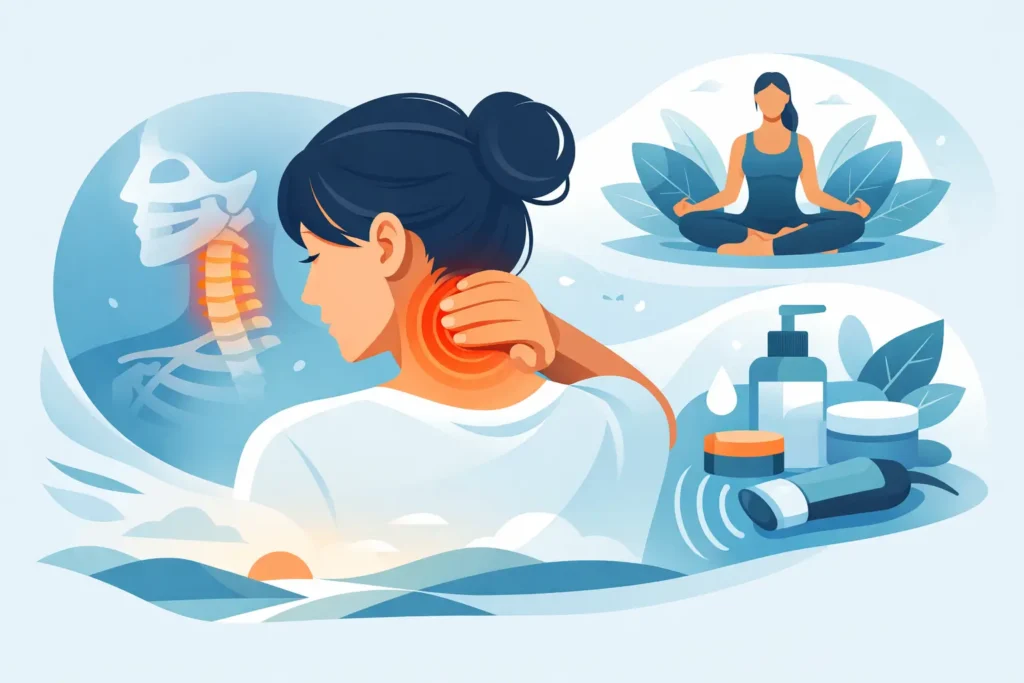
That tight band across your shoulders after a long workday is not always just stress. Neither is the sharp catch when you turn your head to back out of a parking space, or the headache that seems to start at the base of your skull. Effective neck pain relief begins by looking beyond the sore spot and identifying what is placing strain on your neck in the first place.
The neck is built to support the weight of your head while allowing a remarkable range of motion. When posture changes, muscles become overworked, joints stop moving well, or an injury disrupts normal mechanics, even everyday activities can become painful. A personalized plan can help reduce discomfort while restoring the movement, strength, and habits that support lasting recovery.
Why Neck Pain Can Be So Persistent
Neck pain often develops gradually. Hours spent looking down at a phone, leaning toward a laptop, driving, carrying children, or sleeping in an awkward position can repeatedly load the same tissues. Over time, the muscles around the neck and shoulders may tighten to compensate, while certain joints become restricted and others move too much.
Pain may also follow a clear event, such as a car accident, sports injury, fall, or sudden lifting incident. Whiplash injuries deserve careful attention because symptoms do not always appear immediately. Neck stiffness, headaches, dizziness, shoulder pain, reduced range of motion, and arm discomfort may develop over the next several days.
The source is not always limited to the neck itself. Rounded shoulders, limited upper-back mobility, poor workstation setup, jaw tension, or weakness in the muscles that stabilize the shoulder blades can all contribute. This is why temporary relief from heat, massage, or medication can be helpful without fully resolving the pattern that brought the pain on.
Neck Pain Relief Starts With a Complete Assessment
A thoughtful assessment gives care a clearer direction. Rather than assuming every stiff neck needs the same treatment, a provider should listen to how the problem began, what movements aggravate it, whether symptoms travel into the shoulder or arm, and how pain affects sleep, work, exercise, and family life.
At Align Chiropractic and Wellness, this process may include posture evaluation, range-of-motion testing, orthopedic and neurological assessments, and an examination of the spine, shoulders, and surrounding soft tissues. These objective findings help shape a plan that fits your condition and goals. Regular re-evaluations matter, too. They show whether your body is responding as expected and whether care or home exercises should be adjusted.
For some people, the main issue is muscle tension and postural fatigue. For others, joint restriction, disc irritation, nerve involvement, or an accident-related injury may be part of the picture. The right approach depends on the cause, your health history, and the severity of your symptoms.
Care That Addresses More Than the Painful Area
Hands-on chiropractic care can help improve motion in the cervical spine and related areas when clinically appropriate. Gentle spinal or extremity adjustments may reduce joint restriction and help the body move more comfortably. Many patients also benefit when care includes the upper back, ribs, shoulders, and posture rather than focusing on the neck alone.
Rehabilitation is a key part of long-term improvement. Once pain starts to settle, specific exercises can help retrain the deep neck stabilizers, strengthen the upper back, improve shoulder-blade control, and restore mobility where it is limited. This is different from simply stretching a sore area repeatedly. The goal is to build support so your neck is not doing work that should be shared by the rest of your body.
Depending on your needs, a plan may also include acupuncture, spinal decompression, soft-tissue support, and practical guidance for home care. These services are not one-size-fits-all solutions. They are tools that may be considered based on your examination findings, comfort level, and response to care.
Small Daily Changes That Can Support Recovery
Your habits between appointments influence how your neck feels. The goal is not perfect posture every minute of the day. Trying to hold yourself rigidly can create another form of tension. Instead, aim for frequent movement, better support, and less time spent in positions that repeatedly provoke symptoms.
If you work at a computer, bring the screen closer to eye level and sit back so your upper back is supported. Keep the keyboard and mouse close enough that you do not reach forward with your shoulders. A short movement break every 30 to 60 minutes can be more valuable than one long stretch at the end of the day. Stand up, walk, gently roll your shoulders, and change positions before stiffness builds.
Phone use is another common trigger. Raise the device instead of dropping your head toward it for extended periods. When driving, adjust the headrest and seat so you are not craning forward. At night, choose a pillow that keeps your neck in a neutral position rather than pushing it sharply up or letting it drop down. The best pillow height varies with your sleep position and body shape, so comfort and alignment both matter.
Heat may ease muscle guarding, while a cold pack can feel better after a recent flare-up or injury. Use either option for short periods with a protective layer between the pack and your skin. Gentle motion is usually preferable to complete inactivity, but avoid forcing stretches or repeatedly cracking your own neck when pain is acute.
When Headaches, Arm Symptoms, or Stress Are Involved
Neck dysfunction can contribute to certain headache patterns, especially when pain begins near the base of the skull and travels upward. Tight upper-neck muscles and restricted joints may also create pain that spreads into the shoulders or between the shoulder blades. However, headaches have many possible causes, so an accurate evaluation is essential.
Pain, tingling, numbness, or weakness that travels into an arm may indicate irritation involving a nerve. This does not automatically mean a serious condition, but it should not be ignored. A provider can assess the pattern, determine whether additional evaluation is needed, and help guide appropriate care.
Stress can make neck pain feel more intense because it often changes breathing patterns and increases muscle tension through the jaw, shoulders, and upper back. Addressing stress does not mean the pain is imaginary. It means your nervous system and daily demands are part of the whole-person picture. Breathing practices, regular physical activity, restorative sleep, and nutrition habits can support recovery alongside musculoskeletal care.
Know When to Seek Prompt Medical Attention
Most neck pain improves with appropriate conservative care, but some symptoms call for urgent medical evaluation. Seek prompt care for severe neck pain after significant trauma, new or worsening weakness, loss of coordination, trouble walking, loss of bladder or bowel control, fever with severe neck stiffness, unexplained weight loss, or a sudden severe headache unlike your usual headaches.
It is also wise to be evaluated when pain is persistent, repeatedly returning, disrupting sleep, or limiting your ability to work, drive, exercise, or care for your family. Waiting until discomfort becomes overwhelming can allow compensations and fear of movement to become more established.
A Plan Built Around Your Life
Meaningful recovery is not only about getting through the next painful day. It is about being able to look over your shoulder while driving, work without constant tension, sleep more comfortably, return to exercise with confidence, and stay present for the people who depend on you.
If neck pain is interfering with those moments, a personalized evaluation can help clarify what your body needs next. With focused care, guided rehabilitation, and realistic home strategies, neck pain relief can become part of a stronger foundation for healthier movement and long-term wellness.