
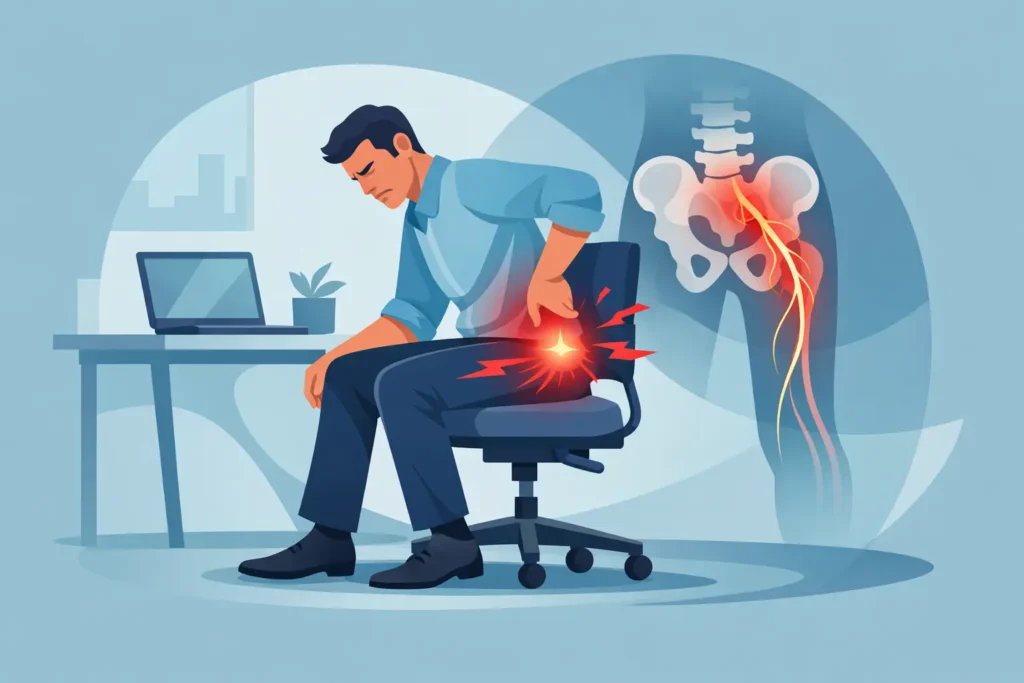
A commute, a long meeting, or an evening on the couch can turn a manageable ache into sharp pain that runs from the low back into the buttock or leg. If you are asking, “why does sciatica hurt worse sitting,” you are not imagining the pattern. Sitting changes the position and load of your lower back, pelvis, hips, and nerves. For some people, those changes aggravate an already sensitive nerve pathway.
Sciatica is a description of symptoms, not a diagnosis by itself. It usually refers to pain, tingling, numbness, burning, or weakness that follows the sciatic nerve pathway. The source may be in the lower spine, the hip and pelvic region, or the surrounding soft tissues. Understanding what provokes your symptoms is an important first step toward choosing care that supports both relief and long-term movement health.
Why Does Sciatica Hurt Worse Sitting?
When you sit, especially in a slouched position, your low back naturally rounds and your pelvis may tip backward. This can increase pressure through the lower spinal discs and change the space around nerves that exit the spine. If a disc is irritated, bulging, or herniated, that added pressure may make pain down the leg more noticeable.
Sitting also keeps the hips flexed for a long period. That position can tension the sciatic nerve and place sustained demand on muscles around the pelvis, including the deep gluteal muscles. In some cases, muscle tightness or irritation in this area contributes to sciatic-like symptoms. The details matter: pain that is worse with bending and sitting can behave differently from pain that worsens with standing or walking.
Time is another factor. Even a well-designed chair cannot fully replace regular movement. Remaining in one posture reduces circulation, allows fatigue to build in postural muscles, and can make a sensitive area feel increasingly stiff. A person may feel fine for the first 15 minutes, then develop pain after an hour because the body has been holding the same load without a break.
The Role of Posture, But Not Perfection
Posture can influence symptoms, but there is no single “perfect” way to sit. The goal is not to hold yourself rigidly upright all day. A stiff, overcorrected posture can create its own muscle tension. Instead, think of comfortable, supported alignment combined with frequent position changes.
A low, soft couch often encourages the pelvis to roll backward and the low back to round. Sitting with a wallet, phone, or bulky item in a back pocket can also create an uneven pelvic position. Long drives can be difficult because they combine hip flexion, vibration, limited movement, and the tendency to reach forward toward the steering wheel.
Your work setup can matter as well. If your chair is too low, your knees may sit well above your hips, which can increase low-back flexion. If the screen is poorly positioned, you may lean forward for hours. These small habits do not cause every case of sciatica, but they can keep a painful pattern going when the body has already become irritated.
Common Reasons Sitting Can Trigger Sciatic Pain
Several conditions can produce pain that feels like sciatica, and a careful assessment helps distinguish between them. Lumbar disc irritation is one common reason sitting feels worse, since sitting and forward bending can increase disc-related symptoms for some people. Spinal joint dysfunction, degenerative changes, or narrowing around a nerve may also play a role.
The hips and pelvic region deserve attention, too. Limited hip mobility can force the lower back to compensate during sitting, standing, and bending. Tight or overactive deep gluteal muscles may irritate tissues near the sciatic nerve. After an auto accident, a fall, pregnancy, a new exercise routine, or weeks of reduced activity, changes in muscle control and pelvic mechanics can make prolonged sitting far less tolerable.
Symptoms may also be referred from other structures and not reflect classic nerve-root compression. That is why it is better to avoid self-diagnosing based on one symptom alone. An individualized exam can look at your posture, movement patterns, spinal mobility, hip function, reflexes, strength, sensation, and the positions that reproduce or ease your pain.
Clues Your Pattern May Be Disc-Related
Pain that increases with sitting, bending forward, coughing, or sneezing can sometimes suggest disc involvement. Some people notice relief when they stand, walk gently, or lie down in a position that reduces pressure through the low back. However, these clues are not definitive. They are useful information for a clinician, not a substitute for an assessment.
Why Standing Is Not Always Better
Not everyone with sciatica feels worse while sitting. For some, standing or walking causes more symptoms, particularly when spinal narrowing or joint-related irritation is involved. The right care plan depends on your specific pattern, physical findings, daily demands, and health history. A strategy that helps a desk worker may not be the best fit for a parent who lifts children all day or an active adult training for a race.
What You Can Do When Sitting Brings on Pain
Start with shorter sitting intervals. Rather than waiting until pain is intense, stand up or take a brief walk every 20 to 30 minutes if your schedule allows. A few minutes of movement can reduce the sustained load that often builds during desk work or driving.
Adjust your seat so your feet are supported, your hips are roughly level with or slightly higher than your knees, and your low back has gentle support. A small lumbar cushion or rolled towel may help some people maintain a more comfortable position. Move the seat closer to your desk or steering wheel instead of reaching forward. If one leg crossed over the other increases symptoms, keep both feet on the floor.
Gentle movement is usually more helpful than prolonged bed rest. Depending on your symptoms, brief walks, comfortable hip mobility work, and clinician-guided rehabilitation exercises can help restore movement and control. Avoid forcing stretches that send sharp pain farther down the leg. A mild pulling sensation may be acceptable, but worsening numbness, burning, or radiating pain is a signal to stop and seek guidance.
Heat or ice may provide temporary comfort, though response varies. Ice can feel helpful after a flare-up, while gentle heat may reduce guarding and stiffness. Neither addresses the underlying driver alone, but both can be useful parts of a broader self-care plan.
Care That Looks Beyond the Painful Leg
Effective sciatica care should not focus only on where the pain travels. The painful leg matters, but so do the lower back, hips, core endurance, walking mechanics, work setup, sleep habits, and the physical demands of your day. A whole-person plan can identify whether limited mobility, poor movement coordination, postural strain, nerve sensitivity, or another issue is contributing to recurring symptoms.
At Align Chiropractic and Wellness, care begins with listening carefully and assessing how your body moves and functions. Depending on your needs and clinical findings, a personalized plan may include chiropractic adjustments, spinal decompression, postural rehabilitation exercises, home exercise instruction, acupuncture, and practical lifestyle guidance. Regular re-evaluations help determine whether your plan is improving function, not simply changing symptoms for a day or two.
When Sciatica Needs Prompt Medical Attention
Most episodes of sciatic pain improve with appropriate conservative care, but certain symptoms should never be ignored. Seek urgent medical attention if you develop new loss of bowel or bladder control, numbness in the groin or inner thigh area, rapidly worsening leg weakness, severe pain after significant trauma, fever with back pain, or unexplained weight loss. These signs may point to a condition that requires immediate evaluation.
If your pain is persistent, keeps returning, interferes with sleep or work, or causes numbness or weakness, schedule a professional assessment. The sooner you understand what is driving the pain, the sooner you can make informed changes instead of rearranging your life around every chair.
You do not have to accept a meeting, car ride, or family dinner as something to brace yourself through. With a thoughtful evaluation, supportive care, and small changes that fit your daily life, sitting can become less of a trigger and more of a manageable part of your routine.