
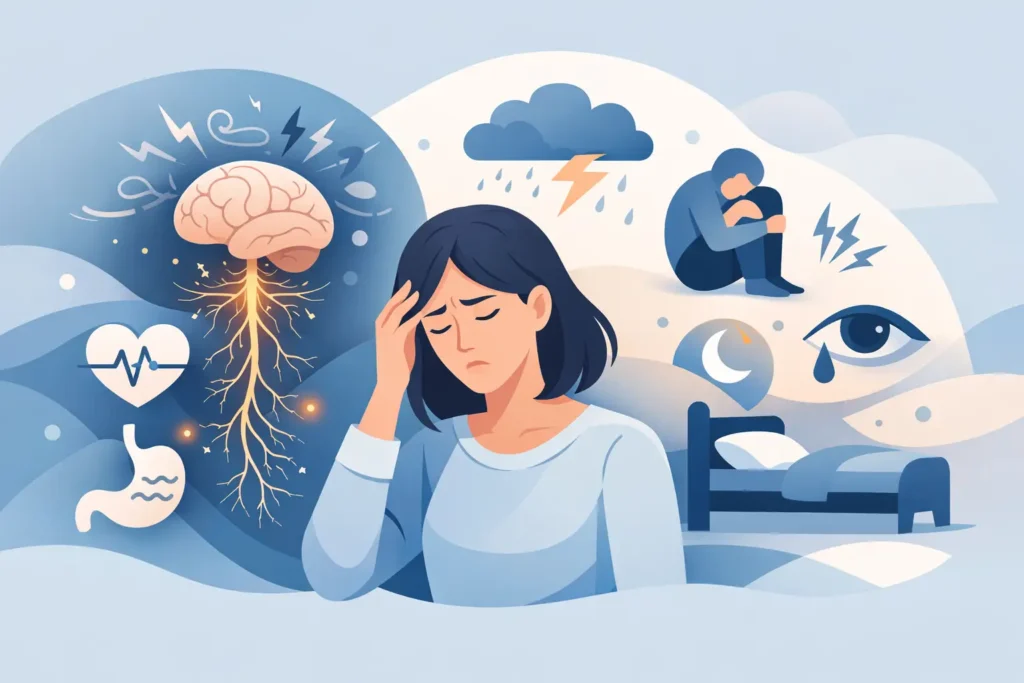
A tight neck after a demanding week may seem like a simple muscle problem. But when it comes with poor sleep, headaches, a racing mind, digestive changes, or pain that keeps returning, your body may be carrying a larger stress load. Nervous system stress symptoms can show up physically, emotionally, and mentally, often making everyday discomfort feel harder to manage.
Stress is not always caused by one dramatic event. For many adults, it builds through long workdays, caring for family, interrupted sleep, chronic pain, a previous injury, poor posture, or the pressure of trying to keep up. The goal is not to eliminate every source of stress. It is to recognize when your body needs support and create a practical plan to help it recover.
What Happens When Your Body Stays on Alert
Your autonomic nervous system helps regulate functions you do not have to think about, including heart rate, breathing, digestion, and your response to perceived danger. During a stressful moment, the body shifts into a protective state. Muscles may tighten, breathing can become shallow, and attention narrows so you can respond quickly.
That short-term response is useful. The challenge comes when the body has difficulty settling back into a calmer state. A demanding job, ongoing pain, poor sleep, and an unresolved auto accident injury can all keep the system more reactive than it needs to be. Over time, that can affect how you feel, move, rest, and cope with normal daily demands.
This does not mean every headache, stomach upset, or sore shoulder is caused by stress. Symptoms can have many causes, and a thorough assessment matters. Still, looking at the connection between physical tension, lifestyle habits, and stress response can provide a more complete picture than treating one isolated symptom at a time.
Common Nervous System Stress Symptoms
Nervous system stress symptoms are not identical for everyone. One person may feel restless and unable to sleep, while another notices jaw tension, low back pain, and fatigue. Symptoms may also fluctuate. You might feel reasonably well during a busy day, then notice discomfort intensify once you finally slow down.
Common signs include:
- Persistent neck, shoulder, jaw, or low back tension
- Frequent headaches or headaches that seem connected to posture and muscle tightness
- Trouble falling asleep, waking often, or feeling unrefreshed after a full night in bed
- Feeling wired but tired, irritable, overwhelmed, or unable to focus
- Shallow breathing, a pounding heartbeat, or a sensation of being on edge
- Digestive changes, such as nausea, appetite shifts, or stomach discomfort
- Increased sensitivity to pain or stiffness after activities that used to feel manageable
Some people also notice that old injuries become more bothersome during stressful seasons. This can happen because protective muscle tension, reduced movement, disrupted sleep, and a heightened pain response can all feed into one another. The body is not failing you. It may be signaling that its current workload exceeds its recovery capacity.
Why Pain, Posture, and Stress Can Reinforce Each Other
Pain and stress often form a frustrating loop. When your neck or back hurts, it may be harder to sleep well, exercise, sit comfortably at work, or stay patient with the people you love. Those changes can increase stress. In response, the body may tighten further, and pain can feel more intense.
Posture can be part of this pattern, especially for people who spend hours at a computer, commute frequently, or look down at a phone throughout the day. A forward-head position, rounded shoulders, or prolonged sitting does not automatically cause pain. However, staying in one position for long stretches can overload certain muscles and joints, particularly when recovery habits are already limited.
The right approach depends on the person. Someone recovering from a collision may need a different plan than a new parent with disrupted sleep or a desk-based professional with recurring tension headaches. A good care plan considers your symptoms, movement patterns, health history, daily demands, and goals rather than assuming one treatment fits everyone.
Calming the Stress Response Starts With Small, Consistent Support
You do not need a perfect routine to help your body feel more regulated. Consistency matters more than intensity. Start with changes that are realistic enough to repeat during a busy week.
Gentle, regular movement can reduce stiffness and give tense muscles a healthier outlet. A short walk, mobility work, or home exercises prescribed for your condition may be more useful than waiting for one long workout you never have time to do. If exercise worsens pain, causes numbness, or brings on dizziness, stop and seek professional guidance rather than pushing through.
Breathing is another practical place to start. When you notice yourself holding your breath or breathing high in your chest, pause for a few slow breaths. Aim for a comfortable inhale and a longer, unforced exhale. This is not a cure for chronic stress, but it can create a brief interruption in the body’s alarm response.
Sleep also deserves attention. Keep your bedroom as dark and cool as possible, limit late caffeine when it affects you, and give yourself a transition period before bed rather than moving directly from email or social media into sleep. If pain is disrupting rest, changing your sleep position or using supportive pillows may help, but persistent sleep problems should be discussed with a healthcare professional.
Nutrition, hydration, and regular meals can support steadier energy as well. Many people reach for caffeine or skip meals when life gets busy, then wonder why they feel shaky, fatigued, or irritable later. Small adjustments can be meaningful, particularly when paired with care that addresses physical discomfort.
How Personalized Chiropractic and Wellness Care May Help
When stress symptoms are accompanied by neck pain, back pain, headaches, postural strain, or lingering injury-related discomfort, a musculoskeletal evaluation can be a helpful next step. At Align Chiropractic and Wellness, care begins by listening to your concerns and assessing how your spine, joints, muscles, posture, and movement may be contributing to your symptoms.
For the right patient, a personalized plan may include chiropractic adjustments, spinal or extremity adjustments, postural rehabilitation exercises, home exercise instruction, spinal decompression, acupuncture, or lifestyle and nutrition guidance. These services are not a substitute for mental health care, medical treatment, or emergency evaluation. They can, however, help address physical stressors such as restricted movement, muscular tension, and postural dysfunction that may be adding to your overall load.
Progress should be monitored, not guessed at. Regular re-evaluations allow your care plan to change as your mobility, pain levels, and goals change. Some patients need focused care after an injury; others benefit most from periodic wellness visits and a clear at-home plan. The best path is the one that fits your condition and helps you participate more fully in daily life.
When to Seek Medical Help Promptly
Do not assume new or severe symptoms are simply stress. Seek urgent medical attention for chest pain, trouble breathing, fainting, sudden weakness or numbness, confusion, severe or unusual headache, changes in vision or speech, or thoughts of harming yourself. These symptoms need timely evaluation.
For persistent tension, recurring headaches, poor sleep, or pain that is changing how you live, you do not have to wait until you are completely overwhelmed. A thoughtful assessment can help identify what your body needs next. Relief often starts with being heard, understanding the patterns behind your symptoms, and taking one manageable step toward feeling more like yourself.