
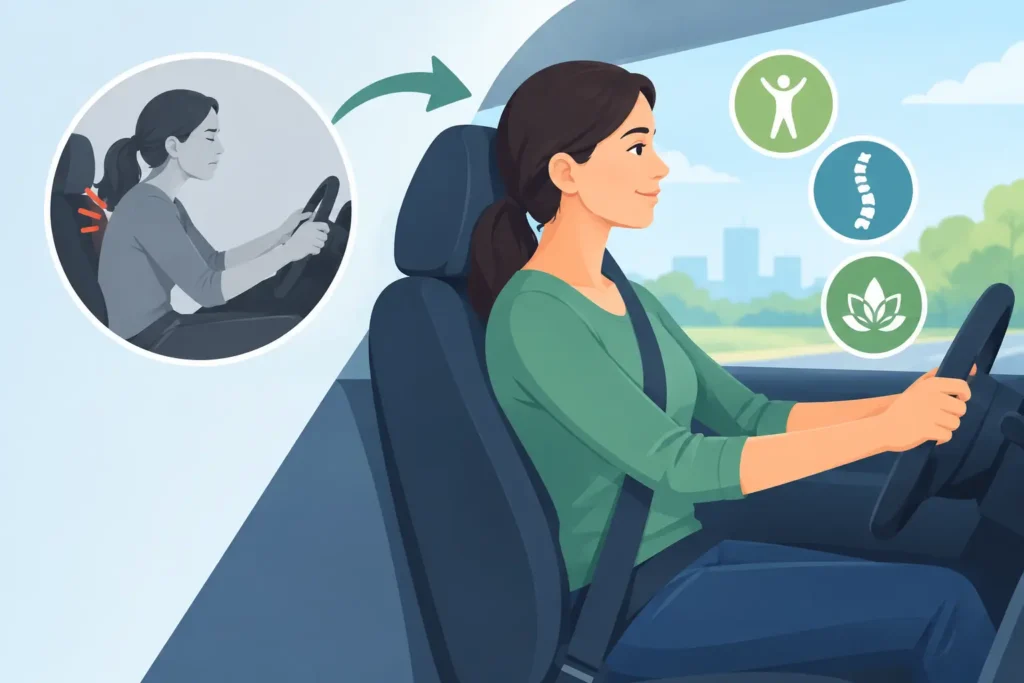
A 20-minute drive can leave your neck tight, your low back achy, and your hips feeling like they need to be pried out of the driver’s seat. Learning how to reduce driving stiffness starts with recognizing that this discomfort is rarely caused by one factor alone. Your seat position, posture, stress level, old injuries, work habits, and the amount of movement you get throughout the day can all contribute.
For many people, driving is not just an occasional activity. It is the commute to work, the school pickup line, the drive across San Antonio, and the time spent running errands. Small strains can build up when the body stays in one position for too long. The good news is that a few intentional changes can make driving more comfortable while supporting healthier movement over time.
Why Driving Can Leave You Feeling Stiff
Driving requires sustained sitting, but it is not relaxed sitting. Your hands remain on the wheel, one foot works the pedals, your eyes stay focused ahead, and your body absorbs vibration and subtle vehicle movement. If you tend to lean forward, twist toward the center console, grip the steering wheel tightly, or hold your shoulders near your ears, muscles in the neck, upper back, low back, and hips may stay activated for the entire trip.
The position of the hips also matters. When your seat is too low, too far back, or reclined too much, the pelvis may roll backward and flatten the natural curve of the low back. This can place added stress on the lumbar spine and surrounding muscles. A seat that is too close can crowd the hips and knees, while a steering wheel that is too far away encourages reaching and rounded shoulders.
Stiffness after driving does not automatically mean something serious is wrong. However, recurring pain is a signal worth listening to, especially when it affects your work, sleep, exercise, or ability to enjoy time with family. Persistent symptoms can sometimes be related to postural dysfunction, joint restriction, muscle imbalance, disc irritation, arthritis, or an injury that has not fully healed.
Adjust Your Driver’s Seat Before You Start the Car
A better driving position can reduce unnecessary strain before the trip even begins. Start by sitting all the way back in the seat so your pelvis and mid-back have support. Your seat should be close enough that you can press the pedals fully without locking your knee or reaching with your toes.
Aim for your hips to be level with or slightly higher than your knees. This position often helps reduce pressure through the low back and hips. If your vehicle seat sits low and cannot be adjusted enough, a firm cushion may help. Avoid overly thick or soft cushions that change your position too dramatically or cause you to slide forward.
Bring the seatback fairly upright, generally around a slight recline rather than a lounge-chair position. Your shoulders should rest comfortably against the seat while your elbows remain softly bent as you hold the wheel. Adjust the steering wheel so you are not reaching forward, hunching, or shrugging your shoulders.
The headrest is also more than a comfort feature. Position it behind the middle of your head, close enough to provide support without pushing your head forward. Proper headrest placement is particularly important for safety and may be especially relevant for people recovering from a car accident or dealing with neck pain.
Support Your Low Back Without Forcing It
Your lower back naturally has a gentle inward curve. Standard vehicle seats do not always support that curve well, especially during longer drives. A small lumbar roll, a rolled hand towel, or a purpose-made support placed at the beltline can help you maintain a more neutral posture.
The goal is support, not an exaggerated arch. If the support feels sharp, pushes you too far forward, or increases symptoms, adjust its height, thickness, or position. Bodies vary, and the best setup is the one that allows you to sit comfortably without bracing or constantly shifting.
Try to keep both feet involved in your posture when it is safe to do so. In an automatic vehicle, the left foot should rest on the designated footrest rather than tucking underneath the body. Sitting on a wallet, phone, or bulky item in a back pocket can create an uneven pelvic position, so remove those items before longer drives.
Use Small Movement Breaks to Reduce Driving Stiffness
Even excellent posture becomes tiring when it is held for too long. The body is designed to move, and regular movement breaks are one of the most effective ways to reduce driving stiffness on road trips, long commutes, and busy errand days.
When possible, stop every 60 to 90 minutes. Get out of the vehicle and walk for a few minutes. Gentle movement is usually more helpful than aggressive stretching, particularly if you are already sore. Roll your shoulders, straighten your posture, take a few relaxed breaths, and allow your arms and legs to move naturally.
At a safe stop, you can also try a gentle hip flexor stretch by stepping one foot behind you and lightly tucking the pelvis under until you feel a mild stretch at the front of the hip. A simple calf stretch against the vehicle or a short walk can help counteract the stillness of sitting. Never stretch, twist, or perform exercises while operating the vehicle.
On shorter trips where stopping is not practical, check in with your body at red lights or while parked. Relax your grip on the steering wheel, let your shoulders drop, gently lengthen through the top of your head, and take two or three slow breaths. These small resets can interrupt the habit of carrying tension.
Prepare Your Body for the Drive
What happens before and after driving affects how you feel in the car. If you spend your workday at a desk, go straight into a long commute, and then sit through dinner or screen time, your spine and hips may have very little opportunity to change positions. Building more movement into the day can help your body tolerate driving better.
A brief walk before a longer drive can warm up the hips and back. After you arrive, resist the urge to remain in the seat answering messages or scrolling. Stand up, take a short walk, and give your body a chance to reset.
Regular strengthening can be useful as well. Exercises that support core endurance, hip strength, upper-back stability, and mobility may improve your ability to hold a comfortable posture. However, the right routine depends on your symptoms, fitness level, and health history. Someone with active sciatic pain, a recent auto accident injury, pregnancy-related pelvic discomfort, or a disc condition may need a different approach than someone dealing with general tightness.
Do Not Ignore Patterns That Keep Returning
Occasional stiffness after a four-hour drive is common. Pain that begins after a 10-minute commute, returns every day, or worsens despite adjusting your seat deserves a closer look. Pay attention to where the discomfort starts, what positions provoke it, whether it travels into an arm or leg, and what helps it settle down. These details can help identify the underlying pattern rather than simply chasing temporary relief.
A chiropractic and wellness assessment can evaluate spinal motion, posture, muscle balance, and movement habits that may be contributing to your symptoms. At Align Chiropractic and Wellness, care may include chiropractic adjustments, spinal and extremity assessment, postural rehabilitation, home exercise instruction, acupuncture, or other personalized recommendations based on your needs and goals. Regular re-evaluations help ensure the care plan continues to match your progress.
Seek prompt medical evaluation if driving-related pain follows a collision or comes with new numbness, weakness, loss of coordination, severe headache, dizziness, chest pain, fever, or changes in bladder or bowel control. These symptoms should not be managed with stretches or seat adjustments alone.
Make Comfort Part of Your Long-Term Wellness Plan
The right seat setup can make a meaningful difference, but lasting comfort usually comes from addressing the full picture: how you sit, move, recover, manage stress, and care for your spine between drives. A few minutes of preparation and movement may prevent hours of discomfort later.
If driving stiffness has become part of your daily routine, you do not have to accept it as the cost of getting where you need to go. Listening to your body early and getting personalized support can help you move with more confidence, both behind the wheel and beyond it.