
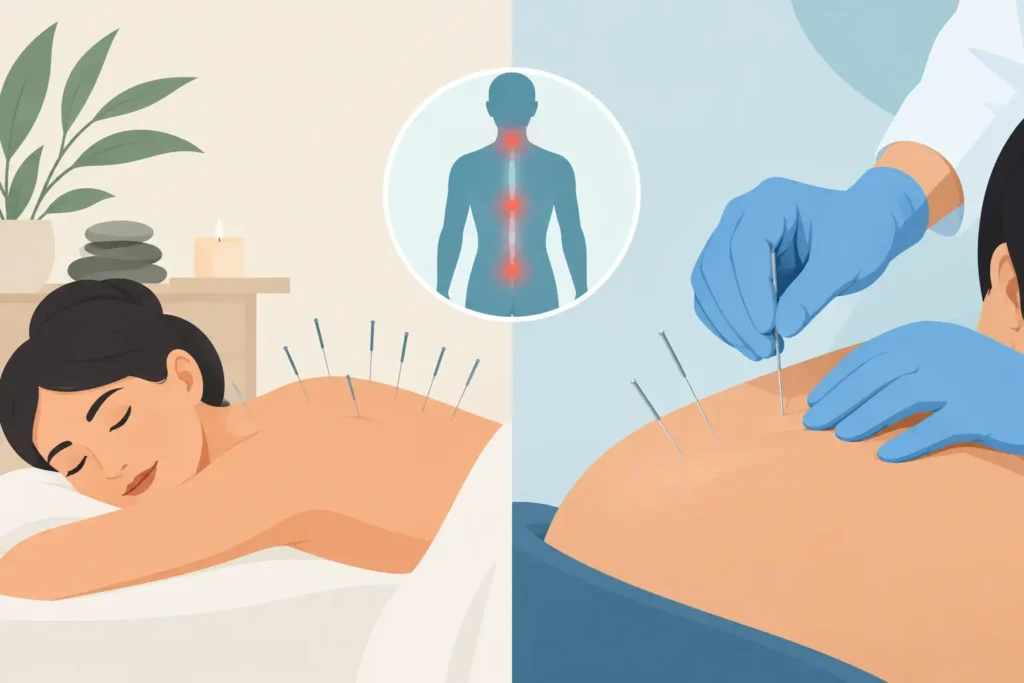
A stubborn knot between the shoulder blades, a tight hip that changes your stride, or a headache that starts at the base of the neck can make any needle-based treatment sound worth trying. But acupuncture versus dry needling is not a simple either-or decision. Although both use very thin, sterile needles, they are based on different treatment approaches and may serve different needs.
The right choice depends on what is driving your discomfort, how your body is moving, your health history, and your goals. At Align Chiropractic and Wellness, we look beyond the painful area to understand the postural, muscular, joint, and lifestyle factors that may be keeping you from feeling your best.
Acupuncture Versus Dry Needling: The Core Difference
Acupuncture is a component of traditional East Asian medicine. It involves placing fine needles at specific points on the body to support the body’s natural regulatory processes. In a modern wellness setting, acupuncture is often used to help manage pain, muscle tension, stress-related symptoms, headaches, and other concerns that can affect daily function.
A practitioner considers more than the location of pain. They may assess patterns such as sleep quality, stress, energy, digestion, and the way symptoms appear throughout the day. The intent is to support the whole person while addressing the concern that brought them in.
Dry needling is a technique more directly focused on muscles and connective tissue. A trained provider inserts a thin needle into a tight band of muscle, often called a trigger point, or into tissue near a painful or restricted area. The goal is generally to reduce muscular guarding, improve local movement, and help calm a sensitive muscle that is contributing to pain.
In other words, acupuncture and dry needling may use similar-looking needles, but the clinical reasoning behind their placement can be quite different. Acupuncture follows an established point system and whole-body framework. Dry needling typically follows an anatomical and neuromuscular framework.
What Does Each Treatment Feel Like?
Most people are surprised by how thin acupuncture and dry needling needles are. They are not the same as the hollow needles used for injections or blood draws. Still, the experience can vary based on the area treated and each person’s sensitivity.
During acupuncture, you may feel a brief pinch as the needle is placed, followed by a mild heaviness, warmth, tingling, or a relaxed sensation. Many patients rest quietly with the needles in place for a period of time. Some leave feeling calmer or more settled, while others notice gradual changes over several visits.
Dry needling can create a stronger local sensation when a tight muscle responds. Some people feel a quick twitch, a cramp-like release, or temporary soreness afterward. That soreness can resemble the feeling after an unfamiliar workout and often resolves within a day or two. Your provider should explain what they are treating, what you may feel, and what type of aftercare can help.
Neither treatment should feel like something you simply have to endure. Open communication matters. If you are nervous about needles, have had an uncomfortable experience before, or have a low pain tolerance, say so. Care can be adjusted to help you feel more at ease.
When Acupuncture May Be a Good Fit
Acupuncture may be considered when pain is affecting both physical comfort and overall well-being. For example, a busy parent with neck tension, poor sleep, and frequent tension headaches may benefit from a treatment approach that considers all of those connected concerns rather than treating the neck alone.
It may also be a helpful complement to chiropractic care and rehabilitation when stress, muscle tension, or nervous system overload appears to be slowing progress. A person recovering from an auto accident, for instance, may have pain from tissue irritation but also guarded movement, disrupted sleep, and anxiety around driving. Addressing recovery from several angles can be more supportive than relying on one intervention.
Acupuncture is not a replacement for a thorough exam or medical evaluation when one is needed. New numbness, progressive weakness, loss of balance, severe unexplained pain, fever, or changes in bowel or bladder control require prompt medical attention.
When Dry Needling May Be a Good Fit
Dry needling may be useful when an assessment identifies a specific muscular restriction that is limiting movement or contributing to pain. A runner with a persistently tight calf, an office worker with painful upper-trapezius trigger points, or someone with hip tightness that makes walking uncomfortable may be dealing with a muscle that is staying in a protective, overactive state.
The technique can be especially helpful when it is paired with movement. Releasing a tight muscle without addressing why it became overworked can lead to only temporary relief. If rounded shoulders, poor lifting mechanics, limited hip mobility, or an unstable joint are part of the problem, those factors deserve attention too.
That is why dry needling often works best as one piece of a personalized plan. Chiropractic adjustments, soft tissue work, postural rehabilitation, spinal or extremity mobility work, and home exercises may all play a role depending on your exam findings.
Relief Matters, but So Does the Reason Pain Keeps Returning
A painful muscle is not always the source of the problem. Sometimes it is doing extra work because another area is not moving well. A tight hamstring may be responding to pelvic mechanics. Upper-back tension may be connected to forward-head posture and long hours at a computer. Sciatic-type symptoms may involve irritation that needs a careful assessment rather than a quick assumption.
This is where a whole-person approach can make a meaningful difference. Before recommending a treatment, a provider should listen to your history, assess movement and posture, and use appropriate objective testing. Regular re-evaluations also matter because your care should change as your body responds.
For some patients, acupuncture is the better starting point. For others, targeted dry needling, manual care, and corrective exercise may be more appropriate. Many people benefit from a combination of approaches over time. The answer is not which treatment is universally better. It is which treatment makes sense for your specific condition and recovery plan.
Safety and Questions to Discuss Before Treatment
Both acupuncture and dry needling should be performed by a properly trained, licensed professional using single-use sterile needles. Credentials and scope of practice can vary by provider and by state, so it is reasonable to ask about training and experience.
Tell your provider about medications, especially blood thinners, as well as pregnancy, bleeding disorders, immune conditions, a history of fainting, or any implanted medical devices. You should also share recent injuries, surgeries, and changes in symptoms. This information helps your provider determine whether treatment is appropriate and how to modify it safely.
After either treatment, hydration, gentle movement, and following your personalized home-care instructions can support recovery. Avoid judging progress from one session alone. Some conditions respond quickly, while long-standing pain patterns often require consistent care and active participation between visits.
Pain may be asking for more than a temporary fix. If you are dealing with recurring tension, headaches, back pain, restricted movement, or discomfort that keeps interrupting your routine, a thoughtful assessment can help clarify the next step. The goal is not just to help you feel better for the day, but to help you move, function, and live with greater confidence.