
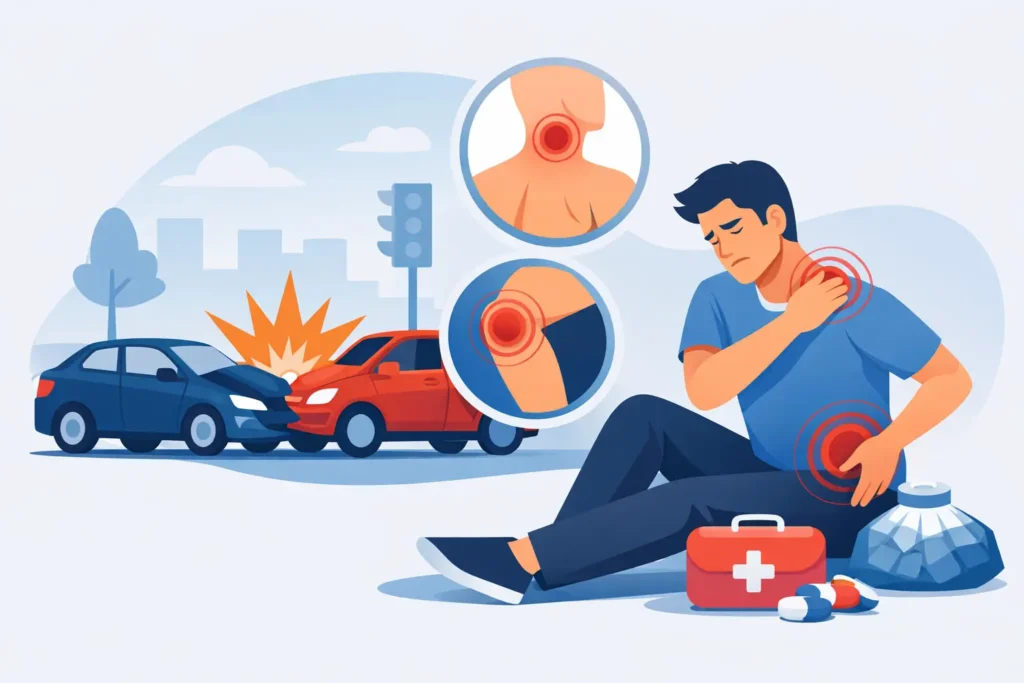
A collision can be over in seconds, yet your body may not fully register the effects until the next morning or even several days later. This guide to post accident soreness can help you understand why delayed pain happens, when it needs urgent attention, and how to take thoughtful steps toward recovery instead of trying to simply push through it.
Even a low-speed accident can place force on the neck, back, shoulders, hips, and nervous system. You do not have to see obvious vehicle damage or feel severe pain at the scene for an injury to be present. Listening to new symptoms early can make a meaningful difference in your comfort, mobility, and longer-term healing.
Why Post-Accident Soreness Can Show Up Later
During an accident, your body releases stress hormones such as adrenaline. That response can temporarily reduce your awareness of pain while you focus on getting to safety, speaking with police, or arranging transportation. Once that immediate stress response settles, inflammation, muscle guarding, and joint irritation may become more noticeable.
The head, neck, and torso can move quickly in different directions during impact. Muscles may tighten to protect vulnerable areas, while ligaments, joints, and soft tissues can be strained. This is why someone may feel mostly fine after a crash but wake up with a stiff neck, headache, low back discomfort, shoulder pain, or reduced range of motion a day or two later.
Soreness does not automatically mean a serious injury, but it should not be dismissed. Symptoms that linger or worsen deserve a proper evaluation, especially if they interfere with sleep, work, driving, exercise, or caring for your family.
Common Symptoms After a Car Accident
Post-accident discomfort looks different from one person to the next. The location of impact, body position, use of a seat belt, prior injuries, and overall health all affect how the body responds.
Neck stiffness and pain are common, particularly after a rear-end collision. Some people also experience headaches that begin at the base of the skull, pain between the shoulder blades, or tightness that spreads into the upper back. Low back pain may develop from force traveling through the pelvis and spine, while hip, knee, wrist, or shoulder soreness can occur when the body braces against the steering wheel, seat belt, or vehicle interior.
You may also notice muscle spasms, fatigue, difficulty concentrating, changes in posture, tingling, or discomfort that radiates into an arm or leg. Pain can be mild at first and gradually become more limiting as inflammation and compensation build. A sore area is not always the only area that needs attention. For example, a stiff neck can change shoulder movement, and low back guarding can alter the way you walk.
When Post-Accident Soreness Needs Emergency Care
Some symptoms require prompt emergency medical attention rather than waiting for a routine appointment. Call 911 or seek emergency care if you experience:
- Loss of consciousness, confusion, fainting, seizures, or increasing drowsiness
- A severe or worsening headache, repeated vomiting, vision changes, or slurred speech
- New weakness, numbness, loss of coordination, or tingling that is rapidly progressing
- Chest pain, trouble breathing, severe abdominal pain, or signs of internal bleeding
- Loss of bladder or bowel control, numbness in the groin area, or inability to move part of the body
These signs can indicate conditions that need immediate medical testing and treatment. If you are uncertain about the severity of a symptom, err on the side of getting evaluated quickly.
What to Do in the First Few Days
The goal in the first several days is not to prove that you are tough enough to ignore pain. It is to protect your body, gather useful information, and avoid making a manageable injury harder to recover from.
Start by getting checked by an appropriate healthcare professional, even if symptoms seem minor but persist. A thorough evaluation may include a health history, discussion of the crash, range-of-motion testing, posture and movement assessment, orthopedic and neurological tests, and imaging referral when clinically appropriate. Objective findings help guide care and create a baseline for measuring progress.
Give your body relative rest, especially from heavy lifting, intense workouts, and activities that sharply increase symptoms. Relative rest does not necessarily mean staying in bed. Gentle walking and comfortable movement may help prevent additional stiffness, as long as they do not aggravate pain or create dizziness, numbness, or weakness.
Cold packs can be useful in the early period when an area feels inflamed or freshly irritated. Apply a wrapped cold pack for short intervals, generally 15 to 20 minutes at a time, and protect your skin. After the initial phase, some people find gentle heat helpful for muscle tension. The right choice depends on your symptoms, so pay attention to how your body responds.
Keep brief notes about pain levels, headaches, sleep quality, stiffness, and symptoms that travel into your arms or legs. This record can help your provider identify patterns, explain changes in your condition, and adjust your plan as recovery progresses.
A Guide to Post-Accident Soreness and Safe Movement
It can be tempting to stretch aggressively when your neck or back feels tight. After an accident, however, forceful stretching, self-cracking, or attempting to “pop” a painful joint can make irritated tissues feel worse. Movement should be gradual and purposeful.
A provider may recommend simple, individualized home exercises to restore mobility, improve posture, and activate muscles that have become guarded or weak. These exercises should fit your injury, current range of motion, and daily demands. An active parent who needs to lift a toddler may need a different recovery plan than an office professional who spends eight hours at a desk or a driver who sits for long periods.
Pay attention to your work setup and sleeping position as well. A supportive pillow, a neutral neck position, regular breaks from sitting, and avoiding prolonged slouching can reduce unnecessary strain while your body heals. Small adjustments often matter because post-accident soreness can make normal habits more stressful on already sensitive tissues.
Why Personalized Care Matters
Pain medication may be appropriate for some people under the guidance of their medical provider, but reducing pain alone does not necessarily address restricted motion, muscular compensation, postural changes, or joint dysfunction after a crash. Recovery works best when care is based on what your body is actually doing, not just where it hurts that day.
Chiropractic care can be one part of a conservative recovery plan for appropriate patients after emergency conditions and fractures have been ruled out. A chiropractor may assess spinal and extremity movement, posture, muscle balance, and nerve-related symptoms before determining whether gentle chiropractic adjustments, soft tissue-focused care, rehabilitation exercises, spinal decompression, acupuncture, or referral to another provider is appropriate.
At Align Chiropractic and Wellness, auto accident care is built around an individualized assessment, a clear plan, regular re-evaluations, and practical at-home guidance. The purpose is not to rush you through a standard sequence of visits. It is to understand how the accident affected your movement and daily life, then support recovery with care that can adapt as symptoms change.
Give Recovery the Time and Attention It Deserves
There is no universal timeline for post-accident soreness. A minor strain may improve quickly, while more significant soft tissue injuries or nerve irritation can take longer. Previous neck or back problems, the force and direction of the collision, stress levels, sleep, and how quickly you return to demanding activities can all influence healing.
Improvement is rarely perfectly linear. You may have a few better days followed by a flare after a long drive, poor night of sleep, or busy weekend. That does not always mean you are starting over, but it is useful feedback that your body may need a change in activity, exercise progression, or treatment approach.
If soreness is not improving, keeps returning, or begins to limit the life you want to live, schedule an evaluation rather than accepting it as the new normal. The kindest response to your body after an accident is to take its signals seriously, get clear answers, and give recovery the support it needs.