
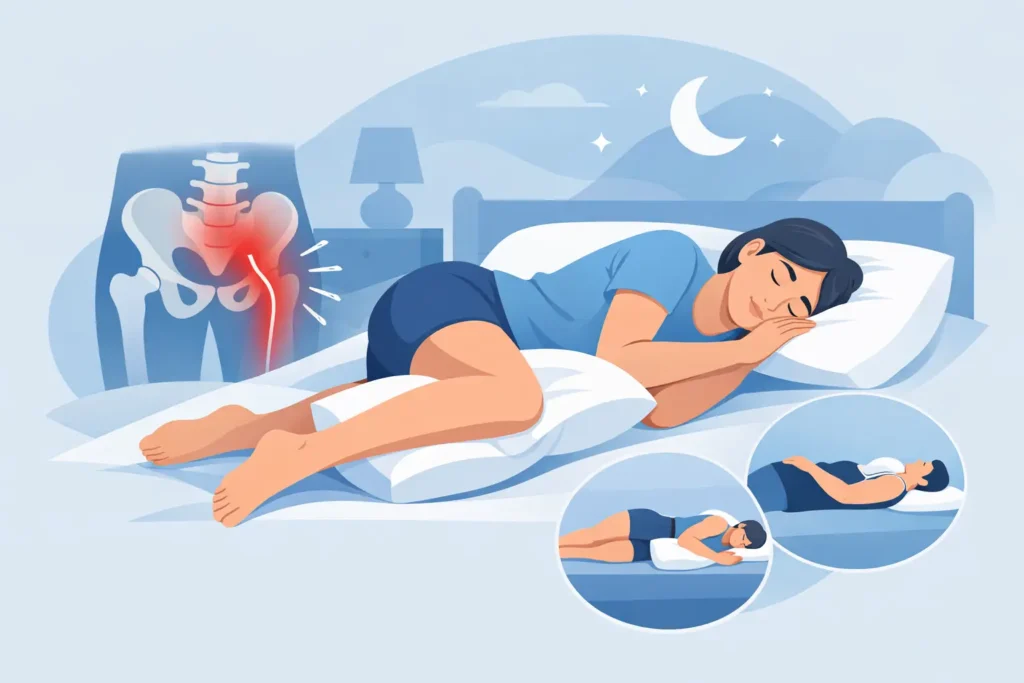
A sharp ache down the back of your leg can make bedtime feel less like rest and more like a search for one position that does not hurt. The best sleeping positions sciatica sufferers can use are those that reduce strain on the low back, hips, and irritated nerve while keeping the spine in a more neutral alignment. The right setup can make a meaningful difference, but it is also a clue: if pain keeps disrupting sleep, your body may need more support than a new pillow alone can provide.
Sciatica is not a diagnosis by itself. It describes symptoms that occur when the sciatic nerve, or one of the nerve roots that contributes to it, becomes irritated or compressed. That can happen with disc irritation, joint dysfunction, spinal narrowing, muscle tension, pregnancy-related changes, or prolonged postural stress. Because the underlying cause varies, the position that feels best for one person may aggravate another.
Why Sciatica Often Feels Worse at Night
During the day, movement naturally changes the load on your spine and hips. At night, you may remain in one position long enough for pressure to build around an already sensitive area. A mattress that sags, a pillow that does not support your neck, or a twisted hip position can also leave the lower back working harder than it should.
Nighttime symptoms do not always mean the condition is getting worse. Still, recurring pain that affects sleep deserves attention. Quality sleep supports tissue recovery, pain regulation, energy, and mood. When sciatica repeatedly interrupts it, addressing both your sleep posture and the source of the irritation can help you move toward more lasting relief.
Best Sleeping Positions for Sciatica
The goal is not to force your body into a picture-perfect pose. It is to find a supported position that allows your pelvis, lower back, and hips to relax. Try each option for several nights, unless it clearly increases your symptoms.
Side Sleeping With a Pillow Between Your Knees
For many people, side sleeping is one of the most comfortable choices. Bend your knees slightly and place a firm pillow between them, ideally extending from your knees toward your ankles. This helps prevent the top leg from dropping forward and twisting the pelvis.
Keep your shoulders and hips stacked rather than rolling your upper body forward while your hips stay behind. If there is a gap between your waist and the mattress, a small folded towel or thin pillow can provide gentle support. Your head pillow should keep your neck level with the rest of your spine, not tipped sharply up or down.
If your symptoms are mainly on one side, sleeping on the opposite side may feel better, but there is no universal rule. Let your symptoms guide you. If lying on one side creates more tingling, numbness, or shooting pain, switch sides or try a different position.
Back Sleeping With a Pillow Under Your Knees
Back sleeping can reduce strain for people whose sciatica worsens when the low back arches excessively. Place one or two pillows under your knees so your hips and knees are gently bent. This can flatten the curve in the lower back slightly and reduce pressure through the lumbar spine.
Some people also benefit from a small towel beneath the low back for light support, but it should not create a pronounced arch. The purpose is comfort and neutral alignment, not forcing your spine into a rigid position. If you wake up with increased leg pain, remove the towel and reassess the height of the pillow under your knees.
Reclined Sleeping for Disc-Related Discomfort
A partially reclined position may be helpful when lying flat increases symptoms. Sleeping in an adjustable bed or a supportive recliner can place the hips and knees in a slightly flexed position, which some people find reduces low-back pressure.
This is often best used as a short-term comfort strategy rather than a permanent sleep solution. A recliner that places your neck too far forward or leaves you twisted can create new discomfort. If reclined sleep is the only way you can rest, a focused assessment can help identify why other positions remain so difficult.
Stomach Sleeping, With Careful Modification
Stomach sleeping is usually not the first recommendation for sciatica because it may increase the arch in the low back and requires the neck to rotate for hours. Yet some people genuinely feel better in this position, particularly if bending forward tends to aggravate their symptoms.
If you prefer sleeping on your stomach, place a thin pillow under your lower abdomen and pelvis to reduce the low-back curve. Use a very thin head pillow, or none if that is comfortable for your neck. Stop if the position increases back pain, radiating leg pain, or morning stiffness.
Small Adjustments That Can Make a Big Difference
Your sleep position works together with your sleep surface. A mattress does not have to be extremely firm to be supportive. What matters is that it holds your body evenly without allowing your hips to sink deeply or creating pressure at your shoulders and hips. A worn mattress with visible sagging can make it difficult to maintain any helpful position.
Pillows are practical alignment tools, not just comfort items. In addition to a knee pillow for side sleeping or a knee bolster for back sleeping, some people benefit from hugging a pillow while side sleeping. This can reduce the tendency for the upper shoulder and torso to rotate forward.
Your transition into and out of bed matters, too. Instead of sitting straight up from your back, roll onto your side first, bring your legs off the edge of the bed, and use your arms to push yourself upright. This log-roll approach can limit sudden twisting through a painful low back.
A brief, gentle wind-down routine may also help. Easy walking, relaxed diaphragmatic breathing, or the specific home exercises recommended by your provider can reduce stiffness before bed. Avoid aggressive stretching when the nerve is highly irritated. Stretching through sharp, burning, or radiating pain can make symptoms more sensitive rather than more flexible.
When One Position Is Not Enough
It is tempting to keep buying pillows and hoping the next setup will solve the problem. Sometimes that is all you need. But persistent sciatica often reflects more than sleep posture. Restricted spinal movement, poor hip mechanics, postural strain, weakness in stabilizing muscles, disc involvement, or muscle tension may all contribute to the pattern.
A personalized evaluation looks beyond where the pain travels. It considers which movements trigger symptoms, how your posture and gait affect your spine, whether there are signs of nerve irritation, and what daily habits may be slowing recovery. From there, care may include chiropractic adjustments, spinal decompression, rehabilitation exercises, acupuncture, and practical at-home recommendations based on your condition and goals.
At Align Chiropractic and Wellness, care is designed around objective assessment and regular re-evaluation, so your plan can change as your body responds. The aim is not simply to help you find a less painful way to sleep tonight. It is to help improve the function and support your body needs to move, rest, and live with greater confidence.
When to Seek Prompt Medical Care
Sciatica should be evaluated promptly if you develop progressive leg weakness, new loss of bladder or bowel control, numbness in the groin or inner thighs, fever, unexplained weight loss, or severe pain following a significant fall or accident. These symptoms may point to a more serious condition that needs urgent medical attention.
Even without those warning signs, schedule an evaluation if your pain is severe, keeps returning, travels farther down the leg, causes persistent numbness, or regularly wakes you from sleep. You do not have to accept restless nights as part of life. With a position that supports your body and a care plan that addresses the underlying contributors, bedtime can become a place for real recovery again.