
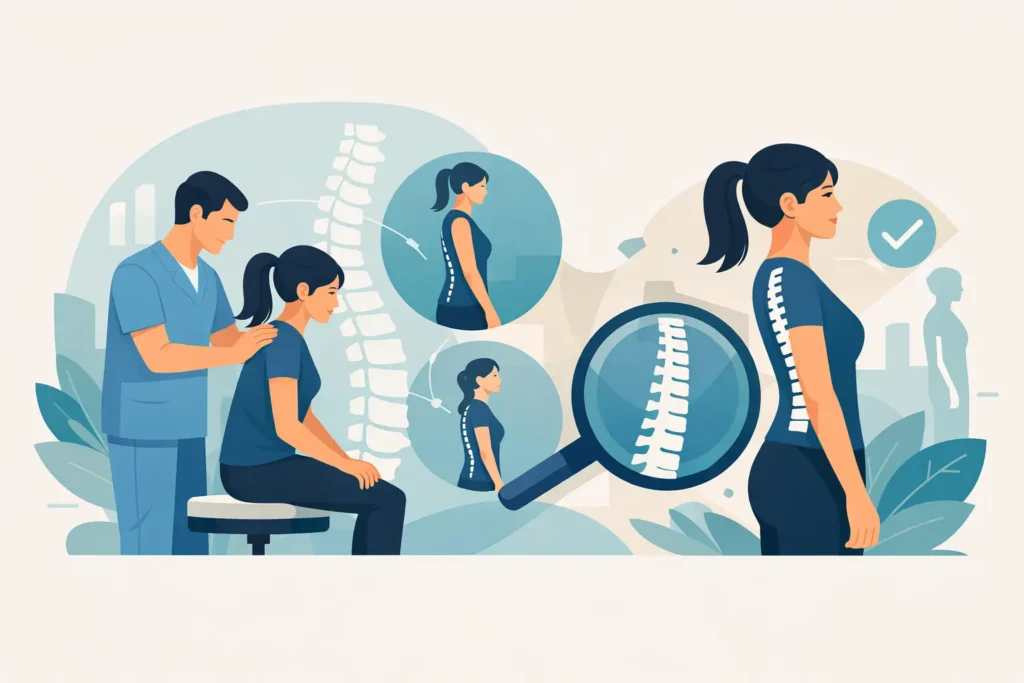
If you catch yourself rounding forward at your desk, shifting your weight unevenly when you stand, or ending the day with tight shoulders and a stiff neck, you are not imagining the connection. Poor posture is not just about appearance. It can affect how your spine moves, how your muscles work, and how your body feels from morning to night. So, can a chiropractor help with posture? In many cases, yes – but not by simply telling you to sit up straighter.
Posture changes for a reason. Sometimes it starts with long hours at a computer. Sometimes it follows an injury, pregnancy, repetitive lifting, or years of compensating for pain. A helpful approach looks at the full picture: spinal alignment, muscle imbalances, movement patterns, work habits, stress, and how your body has adapted over time.
Can a Chiropractor Help With Posture or Just Pain?
Chiropractic care can support better posture because posture and joint function are closely connected. When the spine, pelvis, ribs, or even the shoulders are not moving well, the body often creates workarounds. You may lean forward, hike one shoulder, rotate through the low back, or hold your head in front of your center of gravity. Those patterns can lead to neck pain, headaches, upper back tension, low back discomfort, and fatigue.
A chiropractor assesses how your body is aligned and how it moves. If certain joints are restricted, adjustments may help restore motion. If some muscles are overworking while others are weak or underactive, posture-focused rehabilitation exercises can help retrain support where it is missing. That matters because posture rarely improves from passive care alone.
This is where many people get frustrated. They have probably already tried reminding themselves to stand taller. The problem is that awareness alone does not fix a body that has adapted to stress, injury, poor ergonomics, or repetitive movement. Lasting change usually comes from combining hands-on care with corrective exercise and practical changes at home and work.
Why Posture Gets Worse Over Time
Poor posture is often a slow buildup rather than a single event. The body is efficient. If you spend hours each day looking down at a phone, reaching forward to a keyboard, driving, carrying a child on one hip, or protecting an old injury, your muscles and joints start to treat those positions as normal.
Over time, the chest may tighten, the upper back may become less mobile, and the neck extensors may work too hard just to hold the head up. In the lower body, a tilted pelvis, weak glutes, or limited hip mobility can change the way you stand and walk. Some people notice pain first. Others just feel stiff, crooked, or tired.
There is also a nervous system component. When your body stays under physical or emotional stress, it often defaults to guarded patterns. Shoulders rise. Breathing becomes shallow. Muscles stay tense. A posture problem can be partly structural, partly muscular, and partly stress-related. That is why a whole-person approach tends to make more sense than a one-size-fits-all fix.
What a Chiropractor Looks For in a Posture Evaluation
A good posture assessment is more than a quick glance across the room. It should look at alignment, movement quality, symptom patterns, and the habits that may be feeding the problem.
A chiropractor may check how your head sits over your shoulders, whether one shoulder or hip is higher than the other, how your spine curves in standing, and how your pelvis is positioned. They may also look at how you bend, rotate, squat, walk, or balance. If you have pain, numbness, headaches, or a history of injury, those details matter too.
Objective testing helps guide care. Instead of guessing, your provider can identify which joints are restricted, where mobility is lacking, and which muscles are not doing their share. Re-evaluations are just as important. Posture should not be treated as a static label. It should be tracked as your body responds to care.
How Chiropractic Care Can Improve Posture
The answer to can a chiropractor help with posture depends on what is driving the issue. If posture changes are linked to joint restriction, spinal imbalance, movement dysfunction, or pain-related compensation, chiropractic care can be very useful.
Adjustments can help improve joint mobility in the spine and extremities. When a stiff thoracic spine begins to move better, it may be easier to lift through the chest without overextending the low back. When the pelvis is moving more evenly, standing and walking may feel more balanced. If the neck and upper back are not locked into tension, the head may sit in a more natural position.
But hands-on care works best when it is paired with active rehab. For example, someone with forward head posture may need more than neck treatment. They may also need exercises to strengthen deep neck flexors, activate the mid-back, open the chest, and improve shoulder blade control. Someone with an anterior pelvic tilt may need hip mobility work, glute strengthening, and core coordination.
That combination is often where real progress happens. At Align Chiropractic and Wellness, that kind of personalized approach can include chiropractic adjustments, postural rehabilitation exercises, home exercise instruction, and other supportive therapies based on the individual.
What Chiropractic Cannot Do on Its Own
It helps to be realistic. A chiropractor cannot erase years of poor habits in one visit. They also cannot strengthen weak muscles or change your workstation setup for you. If your posture is being driven by a structural condition, degenerative changes, a significant scoliosis pattern, or an untreated injury, care may need to be modified, coordinated, or approached gradually.
Posture is also not about forcing a perfectly upright position all day. The body does best with variety. Even a good posture becomes stressful if you hold it too long. The goal is not stiffness or perfection. The goal is better alignment, better movement, and less strain.
That is why the best care plans usually include both in-office treatment and simple home strategies. If you feel better after an adjustment but go right back to eight hours of unsupported sitting, the pattern often returns. That does not mean care is not working. It means the environment still needs to change too.
Daily Habits That Make Posture Care Work Better
If you are trying to improve posture, your routine between visits matters. Small changes done consistently usually matter more than dramatic changes done once.
Your screen should be high enough that you are not constantly looking down. Your chair should support your hips so your low back is not doing all the work. If you stand a lot, shifting positions and using supportive footwear can help reduce strain. If you drive often, headrest position and seat angle matter more than most people realize.
Movement breaks are one of the simplest tools. Standing up every 30 to 60 minutes, stretching the chest, walking briefly, or resetting your shoulder blade position can interrupt the stress cycle that keeps posture from improving. If you have a specific exercise program, doing it consistently is often the difference between short-term relief and meaningful change.
Sleeping position can also play a role. The wrong pillow height or a twisted sleeping posture can keep the neck and shoulders irritated, especially if you already spend the day in a forward posture.
When to Seek Help for Posture Problems
Some posture issues are mostly cosmetic. Others come with symptoms that deserve attention. If your posture is tied to recurring headaches, neck pain, upper back tightness, low back pain, sciatica, numbness, or pain after a car accident, it is worth getting evaluated.
The same is true if you feel like your body is becoming less balanced over time, your range of motion is shrinking, or your energy drops because holding yourself up feels like work. During pregnancy, posture changes can happen quickly as the body adapts to a shifting center of gravity, and supportive care may help reduce added stress on the spine and pelvis.
Early care is often easier than waiting until compensation patterns are deeply ingrained. A focused assessment can show whether the issue is mainly mobility, muscle imbalance, ergonomics, injury-related, or a combination of several factors.
Can a Chiropractor Help With Posture for Long-Term Results?
Yes, a chiropractor can help with posture when care is personalized, progress is measured, and treatment goes beyond temporary symptom relief. The strongest results usually come from addressing the joints, muscles, movement habits, and daily stressors that shaped the problem in the first place.
If you have been blaming yourself for not sitting perfectly or standing straight enough, it may help to shift the question. Better posture is not usually about trying harder. It is about giving your body the support, mobility, strength, and guidance it needs to hold itself differently.
A thoughtful care plan can help you move with less strain, feel more comfortable in your body, and build habits that support long-term wellness – not just for your spine, but for how you live every day.