
That nagging ache across your beltline can change how you sit, sleep, work, and even how patient you feel with the people around you. For many people, spinal decompression for lower back pain becomes part of the conversation when stretching, rest, and short-term pain relief have not solved the real problem.
Lower back pain is rarely just about one sore spot. In many cases, the issue involves pressure, irritation, poor movement patterns, disc stress, posture changes, or compensation from old injuries. That is why effective care should start with understanding what is driving the pain, not simply chasing symptoms from week to week.
What spinal decompression for lower back pain is
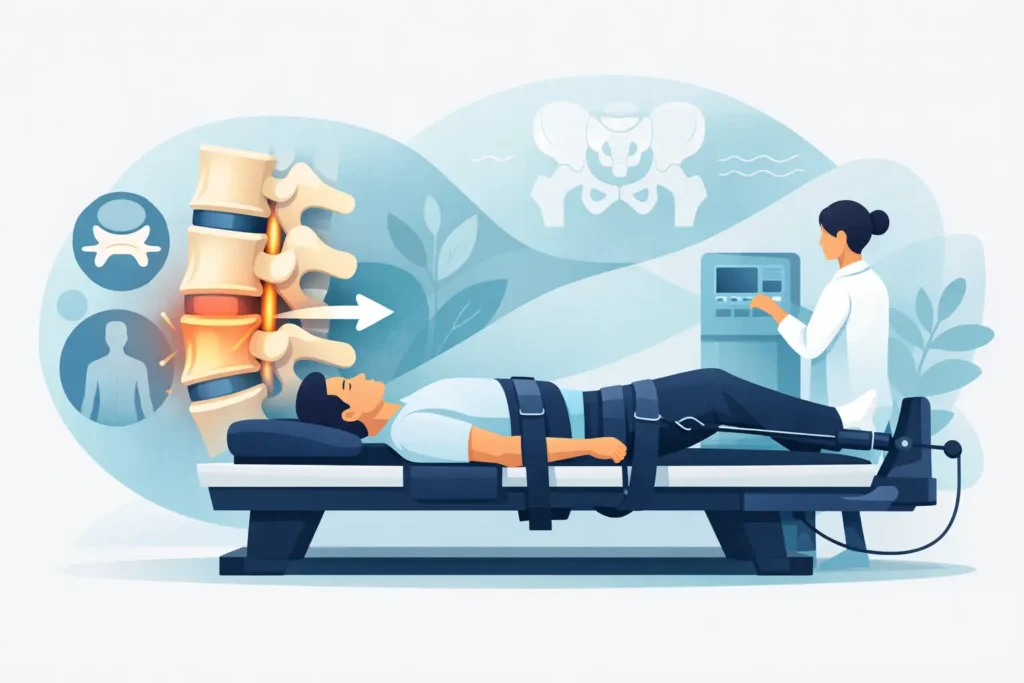
Spinal decompression is a non-surgical therapy designed to gently reduce pressure within the spine. It is commonly used when lower back pain may be connected to disc problems, nerve irritation, sciatica, or compression-related discomfort. During treatment, a specialized table applies controlled traction to the lower spine in a precise, measured way.
The goal is not to force the body into position. The goal is to create a gentle unloading effect that can reduce pressure on affected spinal structures and support better healing conditions. Many patients describe it as a steady stretching sensation rather than something aggressive or painful.
This matters because the lower back does a lot. It supports body weight, absorbs force, and helps transfer movement between the upper and lower body. When the discs, joints, and surrounding muscles are under repeated stress, even everyday tasks like getting out of the car or standing at the kitchen counter can start to feel difficult.
How decompression may help relieve pain
Between the bones of the spine sit discs that act like cushions. Over time, those discs can become irritated, bulged, or compressed. When that happens, nearby nerves may also become irritated, leading to pain in the lower back, buttock, or leg.
Spinal decompression aims to reduce some of that mechanical pressure. In the right case, this can help calm irritated tissues, improve mobility, and decrease radiating symptoms. Some patients notice less stiffness first. Others report that leg pain eases before the lower back fully settles down.
It is also helpful to understand what decompression does not do. It is not a one-visit fix for every cause of lower back pain. If pain is coming mainly from instability, significant muscle weakness, poor movement habits, inflammatory flare-ups, or a condition outside the spine, decompression alone may not be the best answer. This is where a personalized exam becomes essential.
Who may be a good candidate
Spinal decompression can be helpful for people with certain disc-related and nerve-related patterns, especially when symptoms have lingered or keep returning. It is often considered for lower back pain associated with bulging or herniated discs, degenerative disc changes, sciatica, or pain that worsens with sitting, bending, lifting, or prolonged driving.
Some patients seek this type of care after trying medication, rest, massage, or general stretching without lasting improvement. Others are looking for a non-invasive option before considering more involved procedures.
Still, candidacy depends on the person, not just the symptom. A careful provider should look at posture, movement quality, neurological signs, orthopedic testing, symptom behavior, and health history before recommending decompression. If someone has certain spinal conditions, fractures, severe osteoporosis, surgical hardware in some cases, or other medical concerns, another treatment path may be safer and more appropriate.
What a treatment plan should include besides decompression
One of the biggest mistakes in back pain care is assuming that one therapy by itself will solve everything. Lower back pain usually responds best when treatment addresses both the irritated tissues and the habits or structural patterns that keep the problem going.
That is why decompression often works best as part of a broader care plan. Depending on the case, that may include chiropractic adjustments, postural rehab, targeted exercises, mobility work, home care recommendations, and changes to daily routines that are feeding the problem. If your back pain flares every time you sit for work, carry your child on one hip, or return to the gym, those patterns need attention too.
A thoughtful plan should also evolve. Early visits may focus on calming pain and reducing pressure. Later care may shift toward restoring strength, improving movement control, and helping you stay well once symptoms improve. At Align Chiropractic and Wellness, that kind of re-evaluation mindset is part of what helps patients move from short-term relief toward more durable results.
What to expect during spinal decompression for lower back pain
Most patients want to know one thing first – will it hurt? In a properly selected case, treatment is generally comfortable. You are positioned on the decompression table, secured appropriately, and the machine applies gentle cycles of stretch and relaxation based on your provider’s settings.
Sessions vary, but they often last long enough to create a therapeutic effect without overwhelming sensitive tissues. Some people feel immediate relief. Others improve gradually over a series of visits as inflammation settles and movement becomes easier.
You may also receive guidance for what to do between treatments. That can include hydration, walking, simple home exercises, posture changes, or avoiding certain movements for a period of time. These recommendations are not extra credit. They help reinforce what the treatment is trying to accomplish.
When lower back pain needs a closer look
Not every episode of lower back pain is routine. If pain is severe, constant, worsening quickly, or accompanied by significant weakness, numbness, changes in bowel or bladder function, fever, or unexplained weight loss, you need prompt medical evaluation. Those signs suggest something more serious may be involved.
Even without red flags, pain that keeps returning deserves more than guesswork. Repeated flare-ups can mean there is an unresolved mechanical issue, a disc problem that never fully calmed down, or a mismatch between your body and your daily demands. Waiting it out may work for a minor strain, but persistent or radiating pain often benefits from a more specific plan.
Why personalized care matters
Two people can both say, “My lower back hurts,” and need completely different treatment. One may have true nerve irritation from a disc issue. Another may have pain driven by poor hip mobility and prolonged sitting. A third may be dealing with pregnancy-related pelvic stress, while someone else has pain linked to an old auto injury and postural compensation.
This is why a patient-centered clinic does not start with a one-size-fits-all script. It starts by listening carefully, examining thoroughly, and building care around your body, your history, and your goals. If spinal decompression is appropriate, it should be recommended for a clear reason. If it is not, you should be told that just as clearly.
Patients tend to do better when they understand what is happening and why each part of care matters. That confidence changes the experience. Instead of feeling like you are trying random treatments, you begin to see a path forward.
The real goal is not just pain relief
Pain relief matters. When your back hurts, you want to get through the workday, sleep better, and stop thinking about every movement. But lasting progress usually means aiming higher than symptom reduction alone.
The deeper goal is better function. That may mean getting back to exercise without fear, picking up your child comfortably, driving without leg pain, or working at a desk without ending the day stiff and exhausted. It may also mean improving posture, building more resilience, and reducing the chance that the same issue keeps disrupting your life.
Spinal decompression can be a valuable tool in that process when it is used thoughtfully and paired with care that supports the whole person. The best treatment plans respect both the structure of the spine and the reality of daily life – your work, your stress, your habits, and the physical demands your body carries every day.
If lower back pain has been limiting your routine or sending pain into your hip or leg, it may be time to get clear answers instead of pushing through. The right next step is not chasing another temporary fix. It is finding out what your back actually needs so healing has a real chance to happen.