
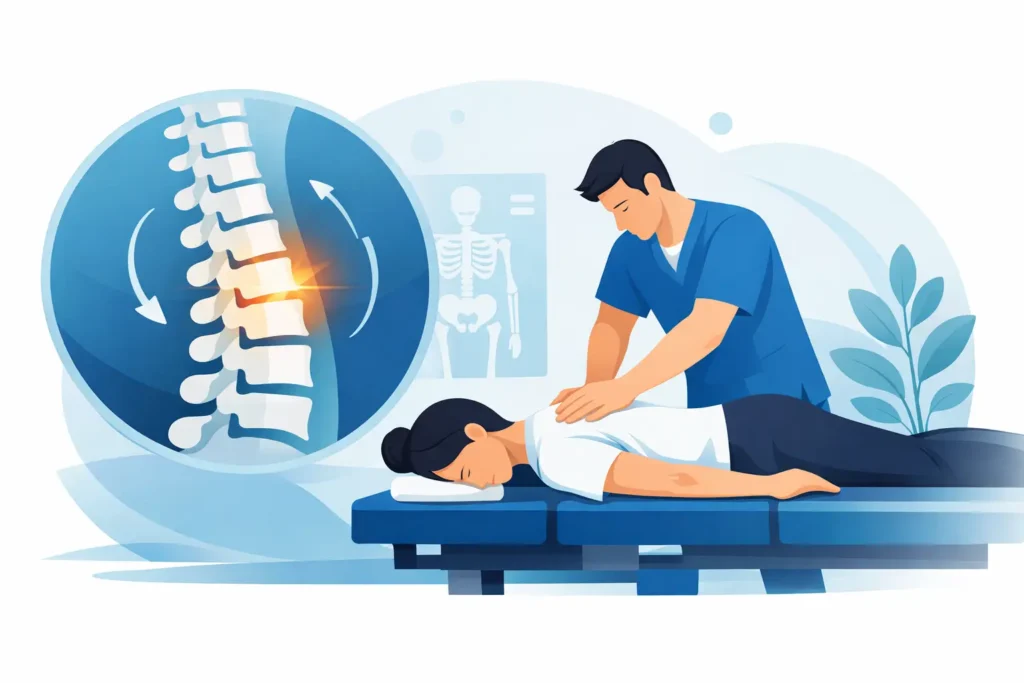
A stiff neck after a long workday, low back pain that keeps returning, headaches that seem to start at the base of the skull – these are the kinds of problems that lead many people to ask about spinal adjustment techniques. Most are not looking for jargon. They want to know what will actually help, what it will feel like, and whether the care will be tailored to their body rather than delivered as a one-size-fits-all routine.
That is exactly the right question to ask. Spinal adjustments are not a single move or a standard script. They are a group of hands-on methods used to improve motion in the joints of the spine, reduce irritation in surrounding tissues, and support healthier movement patterns. The best approach depends on your symptoms, your health history, how your posture and spine are functioning, and how your body responds over time.
What spinal adjustment techniques are meant to do
When a spinal joint is not moving well, the surrounding muscles often tighten, nearby tissues can become irritated, and normal movement starts to feel restricted or painful. In some cases, that limited motion contributes to neck pain, back pain, headaches, sciatica-like symptoms, or ongoing postural strain. Spinal adjustment techniques are designed to restore more normal joint motion and reduce mechanical stress.
That does not mean every painful condition is caused by a spinal joint alone. Sometimes muscle imbalance, disc irritation, workplace posture, pregnancy-related changes, old injuries, or a recent car accident are part of the picture. That is why a careful evaluation matters. Effective care starts with understanding the cause, not just reacting to the symptom.
For many patients, an adjustment is one part of a larger plan that may also include rehabilitation exercises, soft tissue work, home care guidance, ergonomic changes, or other supportive therapies. This whole-person approach usually leads to better results than trying to chase pain from visit to visit.
Common spinal adjustment techniques
There are several ways a chiropractor may adjust the spine. Each method has a purpose, and none is automatically the best for every patient.
Manual thrust adjustments
This is the technique many people picture first. A chiropractor uses their hands to deliver a quick, controlled force to a specific joint. The goal is precision, not force for its own sake. When done appropriately, this type of adjustment can help improve joint motion and reduce tension in the surrounding area.
Sometimes there is a popping sound, and sometimes there is not. That sound is not the measure of success. A good adjustment is judged by the quality of joint motion, how the tissues respond, and how the patient feels during and after care.
Low-force and instrument-assisted techniques
Some patients prefer a gentler approach, and sometimes the clinical situation calls for one. Instrument-assisted methods use a small handheld tool to apply a focused, low-force impulse to a targeted area. These techniques can be useful for patients who are sensitive to manual adjustments, older adults, people with significant muscle guarding, or those recovering from injury.
Low-force approaches can also be a good fit when the goal is to work around tenderness while still improving joint mechanics. Gentle does not mean less thoughtful or less effective. It means the method matches the patient.
Flexion-distraction and decompressive approaches
When disc-related symptoms, radiating pain, or certain types of low back discomfort are involved, a chiropractor may use a table-assisted technique that gently stretches and mobilizes the spine. This can reduce pressure, improve movement, and help calm irritated tissues.
These approaches are often considered when patients report symptoms that worsen with compression, prolonged sitting, or repeated bending. Again, it depends on the diagnosis. Not every case of back pain needs decompression, and not every patient with leg symptoms is a fit for the same method.
Mobilization instead of a traditional adjustment
In some situations, the right choice is not a quick thrust at all. Mobilization involves slower, repeated movements within a joint’s comfortable range. This can help reduce stiffness and improve movement without the setup used for a more traditional adjustment.
Mobilization may be especially appropriate for acute pain, high sensitivity, pregnancy-related discomfort, or patients who are simply more comfortable starting with a gentler style of care.
Why technique selection should be personalized
The most effective spinal adjustment techniques are the ones chosen for your body and your condition. That sounds simple, but it matters. Two people can both say, “My lower back hurts,” and need very different care.
One patient may have pain related to prolonged desk posture and poor core control. Another may be dealing with a recent lifting injury. Another may have pain during pregnancy because of changes in pelvic stability and posture. Another may be recovering from an auto accident with muscle guarding, inflammation, and limited tolerance for forceful treatment.
This is why a thorough exam should come first. A provider needs to look at posture, spinal movement, orthopedic findings, areas of tenderness, muscle tone, functional limitations, and any signs that point to a condition needing a modified approach or outside referral. Objective findings help shape treatment decisions and give a baseline for re-evaluation.
At Align Chiropractic and Wellness, that personalized process is central to care. The goal is not to force every patient into the same treatment style. It is to identify what is contributing to pain and dysfunction, then build a plan that supports both relief and long-term stability.
What spinal adjustment techniques can help with
Patients often seek chiropractic care for obvious reasons like neck pain and low back pain, but the effects of spinal dysfunction can show up in several ways. Reduced joint motion and poor posture can contribute to tension headaches, upper back tightness, shoulder blade discomfort, sciatic irritation, and recurring stiffness after work or exercise.
Spinal adjustment techniques may help when symptoms are linked to mechanical issues in the spine and surrounding joints. They are also commonly used as part of care for pregnancy-related back and pelvic discomfort, postural strain, and recovery after certain auto accident injuries.
That said, honest care includes recognizing limits. Adjustments are not a cure-all. If pain is driven by a non-musculoskeletal issue, or if there are warning signs that suggest a more serious condition, the right next step may be imaging, co-management, or referral. Good chiropractic care is patient-centered, not technique-centered.
What an adjustment usually feels like
One of the biggest concerns people have is whether an adjustment will hurt. In most cases, patients describe it as brief pressure or a quick movement followed by a sense of release, improved mobility, or reduced tension. If the area is already inflamed or irritated, some tenderness can occur, especially early in care. Mild soreness after treatment is also possible, similar to what some people feel after starting a new workout.
Comfort matters, and communication matters just as much. A chiropractor should explain what they are doing, why they are choosing a certain method, and what you may feel. If a patient is nervous, highly sensitive, pregnant, or dealing with acute pain, the technique can often be modified.
The right care plan should feel collaborative. You should not feel rushed, dismissed, or unsure why a specific method is being used.
Adjustments work better when supported by the right plan
For some patients, an adjustment brings noticeable relief quickly. For others, the deeper issue is not just joint restriction but the pattern that keeps recreating it. That may include weak stabilizing muscles, poor workstation setup, repetitive strain, stress-related tension, or movement habits developed after an old injury.
That is why the best results often come from combining spinal adjustment techniques with corrective exercises, postural rehab, home stretching, activity modification, and wellness guidance. If your spine moves better during a visit but your daily habits keep overloading the same tissues, improvement may not last.
Re-evaluations are also important. Your treatment plan should not stay static if your condition changes. As pain decreases and function improves, care often shifts toward strengthening, prevention, and maintaining healthier movement patterns.
Choosing care that fits your goals
If you are considering chiropractic treatment, it helps to look for a provider who takes time to assess thoroughly, explains findings clearly, and adapts care to your needs. Technique matters, but judgment matters more. The best chiropractor is not the one who uses the most methods. It is the one who knows when, why, and for whom each method makes sense.
Whether you are dealing with recurring neck pain, stubborn low back tension, headaches tied to posture, pregnancy discomfort, or symptoms after an accident, the right approach should feel specific to you. Care should address the immediate problem while also helping you move, function, and live with more confidence.
If you have been putting off treatment because you are unsure what an adjustment involves, start by asking questions. A thoughtful provider will welcome them. Relief often begins there – with a clear explanation, a careful examination, and a plan built around your body, your goals, and your long-term health.