
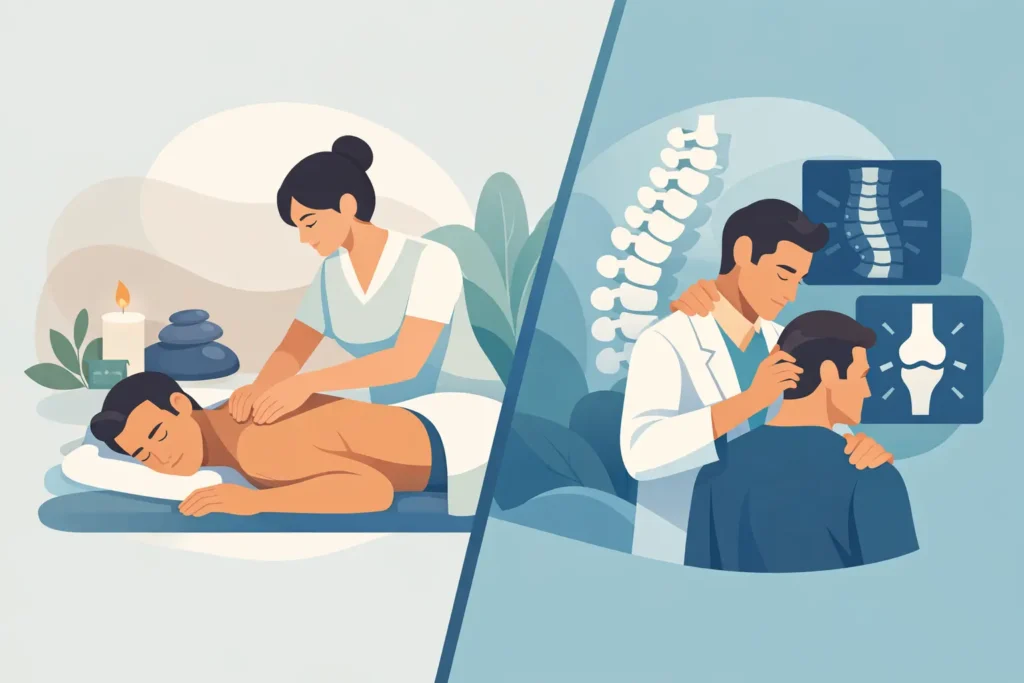
A tight neck after a week at your desk, low back pain that flares when you lift your child, or headaches that keep returning can all leave you asking the same question: massage vs chiropractic treatment – which one will actually help? Both can play a valuable role in feeling better, but they work differently. The right choice depends on what is driving your symptoms, how your body is moving, and what you want from care beyond temporary relief.
For many people, the best answer is not choosing one side forever. It is understanding what each approach is designed to address and using a personalized plan that supports recovery, movement, and long-term wellness.
Massage vs Chiropractic Treatment: The Core Difference
Massage therapy focuses primarily on muscles and other soft tissues. Through hands-on techniques, a massage therapist may help reduce muscle tension, improve circulation, and create a calming effect on the nervous system. It can feel especially helpful when your shoulders are tight, your legs are sore after activity, or stress has left your body feeling guarded and fatigued.
Chiropractic care focuses on how the spine, joints, muscles, and nervous system work together. A chiropractor evaluates posture, joint motion, movement patterns, and the areas where your body may be compensating. Treatment may include spinal or extremity adjustments, rehabilitation exercises, postural guidance, decompression, acupuncture, and practical at-home care recommendations, depending on your needs.
Put simply, massage often addresses the soft-tissue tension you feel, while chiropractic care assesses the structural and functional factors that may be contributing to that tension. If a restricted joint, poor posture, repetitive movement, or an old injury keeps causing your muscles to tighten, relief may be short-lived unless that underlying issue is also addressed.
When Massage May Be the Better Starting Point
Massage can be a great choice when your main concern is generalized muscle soreness, stress-related tension, or recovery after physical activity. Many people appreciate massage because it is relaxing, nurturing, and immediately soothing. It may also help you become more aware of where you hold tension during a demanding workday or while caring for a busy family.
For example, someone with tight upper trapezius muscles after hours of computer work may feel looser after massage. An active adult with sore calves and hamstrings after a long run may also benefit from soft-tissue work and recovery time.
Massage may be particularly useful as part of a wellness routine when there is no significant joint dysfunction, nerve irritation, or persistent movement limitation. However, recurring pain deserves a closer look. If your tightness returns quickly, spreads to another area, or starts limiting your daily activities, there may be more to consider than muscle tension alone.
When Chiropractic Care May Be a Better Fit
Chiropractic care may be a stronger starting point when pain is persistent, recurring, connected to posture, or affecting how you move. This includes common concerns such as neck pain, back pain, headaches, sciatica-like symptoms, stiffness after an auto accident, and discomfort during pregnancy.
A thorough chiropractic assessment looks beyond the location of pain. Low back discomfort, for instance, may be influenced by restricted hip movement, weak core muscles, prolonged sitting, poor lifting habits, or compensation from an old ankle or knee injury. Neck pain may involve forward-head posture, limited upper-back motion, stress-related muscle guarding, or ergonomic habits that place daily strain on the spine.
Rather than offering the same treatment to every patient, individualized chiropractic care starts with listening to your history, evaluating your movement, and identifying measurable findings. Regular re-evaluations can help show whether your care plan is producing meaningful changes in mobility, comfort, and function.
At Align Chiropractic and Wellness, care may include hands-on chiropractic adjustments alongside rehabilitation exercises and home-care instruction. The goal is not simply to help you get through the next few days with less pain. It is to help your body move, stabilize, and recover more effectively over time.
Can Massage and Chiropractic Work Together?
Yes. Massage and chiropractic care can complement one another very well when they are used with a clear purpose. Soft-tissue work may help reduce muscle guarding and make movement feel more comfortable. Chiropractic adjustments and rehabilitation can then address joint motion, posture, and the strength or control needed to maintain those improvements.
Consider a person who develops low back pain after months of sitting for work. Massage may ease the tight hip flexors, glutes, and lower-back muscles that have become overworked. Chiropractic care can assess whether the lumbar spine, pelvis, or hips are moving well and provide exercises that support a healthier sitting posture and stronger movement habits.
The order and frequency matter. Some people benefit from massage first because they are highly tense and sensitive to touch. Others need a chiropractic assessment first because the cause of their discomfort is unclear. A coordinated plan should reflect your symptoms, activity level, health history, and response to care.
What About Headaches, Sciatica, and Auto Injuries?
These situations are where a careful assessment is especially valuable. Headaches can be influenced by neck tension, jaw clenching, posture, sleep position, stress, or restricted movement in the upper back and neck. Massage may help relieve tension, but recurrent headaches should not be treated as a simple muscle problem without considering the bigger picture.
Sciatica-like pain can involve irritation along the sciatic nerve pathway, but the source is not always the same. Some people have pain linked to disc irritation, joint dysfunction, muscle tension, or movement patterns that place pressure on sensitive tissues. The right approach depends on your examination findings and symptoms, including whether there is numbness, tingling, weakness, or pain traveling down the leg.
After an auto accident, even a low-speed collision can leave the body dealing with stiffness, soft-tissue injury, headaches, and reduced range of motion. Symptoms may not appear fully on the first day. Massage can be useful during recovery, but an objective chiropractic evaluation can help document changes in motion, identify areas needing attention, and guide a structured plan for healing.
How to Choose the Right Care for Your Situation
Start by asking what you need most. If you want occasional relaxation or support for uncomplicated soreness, massage may be exactly what your body needs. If pain keeps returning, interferes with work, sleep, exercise, or family life, or seems connected to your posture and movement, chiropractic care can offer a more comprehensive starting point.
You do not have to wait until discomfort becomes severe. Early care can help address small movement restrictions and postural habits before they become larger limitations. A quality provider should explain what they find, discuss realistic goals, and give you clear ways to participate in your progress at home.
Your preferences matter, too. Some patients want a calm, restorative session to manage stress. Others are looking for a plan that includes adjustments, strengthening, ergonomic guidance, and regular progress checks. Neither goal is wrong. The key is choosing care that matches the reason your body is asking for help.
Safety and When to Seek Medical Attention
Massage and chiropractic care are generally non-invasive options, but they are not substitutes for urgent medical evaluation. Seek prompt medical attention for severe or worsening pain after a major injury, sudden weakness, loss of bowel or bladder control, numbness in the groin area, chest pain, unexplained fever, or a sudden severe headache unlike your usual symptoms.
Be open about your health history, medications, prior surgeries, pregnancy, recent accidents, and any new neurological symptoms. This information helps your provider determine whether massage, chiropractic treatment, another type of care, or a referral is most appropriate.
The most helpful next step is often a conversation and a thorough assessment. When you understand why your pain is happening, you can choose care with more confidence and build habits that support the way you want to live, work, move, and feel.