
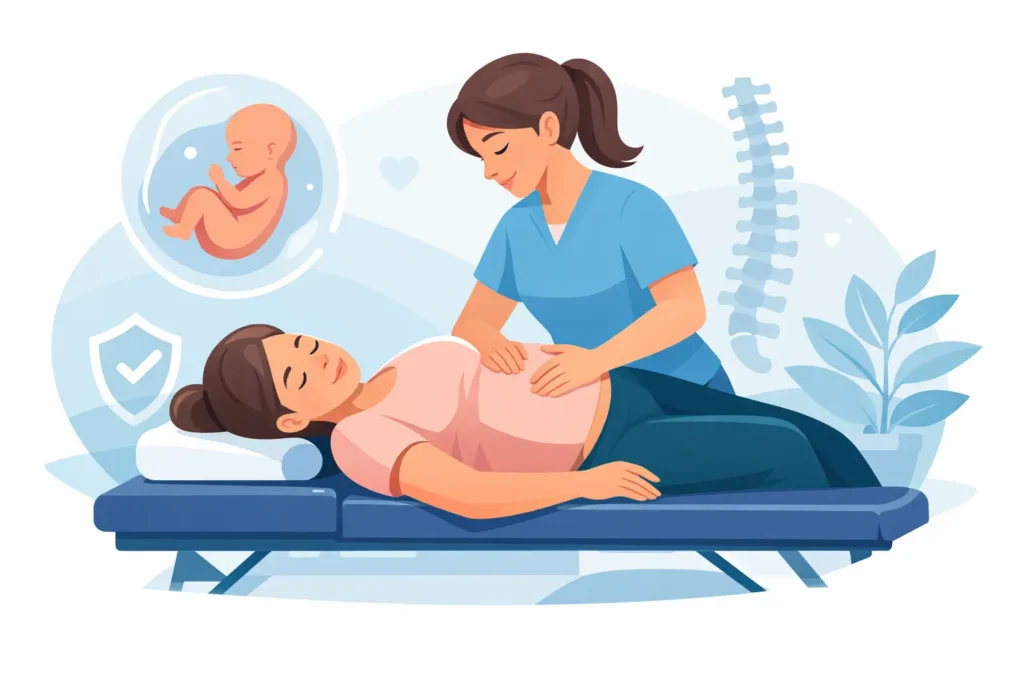
Pregnancy changes your body quickly, and not always comfortably. If your low back aches by the end of the day, your hips feel uneven when you walk, or turning in bed suddenly feels like a workout, it is reasonable to ask: is chiropractic safe during pregnancy?
For many pregnant patients, the answer is yes – when care is tailored to pregnancy, based on a proper assessment, and provided by a chiropractor trained to work with prenatal patients. Chiropractic care during pregnancy is generally focused on reducing mechanical stress, improving joint motion, supporting posture, and helping the body adapt to rapid physical change. That said, safety is never one-size-fits-all. The right care depends on your health history, your trimester, your symptoms, and whether there are any medical concerns that call for added caution.
Is chiropractic safe during pregnancy for most patients?
In a healthy, uncomplicated pregnancy, chiropractic care is commonly considered a safe, conservative option for musculoskeletal discomfort. Many pregnant women seek care for lower back pain, pelvic pain, mid-back tension, rib discomfort, neck pain, headaches, and sciatic-type symptoms. These issues are often mechanical. As the abdomen grows, the center of gravity shifts, posture changes, ligaments become more lax, and the pelvis and spine may move differently under load.
Prenatal chiropractic care is not the same as a standard visit for a non-pregnant patient. A thoughtful provider modifies positioning, technique, and treatment goals. Adjustments are typically gentler, tables may be adapted for comfort, and care plans are built around what your body is tolerating at that stage of pregnancy. The focus is not force for the sake of force. It is comfort, function, and better movement.
What often reassures patients most is this: good prenatal chiropractic care starts with listening. Before any treatment begins, your provider should review your symptoms, medical history, current trimester, prior pregnancies, activity level, and anything your OB-GYN or midwife has flagged.
Why pregnancy creates so much back, hip, and pelvic discomfort
Pregnancy places sustained demand on the musculoskeletal system. Hormonal shifts can increase ligament laxity, especially around the pelvis. The abdominal wall stretches. The rib cage may expand. The lumbar spine often takes on more curve as weight distribution changes. Even your gait can change as your body tries to stay balanced.
That is why discomfort during pregnancy is rarely about one isolated spot. A patient may feel low back pain, but the driver could involve pelvic imbalance, tight hip flexors, weak glutes, altered posture, or reduced thoracic mobility. This is where a whole-person approach matters. Looking only at the painful area can miss the broader pattern.
Chiropractic care can help by improving how joints move, reducing tension in overworked areas, and supporting better mechanics. In many cases, relief is not about “putting something back in place.” It is about helping the body move and adapt more efficiently.
What safe prenatal chiropractic care should look like
Safety during pregnancy comes down to assessment, modification, and communication. A chiropractor should evaluate posture, movement, pain patterns, and functional limitations before recommending care. They should also know when not to adjust, when to modify treatment, and when to refer back to your medical provider.
Treatment usually includes more than an adjustment. It may also involve soft tissue work, postural guidance, gentle mobility exercises, pelvic stabilization strategies, and simple home recommendations. Those pieces matter because pregnancy discomfort is often influenced by how you sit, sleep, walk, lift, and recover between visits.
Positioning is another important part of safety. As pregnancy progresses, lying flat for long periods may not be comfortable or appropriate for some patients. A prenatal-aware provider will use side-lying or specialized table setups when needed and will keep checking in throughout the visit.
At Align Chiropractic and Wellness, this kind of personalized care matters because no two pregnancies feel the same. A first-trimester patient with neck tension and headaches needs a different plan than a third-trimester patient dealing with pelvic pressure and sciatica.
When chiropractic may help during pregnancy
Many pregnant patients come in because daily life starts to feel harder than it should. Standing at work becomes tiring. Walking feels uneven. Sleeping is interrupted by hip pain. Getting up from the couch or rolling over in bed causes a sharp pull across the pelvis.
Chiropractic care may be helpful for lower back pain, sacroiliac joint pain, round-ligament related tension patterns, mid-back stiffness, rib irritation, neck pain, headaches, and sciatic-type symptoms caused by postural or mechanical stress. It can also support patients who simply feel that their body is not moving well as pregnancy progresses.
The goal is not to treat pregnancy itself. It is to support the musculoskeletal system through pregnancy so you can move with less strain and more confidence.
When extra caution is needed
This is where nuance matters. Even if someone asks, “is chiropractic safe during pregnancy,” the safest answer is sometimes, “it depends on your situation.” Certain symptoms and conditions require medical clearance, co-management, or a pause in treatment.
If you are experiencing vaginal bleeding, severe swelling, sudden severe headache, dizziness, abdominal pain, contractions, fluid leakage, decreased fetal movement, fever, or signs of preeclampsia, that is not a routine chiropractic visit. Those symptoms need prompt medical evaluation.
There are also pregnancy complications and high-risk situations where a chiropractor should proceed only with appropriate communication and clinical judgment. A responsible provider does not try to push through red flags. They work as part of your care team.
This is one of the clearest signs of a safe practice: they know their lane. They assess carefully, explain clearly, and refer when needed.
Common concerns about adjustments during pregnancy
Many patients worry that an adjustment could somehow harm the baby. In normal prenatal chiropractic care, treatment is directed at the mother’s joints, muscles, and movement patterns, not the baby. Techniques are chosen to reduce strain and improve comfort, and they are modified for the pregnant body.
Another concern is whether the “popping” sound means something forceful happened. That sound, when it occurs, is simply gas releasing from a joint. It is not a sign that treatment was aggressive. In fact, some prenatal techniques involve little to no audible release at all.
Patients also ask whether care is safe throughout all three trimesters. In many uncomplicated pregnancies, yes, with proper modification. But what is comfortable in the first trimester may not be ideal in the third, and treatment should evolve as your body changes.
Choosing the right chiropractor during pregnancy
If you are considering care, the best question is not only “is chiropractic safe during pregnancy,” but “is this chiropractor equipped to treat pregnant patients safely?” That is a more useful standard.
Look for a provider who takes a detailed history, performs an exam, explains findings in plain language, and personalizes treatment instead of using the same approach for everyone. You want someone who is comfortable modifying technique, using pregnancy-appropriate positioning, and incorporating rehab or home care when needed.
It also helps to choose a clinic that values re-evaluation. Pregnancy changes quickly. A treatment plan should reflect that. What helps at 20 weeks may need to be adjusted at 32 weeks.
What results can you realistically expect?
Chiropractic care is not magic, and pregnant patients appreciate honesty. Some people feel noticeable relief quickly, especially when pain is clearly tied to joint restriction or muscular tension. Others improve more gradually because their discomfort is being driven by several factors at once, including sleep changes, work demands, past injuries, and the normal physical stress of pregnancy.
The best outcomes often come from combining in-office care with practical support at home. That may include stretching, positional advice, pelvic support strategies, changes to workstation setup, or simple exercises to improve stability.
The goal is progress, not perfection. Pregnancy is dynamic. A good care plan helps you stay more comfortable and functional as your body keeps changing.
If you are dealing with back pain, hip pain, pelvic tension, or sciatic discomfort and wondering whether conservative care is a good fit, the next best step is a personalized evaluation. The right provider will help you understand what is causing your symptoms, whether chiropractic is appropriate for you, and how to move through pregnancy with more comfort and confidence.