
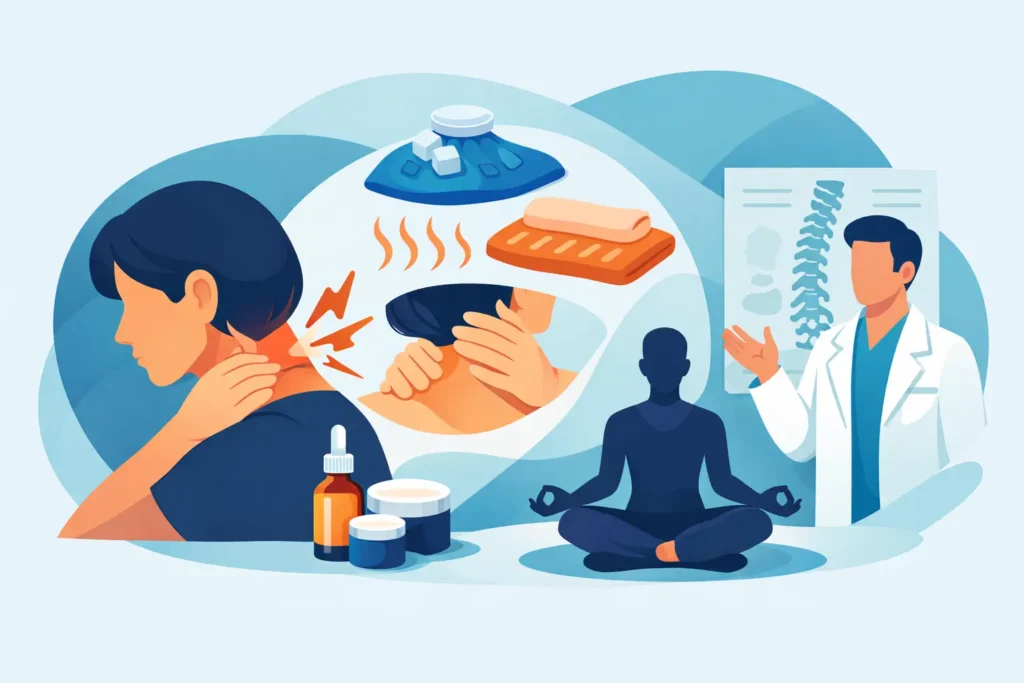
A sore neck the day after a car accident is easy to brush off. Many people assume it will pass with a little rest. But whiplash can affect more than the neck alone, and the best remedies for whiplash usually involve more than waiting it out.
Whiplash happens when the head is suddenly forced forward and backward, overstretching muscles, ligaments, joints, and other soft tissues. Rear-end collisions are a common cause, but sports injuries, falls, and other sudden impacts can do it too. Some people feel pain immediately. Others do not notice the full extent of symptoms until hours or even days later.
What whiplash can feel like
Whiplash symptoms vary from person to person. Neck pain and stiffness are common, but many people also notice reduced range of motion, shoulder tension, upper back pain, headaches, jaw discomfort, dizziness, or tingling into the arm. In some cases, poor sleep, fatigue, and trouble concentrating show up as well.
That range matters because whiplash is not always a simple muscle strain. The force of the injury can irritate spinal joints, disturb normal posture, and create patterns of compensation through the shoulders and upper back. If care only focuses on covering up pain, the underlying problem may linger.
The best remedies for whiplash start with the right timing
One of the biggest mistakes after whiplash is doing too much too soon, or doing too little for too long. The first few days usually call for calming the area down, reducing irritation, and avoiding movements that sharply increase pain. After that early phase, gentle movement and guided care are often more helpful than extended rest.
Ice can help during the first 24 to 72 hours, especially if there is fresh inflammation and soreness. Applying it in short sessions can reduce pain and help limit swelling. Later, some people respond better to heat, especially when muscle tightness becomes the bigger issue. It depends on where you are in the healing process and how your body responds.
Over-the-counter pain relief may also help some patients get through the initial stage, but medication does not restore joint motion, improve posture, or retrain injured tissues. It can be one piece of the picture, not the whole plan.
Gentle movement matters
Years ago, people were often told to rest completely or wear a neck collar for long periods. That approach can backfire. Too much immobilization may lead to more stiffness, weaker support muscles, and a slower return to normal function.
Unless a doctor has told you otherwise, gentle range-of-motion work is often part of recovery. Small, controlled movements can help keep the neck from becoming more restricted. The key is not forcing it. Pain is useful information. Sharp or worsening symptoms are a sign to stop and get evaluated.
Why an evaluation matters more than guessing
The best remedies for whiplash are different for a mild case than for a more complex injury. That is why a proper assessment matters. A good exam looks at more than pain level alone. It should consider posture, range of motion, muscle tension, joint restriction, nerve irritation, headache patterns, and how the injury is affecting daily life.
Some symptoms need prompt medical attention. Severe pain, loss of strength, numbness that is progressing, major dizziness, vision changes, or signs of concussion should not be ignored. The same goes for symptoms that are not improving or are getting worse.
An objective evaluation helps determine whether the main issue is muscle guarding, joint dysfunction, nerve irritation, or a combination of factors. Once that is clear, care can be tailored instead of generic.
Chiropractic care can help restore motion
For many patients, chiropractic care is one of the most effective remedies for whiplash because it addresses how the injury affects movement and alignment, not just pain signals. After a collision or sudden impact, spinal joints may stop moving normally. That loss of motion can lead to muscle tension, headaches, and ongoing stiffness.
A chiropractor can assess where motion is limited and use appropriate hands-on care to improve mobility. Depending on the patient and the stage of healing, that may include gentle chiropractic adjustments, soft tissue work, or other supportive techniques. The goal is to help the body move better so healing can happen with less strain.
This is not a one-size-fits-all process. Early care may need to be very gentle. As inflammation settles, treatment can progress based on how the body is responding. That personalized approach is especially important after an auto accident, where symptoms often extend beyond the neck itself.
Rehab exercises help prevent lingering problems
Pain relief is only part of recovery. One reason whiplash can turn into a long-term problem is that the muscles that support posture and stabilize the neck do not automatically return to normal. Even when pain starts to fade, weakness, poor movement patterns, and guarding can remain.
That is where targeted rehabilitation matters. Specific exercises can help restore strength, coordination, and endurance in the neck, shoulders, and upper back. These are not random stretches pulled from the internet. The right plan depends on your posture, your symptoms, and how your body compensates after injury.
Home exercises are especially valuable because recovery happens between visits too. A clear, practical routine gives patients something active they can do to support healing instead of feeling stuck waiting for pain to disappear.
Posture plays a bigger role than most people think
After whiplash, many people begin protecting the injured area without realizing it. They round their shoulders, push the head forward, or hold tension through the jaw and upper traps. That pattern can keep stress on irritated tissues and fuel ongoing headaches and neck tightness.
Postural retraining helps reduce that cycle. When the spine and surrounding muscles are working more efficiently, there is often less strain on healing tissues. Small changes in workstation setup, driving posture, sleep position, and movement habits can make a meaningful difference.
Acupuncture and soft tissue care can calm the system
When muscles are tight, irritated, and protective, hands-on soft tissue work or acupuncture may be helpful additions to care. These approaches can support circulation, reduce muscle guarding, and help calm the nervous system.
Some patients feel mostly stiff and achy. Others describe a constant sense of tension that will not let up. In those cases, helping the body shift out of a pain-and-guarding pattern can be an important part of progress. This is one reason integrative care often works well for whiplash. Different therapies can support different parts of the healing process.
Lifestyle factors can speed recovery or slow it down
Healing is not just about what happens in the treatment room. Sleep quality, stress levels, hydration, and nutrition all influence recovery. When the body is under stress, muscles tend to stay tighter, pain sensitivity may increase, and healing can feel slower.
That does not mean patients need a perfect routine to get better. It means recovery usually improves when care looks at the whole person. Better sleep habits, simple anti-inflammatory nutrition choices, and reasonable activity modifications can all support the process.
When symptoms stick around
Some whiplash cases resolve fairly quickly. Others become frustratingly persistent. If pain, headaches, or stiffness are still hanging on weeks later, it is worth asking why. Sometimes the issue is untreated joint dysfunction. Sometimes it is deconditioning, postural strain, or an incomplete rehab plan.
Chronic symptoms do not always mean severe damage, but they do mean the body may need a more complete strategy. Regular re-evaluations are valuable here. They show what is improving, what is not, and whether the treatment plan needs to change.
Finding the best remedies for whiplash for your case
The best remedies for whiplash are usually a combination of the right diagnosis, the right timing, and the right support. Early home care can help settle things down. Chiropractic treatment can restore motion. Rehab exercises can rebuild stability. Acupuncture and soft tissue therapies can reduce guarding and tension. Lifestyle support can help the body recover more fully.
What works best depends on the severity of the injury, how long symptoms have been present, and what structures are involved. That is why personalized care matters. At Align Chiropractic and Wellness, the goal is not simply to help patients feel better for a day or two. It is to identify what the injury changed, support healing from multiple angles, and help patients return to daily life with more confidence and less pain.
If your neck still does not feel right after an accident, do not assume time alone will fix it. A careful evaluation and a focused plan can make recovery feel much more manageable, and getting the right help early often gives the body its best chance to heal well.