
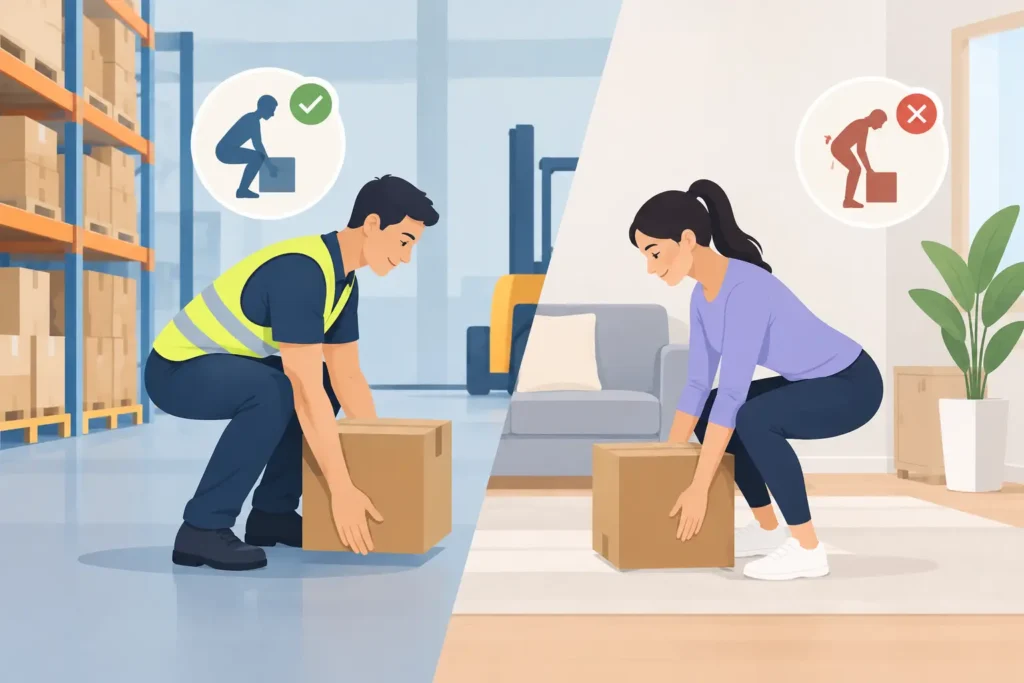
A laundry basket, a toddler, a case of water, or a box moved during a busy workday can trigger pain in seconds. Learning how to avoid lifting injuries is not just about remembering to bend your knees. It means preparing your body, using efficient movement patterns, and recognizing when a load or task exceeds what your body can safely handle.
Lifting injuries often affect the low back, neck, shoulders, hips, and wrists. They can happen after one awkward lift, but they also build gradually when repetitive strain, poor posture, muscle fatigue, and limited mobility are ignored. The encouraging news is that many lifting-related injuries are preventable with a few consistent habits.
Start With the Load, Not the Lift
Before you reach down, pause for a moment. Look at the object, consider its weight, and decide where it needs to go. A rushed lift is more likely to become a twisting lift, an overhead reach, or a sudden pull from an awkward position.
Test the weight by gently nudging or lifting one edge. If it is heavier, larger, or more unstable than expected, use a cart, a dolly, or ask someone to help. This is especially true for furniture, bulky deliveries, bags of soil, equipment, and boxes without handles. Getting help is not a sign of weakness. It is a practical way to protect your spine and joints.
The path matters, too. Clear tripping hazards, open doors in advance, and identify where you will set the item down. If you have to carry something a distance, plan a stopping point rather than pushing through fatigue.
Use Body Mechanics That Protect Your Spine
Your spine is designed to move, but it is more vulnerable when it is bent, twisted, and loaded at the same time. Good lifting mechanics reduce that stress by keeping the load close and allowing your hips and legs to share the work.
Stand close to the object with your feet about shoulder-width apart. Position one foot slightly ahead of the other if that feels more stable. Bend at your hips and knees, rather than folding forward from your waist, and gently tighten your abdominal muscles as if preparing for a light cough.
Keep your chest open, your back in a comfortable neutral position, and the object close to your body. Then push through your legs to stand. There is no need to force an exaggerated arch in your low back. The goal is controlled, balanced movement – not stiffness.
Avoid twisting while carrying a load. If you need to turn, move your feet and pivot your entire body. This small adjustment can significantly reduce rotational stress through the low back, hips, and knees.
When setting an item down, use the same care you used to pick it up. Bend your knees and hips, keep the object close, and avoid reaching forward at the last second. Many people feel fine during the lift but strain themselves while lowering or placing the item on the floor.
How to Avoid Lifting Injuries When the Object Is Awkward
Not every item can be lifted perfectly. A child may shift in your arms, a grocery bag may pull to one side, or a box may be too wide to hold close to your torso. In these situations, the safest option may be to change the task rather than trying harder.
Break a heavy load into smaller loads when possible. Use two grocery trips instead of one, divide a box of books, or move items individually before lifting the container. For objects stored on the floor, consider raising them onto a low bench or sturdy surface first if that gives you a better grip and position.
For items that must be moved with another person, communicate before lifting. Agree on the route, the destination, and a simple count before you begin. One person lifting before the other is ready can create a sudden, uneven pull through the back and shoulders.
Be especially cautious with lifting from a low position, from inside a car trunk, or from a deep shelf. These tasks often place the load farther from your body, increasing the demand on the low back. Step as close as you can, reposition the item first, and avoid reaching and pulling in one motion.
Build a Body That Is Ready for Everyday Lifting
Proper technique is essential, but your daily capacity matters as well. Tight hips, weak glutes, poor core endurance, and limited shoulder mobility can make ordinary tasks feel harder than they should. That does not mean you need an intense workout routine before you can safely carry groceries. It means gradual conditioning can make your body more resilient.
Walking, strength training, and simple mobility work can all support better lifting tolerance. Exercises that strengthen the hips, legs, upper back, and abdominal muscles are particularly useful because these areas help stabilize the body while you carry, push, pull, and bend.
Consistency matters more than intensity. A few sessions each week of appropriate movement can be more helpful than a demanding routine that leaves you sore, exhausted, or discouraged. If you are returning to activity after pain, pregnancy, an accident, or a long period of inactivity, individualized guidance can help you progress safely.
Posture also plays a role. Spending hours at a desk or looking down at a phone can leave the neck, shoulders, and upper back stiff before you ever attempt a lift. Brief movement breaks during the day can reduce that buildup of tension. Stand up, walk, gently move your shoulders, and change positions before your body starts to feel locked up.
Know When Not to Push Through Pain
Muscle effort during a lift can be normal. Sharp pain, tingling, numbness, weakness, or pain that travels into an arm or leg is different. Stop the activity if you feel those symptoms. Continuing to lift through them can turn a minor strain into a longer recovery.
Pay attention to warning signs that occur outside the moment of lifting as well. Recurrent low back tightness, frequent neck tension, pain when bending, reduced range of motion, or discomfort that returns every time you do yard work may point to an underlying movement or postural issue worth evaluating.
If pain follows a fall, auto accident, or a sudden lifting incident, an assessment can help identify what is contributing to your symptoms. Objective testing and a personalized care plan may include chiropractic care, rehabilitation exercises, home-care instruction, or other supportive therapies based on your needs and goals.
Make Safer Lifting a Daily Habit
The best technique is the one you can use consistently when life is busy. Keep frequently used items between knee and chest height when possible. Store heavy cookware, pet food, and household supplies where you do not need to repeatedly bend, twist, or reach overhead. At work, adjust your setup or ask about equipment that reduces repetitive strain.
It also helps to respect fatigue. Your form is more likely to slip at the end of a long shift, after a workout, or when you are trying to finish a project quickly. Take a brief break, hydrate, and reassess the task. A few extra minutes is far less disruptive than weeks of back or shoulder pain.
At Align Chiropractic and Wellness, we believe prevention begins with understanding how your body moves and what it needs to function well. If lifting discomfort is limiting your work, family time, or favorite activities, a personalized evaluation can help you identify the root causes and create a clear path toward stronger, more confident movement.
Your body does a great deal for you every day. Give it the time, support, and smart movement habits it needs before the next heavy lift demands more than it is ready to give.