
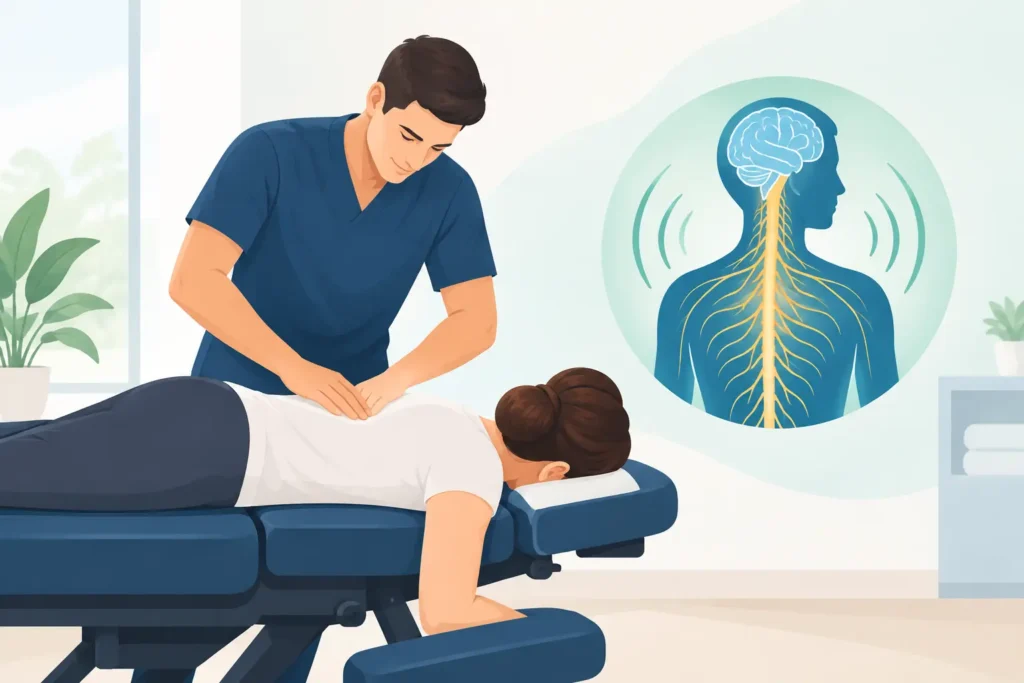
A tight neck before a deadline, a low back that aches after a long commute, or headaches that appear at the end of a demanding week can feel like separate problems. Often, they are connected by the same pattern: a body that has been bracing, compensating, and staying on alert for too long. Understanding how chiropractic reduces nervous system stress begins with recognizing that your spine, muscles, movement patterns, and stress response continually influence one another.
At Align Chiropractic and Wellness, care is designed to look beyond the location of pain. A thorough assessment helps identify the postural strain, joint restriction, muscle tension, injury history, and daily habits that may be keeping your body in a guarded state. The goal is not simply to chase symptoms. It is to help your body move, recover, and function with less strain.
Your Nervous System and Physical Stress
Your nervous system constantly gathers information from your body and surroundings. It monitors movement, position, pressure, discomfort, and potential threats, then helps coordinate an appropriate response. When you are under pressure at work, sleeping poorly, recovering from an injury, or sitting in the same position for hours, that response can become more intense and persistent.
Stress is not always emotional. Physical stress can include a forward-head posture at a computer, repetitive lifting, a previous auto accident, pregnancy-related changes, an old sports injury, or even prolonged inactivity. These demands can contribute to stiff joints, overworked muscles, and altered movement patterns. In turn, ongoing discomfort may make the nervous system more protective, causing muscles to tighten and movement to feel more difficult.
This does not mean every symptom is caused by spinal misalignment, nor does chiropractic replace medical or mental health care when those services are needed. Stress has many causes, including medical conditions, anxiety, trauma, sleep concerns, and lifestyle demands. Chiropractic care can be a valuable part of a broader wellness plan when musculoskeletal tension, pain, and reduced movement are contributing to how stressed your body feels.
How Chiropractic Reduces Nervous System Stress Through Movement
Chiropractic adjustments are hands-on techniques used to address restricted or poorly moving joints in the spine and extremities. When a joint is not moving well, nearby muscles often work harder to stabilize the area. That extra effort can create soreness, stiffness, and a sense that your body is always holding tension.
By improving joint motion where appropriate, an adjustment may help reduce mechanical irritation and make movement feel easier. Many patients describe feeling less tight or more mobile after care. That change can matter because comfortable, confident movement sends different input to the nervous system than painful, guarded movement.
The effect is not identical for everyone. Some people notice a meaningful change early in care, especially after a recent strain or long period of postural stress. Others need a more gradual plan that combines adjustments with rehabilitation exercises, soft tissue support, activity changes, and home care. The right approach depends on your condition, health history, goals, and how your body responds over time.
Less Guarding Can Support Better Recovery
Muscle guarding is a protective response. After pain, injury, or repeated strain, the body may tighten muscles around an area to limit movement. In the short term, this can be useful. When guarding remains long after the original problem, however, it may contribute to stiffness, fatigue, reduced range of motion, and recurring discomfort.
Chiropractic care can help address the mechanical factors that encourage this cycle. A personalized plan may include spinal or extremity adjustments, postural rehabilitation, spinal decompression when clinically appropriate, and specific home exercises. As mobility and strength improve, the body may not need to rely as heavily on constant muscular tension for protection.
This is one reason care should be individualized. For one patient, the main issue may be a stiff upper back and forward-head posture related to desk work. For another, it may be pelvic and low-back discomfort during pregnancy, a lingering whiplash pattern after an accident, or sciatic pain that affects walking and sleep. A careful evaluation helps determine which tissues and movement patterns need attention.
The Role of Posture, Pain, and Daily Habits
Posture is not about holding one rigid, perfect position all day. Bodies are designed to move. The problem is usually spending too much time in one position, particularly when that position loads the neck, shoulders, and low back in a way your body cannot comfortably tolerate.
A screen that is too low, hours spent looking down at a phone, driving, carrying a child on one hip, or lifting with poor mechanics can all add up. These habits may not cause immediate pain, but over time they can increase physical stress and reduce movement options. When discomfort becomes routine, sleep, concentration, mood, and activity levels can suffer.
Chiropractic care is most effective when it is paired with practical changes outside the office. That may mean learning a few mobility exercises, adjusting your workstation, taking brief movement breaks, improving lifting mechanics, or building more supportive sleep habits. Nutrition guidance and acupuncture may also be considered as part of an integrative plan when they fit a patient’s needs and goals.
Small changes are often more sustainable than an unrealistic overhaul. A two-minute movement break several times a day may be more helpful than promising yourself an intense workout that never happens. The same is true for home exercises: the best plan is one you can consistently perform and that is progressed as your function improves.
Why Objective Assessment and Re-Evaluation Matter
It is easy to normalize pain or stress when it has been present for months. You may assume your headaches are just part of a busy schedule or that your low-back tension is simply the cost of getting older. An assessment creates a clearer starting point by looking at areas such as spinal mobility, posture, range of motion, muscle balance, functional movement, and symptom patterns.
Those findings help guide care rather than relying on a one-size-fits-all approach. They also provide a way to measure progress. Regular re-evaluations can show whether movement is improving, whether symptoms are changing, and whether your care plan needs to be adjusted.
This matters because relief alone is not always the same as recovery. If pain decreases but the underlying movement pattern, weakness, or daily stressor remains unchanged, symptoms may return. A care plan focused on both short-term comfort and long-term function can give you a better chance of maintaining progress.
When Chiropractic May Be a Helpful Part of Your Plan
Chiropractic may be worth considering if you have persistent neck or back tension, posture-related discomfort, recurring headaches, reduced mobility, sciatica, pregnancy discomfort, or musculoskeletal symptoms after an auto accident. It can also be helpful for people who notice that physical discomfort makes it harder to sleep, exercise, focus, or stay active with their families.
A good chiropractic visit should include listening. Your provider should ask about your symptoms, health history, daily routines, and goals, then explain recommendations in clear language. If your symptoms suggest that imaging, medical evaluation, or another type of care is needed, the appropriate next step may be a referral rather than an adjustment.
If you are feeling worn down by persistent pain, do not assume you have to push through it. A personalized evaluation can help you understand what your body may be compensating for and what practical steps could help you feel more at ease in your movement and your day.