
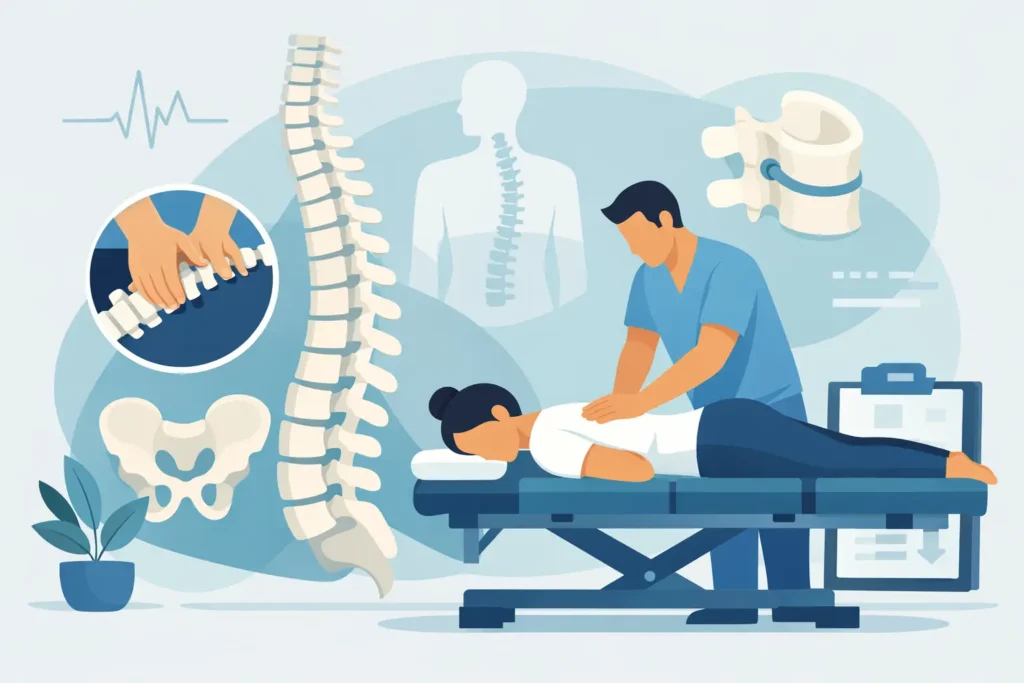
That stiff neck that keeps returning after a long workday, the low back pain that flares when you pick up your child, the headaches that seem tied to stress and posture – these are the kinds of problems that often bring people searching for a guide to spinal adjustments. Most patients are not looking for hype. They want clear answers, a safe plan, and a provider who will explain what is happening in their body and what can actually help.
What spinal adjustments are and what they do
A spinal adjustment is a hands-on technique used to improve motion in a joint that is not moving well. When spinal joints become restricted, irritated, or overloaded, nearby muscles often tighten, posture can change, and the nervous system may stay in a more stressed state. Over time, that can contribute to neck pain, back pain, headaches, stiffness, and movement patterns that keep the problem going.
The goal of an adjustment is not simply to make a popping sound. The real purpose is to restore healthier joint motion, reduce mechanical stress, and help the body move more comfortably. For some patients, this leads to noticeable pain relief right away. For others, especially those with long-standing postural strain or injury, the change is more gradual and works best as part of a broader care plan.
That broader view matters. A well-done adjustment can be powerful, but it is rarely the whole story. If poor workstation posture, weak stabilizing muscles, pregnancy-related changes, a recent auto accident, or repeated lifting patterns are part of the problem, those factors need attention too.
A guide to spinal adjustments starts with the evaluation
Before any treatment, the most important step is a thorough assessment. Good chiropractic care should feel personalized from the start. That means reviewing your symptoms, health history, daily activities, past injuries, and goals. It also means looking at posture, spinal movement, muscle balance, orthopedic findings, and neurological function.
This is where care becomes more precise. Two people can both say, “My back hurts,” but need very different approaches. One may have irritation from prolonged sitting and poor hip mobility. Another may be dealing with disc-related pain, sciatica, or compensation after a car accident. The adjustment itself may be similar in concept, but the treatment plan should reflect the cause, not just the symptom.
Objective findings also help track progress. Re-evaluations matter because your body changes as care progresses. A plan that fits week one may need to be updated by week four. That is one reason individualized care tends to produce better long-term results than a one-size-fits-all approach.
What an adjustment feels like
Many first-time patients are nervous about the unknown. That is understandable. In most cases, a spinal adjustment is quick and controlled. The chiropractor positions the body carefully and applies a specific force to a targeted joint. Sometimes there is a popping or cracking sound, which is simply gas releasing from the joint. Sometimes there is no sound at all.
Most patients describe the experience as a sense of pressure followed by relief, increased mobility, or less tension. Some techniques are more manual and direct, while others are gentler and use lighter force. The right method depends on your age, comfort level, health history, and condition.
If you are pregnant, recovering from an accident, feeling highly inflamed, or simply prefer a gentler style of care, there are ways to modify treatment. This is one of the biggest misconceptions about chiropractic care – people assume there is only one type of adjustment. In reality, technique selection should match the patient.
Who may benefit from spinal adjustments
Spinal adjustments are commonly used for patients dealing with neck pain, back pain, reduced mobility, tension headaches, posture-related strain, and certain types of radiating discomfort such as sciatica. They can also be helpful for people whose jobs involve long hours at a desk, repetitive movement, heavy lifting, or a lot of driving.
Patients often seek care during pregnancy when changing posture, ligament laxity, and added pressure on the low back and pelvis create discomfort. Others come in after an auto accident, where even a relatively minor collision can leave lasting stiffness, muscle guarding, and spinal irritation.
That said, not every painful condition should be adjusted right away, and not every patient is a candidate for every technique. Sometimes inflammation needs to calm down first. Sometimes imaging, co-management, or another type of conservative treatment is appropriate. Honest providers do not force every case into the same treatment model.
Benefits, limits, and realistic expectations
A practical guide to spinal adjustments should be honest about both benefits and limitations. Chiropractic adjustments can help reduce pain, improve mobility, support better posture, and make it easier for muscles and rehab exercises to work the way they should. Many patients also report better body awareness and less day-to-day tension.
Still, results vary. If your pain is new and mostly mechanical, relief may come quickly. If you have years of postural stress, muscle imbalance, disc irritation, or recurring flare-ups, you may need a series of visits along with exercises and home-care changes. The body often improves in stages.
This is where expectations matter. An adjustment can create an important shift, but lasting improvement usually comes from combining treatment with corrective exercise, movement changes, and regular reassessment. If the underlying habits never change, symptoms often return.
Are spinal adjustments safe?
For the right patient, spinal adjustments are generally considered a safe, non-invasive treatment option when performed by a qualified chiropractor. As with any healthcare service, safety depends on proper screening, technique selection, and clinical judgment.
Some patients feel mild soreness, fatigue, or temporary stiffness after an adjustment, especially early in care or after treatment to an area that has been very restricted. This usually resolves quickly. Serious complications are rare, but they are part of why a careful history and examination are essential.
You should always tell your provider about prior surgeries, osteoporosis, recent trauma, numbness, progressive weakness, changes in bowel or bladder function, unexplained weight loss, fever, or any major medical diagnosis. These details help determine whether chiropractic care is appropriate and how treatment should be adapted.
Why adjustments often work better with other therapies
At a whole-person clinic, spinal adjustments are often one piece of a more complete strategy. If a patient gets temporary relief but the problem keeps returning, the next question is why. Is the spine under constant stress from poor posture? Are weak stabilizers forcing other muscles to overwork? Is inflammation being aggravated by sleep position, stress, or repetitive activities?
That is why many patients do best when adjustments are combined with postural rehabilitation, spinal decompression when indicated, extremity work, home exercises, acupuncture, or lifestyle support such as nutrition and recovery guidance. The point is not to pile on services. It is to build a plan that fits the person.
At Align Chiropractic and Wellness, that patient-centered approach is central to care. Treatment is guided by findings, adjusted over time, and supported with practical recommendations you can use at home so progress continues between visits.
How to know if it is time to schedule an evaluation
If pain is interfering with sleep, work, exercise, parenting, or your ability to get through the day comfortably, it is worth getting assessed. The same goes for recurring headaches, sciatica, post-accident stiffness, persistent neck tension, or a posture problem that seems to be getting worse instead of better.
You do not need to wait until symptoms become severe. In many cases, earlier care is simpler care. Small restrictions and movement problems are often easier to correct before they turn into a longer cycle of compensation and inflammation.
The best next step is not guessing whether you need an adjustment. It is getting a clear evaluation from a provider who listens, explains what they find, and maps out a plan that makes sense for your body and your goals. Relief matters, but so does staying well enough to keep doing the things that matter to you.