
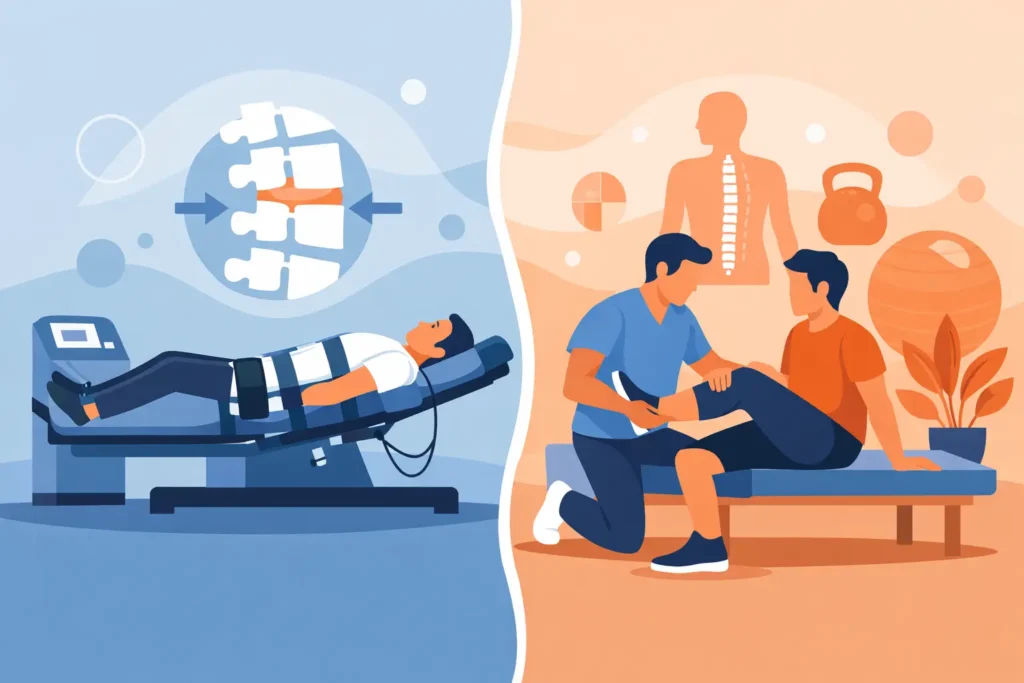
A painful trip from your desk chair to the car, numbness down one leg, or a neck that will not turn comfortably can make every treatment option sound urgent. When comparing decompression versus physical therapy, the better question is not which treatment is universally best. It is which approach fits the source of your symptoms, your exam findings, and the activities you want to return to.
Both can be valuable parts of conservative care for back and neck conditions. They work differently, however. Spinal decompression is a targeted treatment intended to reduce pressure and improve motion in specific areas of the spine. Physical therapy generally emphasizes movement, strength, flexibility, and function. For many people, the most meaningful progress comes from a personalized plan that may include elements of both.
Decompression Versus Physical Therapy: The Core Difference
Spinal decompression is a non-surgical therapy that uses controlled traction to gently stretch the spine. Depending on the technique and the area being treated, this may create small changes in pressure within spinal discs and help reduce stress on irritated spinal structures. The goal is not to force a disc back into place. Rather, it is to create a more favorable environment for movement, comfort, and recovery when disc-related or nerve-related symptoms are present.
Physical therapy is a broader category of rehabilitation. A physical therapist evaluates how you move and builds a program that may include hands-on treatment, therapeutic exercise, balance work, mobility training, education, and activity modification. The focus is often on restoring strength, confidence, and everyday function after pain, injury, surgery, or prolonged inactivity.
In a chiropractic wellness setting, rehabilitation exercises and home-care instruction can serve similar functional goals. Your care plan may include spinal adjustments, postural rehabilitation, decompression, and guided exercises based on what your assessment shows. The right combination should always be driven by your condition, not by a one-size-fits-all protocol.
When Spinal Decompression May Be Considered
Decompression may be considered when symptoms suggest that a spinal disc or nearby nerve is under stress. A person with low back pain that travels into the buttock, thigh, calf, or foot may have sciatica-like symptoms. Others notice tingling, numbness, burning, or pain that increases with sitting, bending, coughing, or certain positions. In the neck, similar irritation can lead to pain that travels into the shoulder, arm, or hand.
A careful exam matters because not every radiating symptom has the same cause. Postural strain, joint restriction, muscle tension, hip dysfunction, and other concerns can create overlapping patterns of discomfort. At Align Chiropractic and Wellness, objective assessments and regular re-evaluations help guide whether decompression is appropriate and whether the plan is producing meaningful change.
Decompression is usually delivered as a series of sessions rather than a single treatment. Some patients notice relief early, while others improve more gradually as inflammation settles and their body adapts to better movement habits. It is often paired with appropriate exercise, posture guidance, and daily activity changes so that the spine is not repeatedly exposed to the same aggravating forces.
What decompression does not replace
Decompression can help address a specific mechanical component of pain, but it does not automatically rebuild strength, improve lifting mechanics, or correct the habits that contribute to recurring flare-ups. If weak trunk muscles, limited hip mobility, poor workstation setup, or long periods of sitting are part of the problem, those factors need attention too.
It also is not suitable for everyone. Certain fractures, spinal instability, severe osteoporosis, infection, cancer, or other medical conditions may require a different approach or medical referral. New bowel or bladder changes, progressive weakness, saddle numbness, fever with severe pain, or symptoms after significant trauma deserve prompt medical evaluation.
When Physical Therapy May Be the Better Fit
Physical therapy can be especially helpful when your main challenge is getting back to normal movement and activity. Perhaps you are recovering after an auto accident, struggling with balance, returning to exercise after months of back pain, or finding that an old injury has made you fearful of lifting, walking, or reaching. A progressive rehabilitation plan can help restore capacity in a structured way.
It is also a strong option for people whose pain is linked to deconditioning, movement limitations, or weakness rather than clear nerve compression. For example, a parent with recurring low back soreness from lifting children may benefit from learning hip-hinge mechanics, improving core endurance, and building strength gradually. A working professional with neck tension may need thoracic mobility, postural endurance, and changes to their workstation as much as they need short-term pain relief.
The trade-off is that exercise-based rehabilitation asks for active participation. Results depend partly on consistency in the clinic and at home. That effort is worthwhile because the goal is not only to feel better during an appointment, but to move better between appointments and maintain progress over time.
Why the Best Plan Is Often Not Either-Or
For some conditions, decompression can make it easier to begin rehabilitation by reducing pain and nerve irritation. Once movement is more comfortable, targeted exercises can help support the spine and improve tolerance for daily demands. In other cases, exercise and manual care may be sufficient without decompression.
Consider someone with low back pain and leg symptoms after long hours of driving. If the examination suggests disc irritation, decompression may be one useful tool early in care. But the plan should also address driving posture, hip mobility, core endurance, walking breaks, and the way the person returns to lifting or exercise. Treating only the pain pattern without changing the underlying stressors can leave the person vulnerable to another flare-up.
The same principle applies to neck pain and headaches. A treatment plan may include spinal or extremity adjustments, soft tissue work, rehabilitation exercises, and practical advice for sleep, screen time, and stress management. If appropriate, acupuncture, nutrition support, or other wellness strategies may also support the broader recovery process. The goal is to help your body function more comfortably and resiliently, not simply chase symptoms from week to week.
Questions to Ask Before Choosing Care
Before committing to decompression, physical therapy, or a combined plan, ask for a clear explanation of your findings. You should understand what may be contributing to your symptoms, what treatment is intended to change, and how progress will be measured.
It is helpful to ask how long the initial plan will last, what you should do at home, and when your provider will re-evaluate you. Pain levels matter, but they are not the only marker of progress. Improved range of motion, better tolerance for sitting or walking, less frequent flare-ups, stronger movement patterns, and a return to the activities you enjoy are all meaningful outcomes.
Also share the full picture. Mention previous injuries, pregnancy or postpartum changes, work demands, exercise routines, sleep difficulties, medications, and any symptoms that concern you. The more complete the assessment, the more precise your care can be.
A Personalized Path Back to Movement
You do not have to choose a treatment based on a label alone. The right starting point depends on whether your body needs pressure relief, mobility work, progressive strengthening, postural support, or a thoughtful combination of care.
If back pain, neck pain, headaches, or sciatica are limiting your life, schedule an evaluation to discuss your symptoms and goals. A clear assessment and a plan built around your body can help you take the next step toward more comfortable movement and greater confidence in daily life.