
That sharp pull down the leg when you stand up, the aching in your low back after a workday, the neck tension that seems to trigger headaches – these are the moments when many people start asking about the benefits of spinal decompression. Not because they want a trendy treatment, but because they want relief that makes sense and care that addresses the source of the problem.
Spinal decompression is a non-surgical therapy designed to gently reduce pressure on the discs and joints of the spine. For the right patient, it can be a valuable part of a broader care plan that may also include chiropractic adjustments, rehab exercises, posture correction, and home care recommendations. The goal is not simply to quiet symptoms for a few days. It is to create better conditions for healing, movement, and long-term function.
What spinal decompression is really trying to do
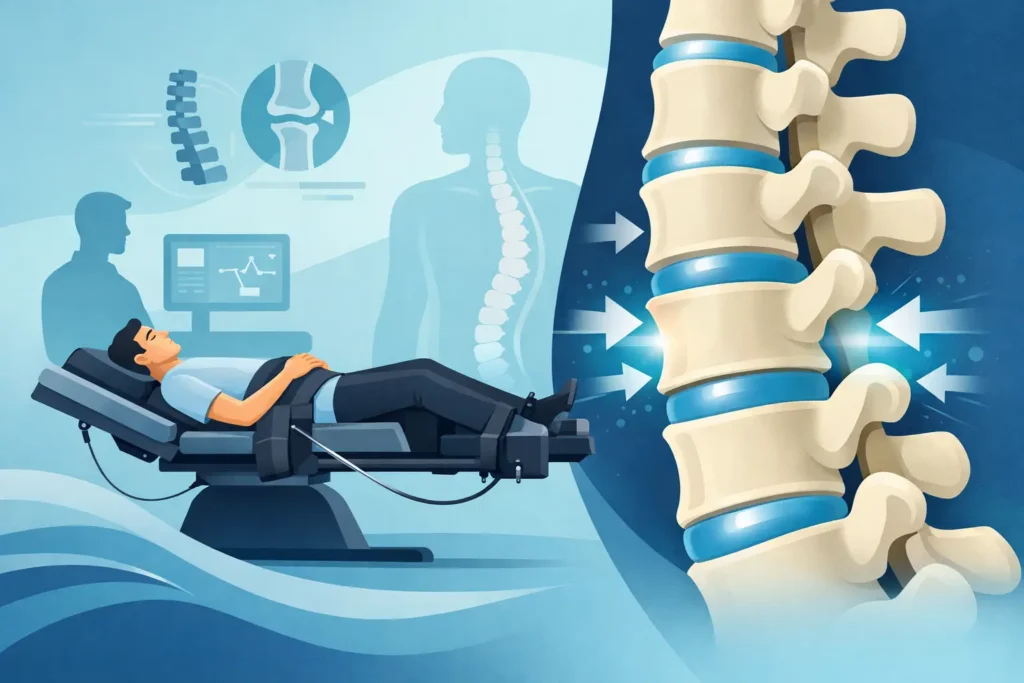
When a disc is irritated, compressed, or bulging, nearby nerves and soft tissues can become inflamed. That can lead to back pain, neck pain, numbness, tingling, sciatic symptoms, and reduced mobility. Spinal decompression works by applying a controlled stretching force to the spine in a very specific way.
This gentle traction can help reduce disc pressure, improve circulation to injured tissues, and create space in areas that have become irritated or compressed. It is not the same as a quick pull or a one-size-fits-all machine session. The best results come when treatment is based on an exam, objective findings, and a clear understanding of which structures are involved.
Benefits of spinal decompression for pain and function
One of the main benefits of spinal decompression is reduced pressure on irritated spinal discs and nerves. When that pressure eases, patients often notice less radiating pain, less numbness or tingling, and less of the constant guarding that makes simple movement feel difficult. This can be especially helpful for people with sciatica, disc bulges, disc herniations, and certain types of chronic neck or low back pain.
Another important benefit is improved mobility. Pain often changes how the body moves. People bend less, walk differently, and start compensating through the hips, shoulders, or upper back. Over time, those compensation patterns can create a second layer of discomfort. By calming irritation in the spine, decompression can make it easier to stand upright, turn the head, walk more comfortably, and return to normal activities with less fear.
There is also a recovery benefit that matters just as much as symptom relief. Spinal discs have a limited blood supply compared with other tissues, so anything that supports fluid exchange and reduces ongoing compression can help the area recover more effectively. While decompression is not a magic fix, it may improve the healing environment for damaged or stressed spinal tissues.
For some patients, the biggest win is not that pain disappears overnight. It is that they can finally tolerate exercise, rehabilitation, and daily movement again. Once pain drops to a more manageable level, strengthening the core, improving posture, and correcting movement patterns becomes much more realistic.
Who may benefit most from spinal decompression
Spinal decompression is often considered for adults dealing with disc-related neck or back pain, sciatica, degenerative disc changes, or nerve irritation. It may also help people whose symptoms worsen with sitting, bending, lifting, or prolonged standing. Many working professionals and parents fall into this category because long commutes, desk work, childcare, repetitive lifting, and stress all add up over time.
It can also be useful after an injury, including some auto accident cases, when the spine has been irritated and conservative care is appropriate. In other cases, patients come in with chronic postural stress rather than one clear injury. They may not remember a specific moment something went wrong, but they know they have become stiffer, more limited, and more uncomfortable over the years.
That said, it depends on the diagnosis. Not every patient with back pain needs decompression, and not every disc problem responds the same way. A careful assessment helps determine whether the pain is truly disc-related, whether nerves are involved, and whether this treatment makes sense as part of the plan.
The benefits of spinal decompression are best when care is personalized
This is where patients often get frustrated with generic treatment. Two people can both say, “My back hurts,” but have very different causes. One may have a disc issue with sciatic pain. Another may have primarily muscular tension, joint restriction, or postural instability. The treatment approach should reflect that difference.
The benefits of spinal decompression tend to be better when the therapy is customized to the patient’s condition, tolerance, and goals. That means considering the level of spinal involvement, the duration of symptoms, the person’s work demands, exercise habits, sleep position, and even how stress may be affecting muscle tension and recovery.
At a clinic like Align Chiropractic and Wellness, decompression is not meant to stand alone when other pieces are clearly needed. If posture is contributing to the problem, that needs to be addressed. If weakness or instability is keeping the issue going, rehabilitation matters. If inflammation, poor recovery habits, or repetitive strain are part of the picture, those factors should be part of the conversation too.
What treatment feels like and what to expect
Many patients are relieved to learn that spinal decompression is typically gentle and controlled. During treatment, you are positioned on a specialized table, and the therapy applies a gradual decompressive force based on your condition. Most people do not find it painful. In fact, many describe it as a stretch or a feeling of pressure easing.
Results can vary. Some patients notice changes quickly, while others improve more gradually over a series of visits. That usually depends on how long the problem has been present, how irritated the tissues are, and whether there are additional issues such as poor posture, muscle imbalance, or work-related strain.
A realistic care plan matters. If symptoms have been building for months or years, one session is unlikely to solve everything. Progress is often measured by changes in pain intensity, frequency of flare-ups, mobility, activity tolerance, and neurological symptoms such as numbness or radiating pain.
When spinal decompression may not be the right fit
Good care includes knowing when not to use a treatment. Spinal decompression is not appropriate for every condition. Certain fractures, severe instability, some post-surgical cases, and other medical concerns may require a different approach or referral. Pregnancy may also change how care is selected, even though many pregnant patients can still benefit from other supportive therapies for back and pelvic discomfort.
This is why an exam matters so much. A provider should not recommend decompression just because someone has back pain. The recommendation should come after reviewing symptoms, medical history, physical findings, and any necessary imaging or objective testing.
Why decompression works better with rehab and home care
Even when decompression helps reduce pain, the body still needs support to hold onto that progress. If a patient returns to the same slouched sitting posture, poor lifting mechanics, weak core control, and repetitive stress without any changes, symptoms often return.
That is why the best care plans usually combine passive treatment with active recovery. Rehab exercises can improve spinal stability. Postural training can reduce repeated strain. Home exercises help maintain mobility between visits. In some cases, acupuncture, soft tissue work, or nutritional support may also help calm inflammation and improve recovery.
This whole-person approach matters because pain is rarely caused by one thing alone. A disc issue may be the main driver, but posture, stress, sleep quality, movement habits, and muscle imbalance often influence how long the problem lasts and how well someone heals.
A practical way to think about results
If you are considering decompression, it helps to think beyond the question, “Will it stop my pain?” A better question is, “Will it help me function better and create a path toward more lasting improvement?”
For many patients, the most meaningful outcomes are being able to sit through work without constant shifting, drive without leg pain, sleep more comfortably, return to workouts, pick up their child with less fear, or get through the day without relying on temporary symptom relief. Those are real quality-of-life changes.
Spinal decompression is not the answer for everyone, but for the right patient, it can be a valuable part of a thoughtful, non-invasive treatment plan. If your pain seems tied to disc pressure, nerve irritation, sciatica, or persistent spinal compression, a personalized evaluation can help you find out whether it fits your needs and what the next best step should be.
Relief is important, but so is understanding why your pain keeps showing up – and getting care that helps your body move toward something better.