
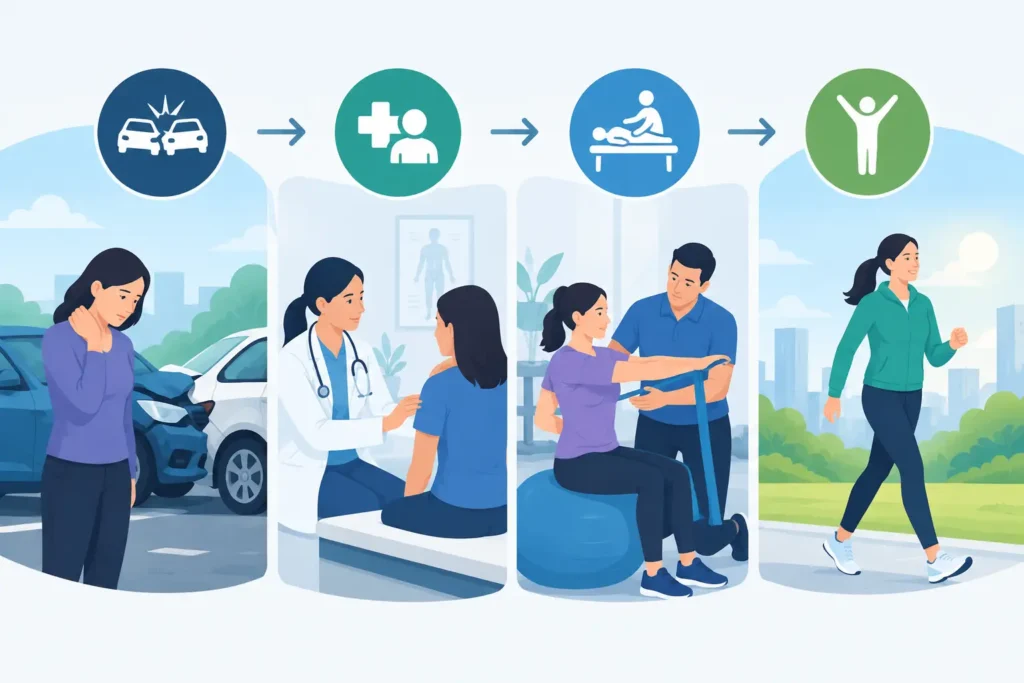
A collision can be over in seconds, yet the effects on your body may unfold over days or weeks. This auto injury recovery example shows why early assessment, individualized care, and consistent follow-through can matter when neck pain, back pain, headaches, stiffness, or fatigue appear after a crash.
Consider a common situation: a working parent in San Antonio is rear-ended at a stoplight. Their car has moderate damage, and they initially feel shaken but able to go home. By the next morning, turning their head is difficult, their low back feels tight, and a dull headache has started. They assume they simply need rest. A few days later, sitting at a desk and picking up their child become much more uncomfortable.
Every injury and recovery is different. This example is not a promise of a specific result. It does show how a thoughtful, whole-person care plan can address more than the immediate pain.
The First Week: Looking Beyond Soreness
After an auto accident, adrenaline can temporarily mask symptoms. Once that initial stress response fades, injured or irritated muscles, ligaments, joints, and nerves may begin to speak up. Whiplash-related injuries can affect the neck, upper back, shoulders, jaw, and head. The force of bracing during a collision can also contribute to low back pain, hip discomfort, numbness, or radiating symptoms into an arm or leg.
In this example, the patient begins care after first receiving appropriate medical evaluation and being cleared for chiropractic treatment. A thorough chiropractic assessment does not start with an assumption that every sore area needs the same treatment. It starts with listening.
The provider asks about the crash, including the direction of impact, body position, seat belt use, immediate symptoms, and changes since the accident. They also discuss prior injuries, work demands, sleep, activity level, and health history. This context helps create a clearer picture of how the collision may be affecting the patient’s movement and daily life.
Objective testing may include posture assessment, spinal and extremity range-of-motion testing, muscle and neurological screening, orthopedic tests, and palpation to identify areas of joint restriction, muscle tension, and tenderness. If findings suggest a need for additional imaging, medical care, or a referral, that should be addressed promptly. New or worsening weakness, severe headache, confusion, chest pain, difficulty breathing, loss of bowel or bladder control, or significant numbness require urgent medical attention.
An Auto Injury Recovery Example: Creating a Personal Plan
Our example patient has reduced neck rotation, painful upper-back muscle spasms, mild low-back stiffness, and headaches that worsen after computer work. Their assessment also reveals a forward-head posture that likely existed before the crash but is now placing more strain on already irritated tissues.
Rather than trying to force a rapid return to normal activity, the care plan has two goals: reduce irritation and restore healthy movement in a measured way. At Align Chiropractic and Wellness, this may involve hands-on chiropractic adjustments when appropriate, along with targeted soft-tissue support, rehabilitation exercises, and practical at-home guidance.
During the early phase, care may be more frequent because symptoms and movement restrictions are more active. Gentle spinal or extremity adjustments can help improve joint motion where restrictions are present. The approach should always match the patient’s comfort level, examination findings, and stage of healing. Some people respond well to a lighter approach at first, while others need care directed to both the spine and affected extremities.
Acupuncture may also be considered for patients who are experiencing muscle tension, pain, or stress that is interfering with rest and recovery. The goal is not simply to cover up symptoms. It is to support the body as it calms down and begins moving more normally again.
At home, the patient is instructed to avoid complete bed rest while also respecting their current limits. Short walks, comfortable position changes, hydration, and sleep-supporting pillow guidance can be useful. They may be asked to pause heavy lifting, intense workouts, or repetitive overhead activity until the body is ready. The right amount of activity depends on the injury, the person’s baseline health, and how their symptoms respond.
Weeks Two Through Four: Rebuilding Movement and Confidence
By the second week in this example, the patient’s headaches are less frequent and they can turn their head farther while driving. Their low back still becomes tight after sitting for long periods, however, and they remain cautious about exercise.
This is often when rehabilitation becomes especially valuable. Pain relief alone does not necessarily mean the body has regained its ability to stabilize, bend, rotate, lift, and tolerate daily demands. If the patient returns too quickly to old habits without restoring strength and control, symptoms can linger or recur.
The provider introduces simple, specific exercises based on the patient’s examination. These might include deep neck stabilization work, gentle mobility exercises, postural retraining, core activation, or hip and shoulder movement drills. Home exercises are kept manageable. A plan that fits into a busy morning or work break is more likely to be completed than a complicated routine that feels overwhelming.
The patient also receives ergonomic guidance for their desk setup. Raising a screen to eye level, using lumbar support, taking brief movement breaks, and avoiding prolonged phone-down posture can reduce unnecessary strain during recovery. These changes are not substitutes for treatment, but they help protect the progress being made in the clinic.
Nutrition and supplementation guidance may be appropriate for some patients as part of broader wellness support. Food, hydration, sleep, stress levels, and daily movement all influence how a person feels and functions. Recovery is rarely limited to one body part, especially after the physical and emotional stress of an accident.
Re-Evaluation: Measuring More Than Pain Levels
A personalized plan should change as the patient changes. In this auto injury recovery example, a re-evaluation at several weeks compares the patient’s current findings with their initial assessment. Neck range of motion has improved, upper-back spasms have decreased, and headaches are now occasional rather than daily. The patient is also sleeping better.
There is still work to do. Their posture collapses when tired, and lifting their child from the floor produces mild low-back discomfort. The next phase of care therefore shifts toward building endurance, improving lifting mechanics, and progressing home exercises safely.
Regular re-evaluations help keep care purposeful. They provide an opportunity to celebrate meaningful gains, identify areas that still need attention, and adjust recommendations when the original plan is no longer the right fit. This is particularly important after an auto accident because recovery is not always linear. A long car ride, a demanding work week, poor sleep, or increased stress can temporarily flare symptoms even when overall progress is moving in the right direction.
Returning to Daily Life Without Ignoring Your Body
After several more weeks, the patient in this example can work at their desk with fewer breaks, check blind spots while driving without sharp pain, and return to modified workouts. They are not told to push through every sensation. Instead, they understand which muscle fatigue is expected with rebuilding activity and which symptoms signal a need to slow down or contact their provider.
That distinction matters. Good recovery is not defined only by having a pain-free day. It is also reflected in better mobility, improved confidence, stronger movement habits, and the ability to participate in work, family life, and activities with less fear of setting symptoms off.
Some people need a relatively short course of care after a minor collision. Others have more complex injuries, pre-existing conditions, persistent headaches, nerve symptoms, or significant postural problems that call for a longer plan and coordination with other healthcare providers. The right timeline depends on the person, not a calendar.
If you have been in an accident and your body does not feel like itself, do not dismiss the change simply because the crash seemed minor. A careful assessment can help clarify what is happening, what your body needs now, and how to take the next step toward feeling steady, comfortable, and capable again.