
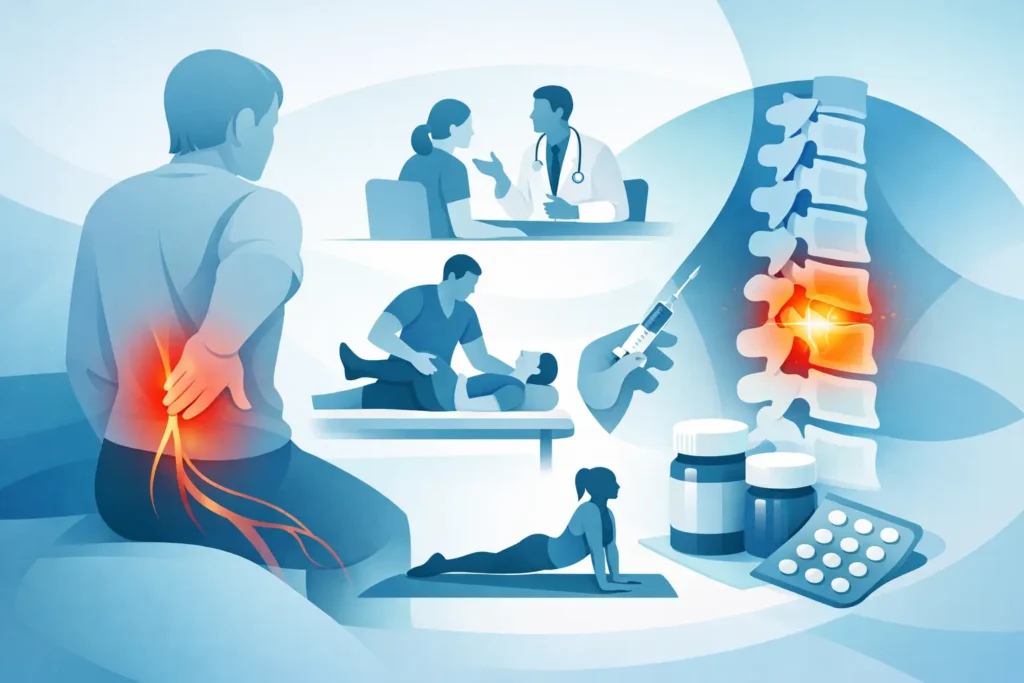
That sharp pain running from your low back into your hip, leg, or foot can change the way you sit, sleep, drive, and work. When people start searching for sciatica treatment options, they are usually not looking for theory. They want to know what can actually help, what may be making the problem worse, and how to move toward relief without guessing.
Sciatica is not a condition all by itself. It is a pattern of symptoms that usually happens when the sciatic nerve is irritated, compressed, or inflamed. For some people, that irritation starts in the lower spine. For others, it may involve disc issues, joint dysfunction, muscle tension, poor movement patterns, pregnancy-related changes, or postural stress that has been building for months or years. That is why the best treatment plan is rarely one-size-fits-all.
Understanding what sciatica is really telling you
Sciatica often causes pain that travels down one leg, but it can also bring numbness, tingling, weakness, burning, or a deep ache that comes and goes. Some people feel worse when they sit. Others notice it more when standing up, bending forward, coughing, or walking for longer periods.
Those symptoms matter because they can point toward different sources of pressure or irritation. A disc bulge may respond differently than a joint restriction, and both may need a different approach than muscular compression or postural imbalance. If treatment only chases the pain without identifying the cause, relief may be temporary.
That is why a careful exam should come first. A provider should look at your movement, posture, reflexes, muscle strength, pain patterns, and orthopedic or neurological findings. In some cases, imaging may be appropriate, especially if symptoms are severe, worsening, or associated with red flags like significant weakness or changes in bowel or bladder control.
Sciatica treatment options that are often most helpful
The most effective care usually combines pain relief with correction of the underlying mechanical problem. In many cases, conservative treatment can help significantly, especially when care is started before the issue becomes more chronic.
Chiropractic care and spinal adjustments
When sciatica is related to spinal joint restriction, pelvic imbalance, or mechanical stress in the lower back, chiropractic care may help improve motion and reduce irritation on the tissues around the nerve. A precise adjustment is not about forcing the body. It is about restoring healthier movement in the joints so the spine can function with less stress.
For the right patient, this can reduce pressure, improve mobility, and make everyday movement less aggravating. It also tends to work best when paired with other therapies rather than used in isolation.
Spinal decompression
If disc involvement is contributing to sciatic symptoms, spinal decompression may be considered. This approach uses controlled traction to reduce stress on the lumbar discs and create a more favorable environment for healing. Some patients describe it as one of the first things that lets their leg pain calm down enough to move more normally again.
Still, decompression is not right for everyone. The exact cause of symptoms, overall spinal health, and severity of the condition all matter. That is why proper assessment is so important before starting treatment.
Rehabilitation exercises
One of the biggest mistakes in sciatic care is stopping at passive treatment. Hands-on care can be valuable, but long-term progress usually depends on retraining how the body moves and stabilizes.
Rehabilitation exercises may focus on core support, hip mobility, glute strength, posture, and movement mechanics. In some cases, directional exercises for disc-related pain can be especially useful. In others, nerve mobility work or gentle stretching may be more appropriate. The key is that the exercises should match your presentation. Giving the same handout to every patient with leg pain is not personalized care.
Acupuncture for pain relief and muscle tension
Acupuncture can be a helpful addition for some people with sciatica, especially when pain is accompanied by muscle guarding, inflammation, or stress-related tension. It may support pain modulation, help tight tissues relax, and complement a broader treatment plan.
This is often valuable for patients who want a non-drug option and appreciate a more integrative approach. It may not address every structural contributor on its own, but it can be a meaningful part of care.
Home care and activity modification
What you do between visits matters. Many sciatic flare-ups are aggravated by prolonged sitting, repeated bending, poor workstation setup, or movement habits that keep irritating the area. A good plan should include practical advice you can actually use at home and at work.
That may include changes to sitting position, sleep posture, lifting mechanics, walking routines, ice or heat guidance, and specific stretches or exercises. These recommendations should feel realistic, not overwhelming. Small changes, done consistently, often make a bigger difference than people expect.
When medication, injections, or surgery enter the conversation
Not every case of sciatica needs chiropractic care, rehab, or wellness-based support alone. Sometimes medication is used to reduce inflammation or manage pain during a more acute flare. In some situations, injections may be recommended to calm severe nerve irritation.
There are also cases where surgery becomes appropriate, particularly if symptoms are progressive, neurological deficits are developing, or conservative care has failed after a reasonable trial. Surgery can be necessary and beneficial for the right patient. At the same time, many people improve without it, especially when they receive timely and targeted conservative treatment.
The goal should never be to push one method for everyone. It should be to recommend the least invasive and most appropriate option based on the person in front of you.
Why personalized care matters with sciatica treatment options
Two people can both say, “I have sciatica,” and need very different treatment plans. One may have pain driven by a lumbar disc issue after lifting something heavy. Another may have recurring sciatic symptoms related to poor posture, deconditioned core muscles, tight hips, and long hours at a desk. Another may be pregnant and dealing with pelvic and low back changes that are affecting nerve irritation.
This is where individualized care becomes so important. A thoughtful treatment plan should reflect your symptoms, exam findings, daily demands, and health goals. It should also change as you improve. Re-evaluations help make sure care is working and help guide when to progress exercises, reduce visit frequency, or shift the focus toward prevention.
At Align Chiropractic and Wellness, that whole-person approach is central to how care is delivered. The aim is not simply to quiet symptoms for a few days. It is to help patients move better, function better, and build habits that support lasting results.
What to expect from a conservative care plan
Most people want to know how long recovery will take. The honest answer is that it depends. A newer flare-up with mild nerve irritation may improve relatively quickly. A chronic case with disc involvement, weakness, or years of compensation patterns may take longer.
In general, a conservative care plan should start with a clear assessment, a practical explanation of what is likely driving your symptoms, and specific recommendations for treatment frequency and home care. Early care may focus on calming pain and reducing nerve irritation. As symptoms improve, treatment should shift toward restoring strength, mobility, and resilience.
If your provider cannot explain why they are recommending a treatment, or if the plan never evolves, that is a problem. Good care should be specific, measurable, and responsive to your progress.
Signs it is time to get evaluated
If leg pain is shooting, burning, tingling, or associated with numbness, do not ignore it just because the pain comes and goes. The same is true if back pain keeps returning and starting to travel farther down the leg. Ongoing symptoms can change the way you move and can create compensation patterns that affect other areas of the body.
You should also seek prompt evaluation if pain is intense, sleep is disrupted, walking feels unstable, or weakness is developing. And if you have sudden bowel or bladder changes, saddle numbness, or rapidly worsening neurological symptoms, that requires immediate medical attention.
The good news is that many people have more sciatica treatment options than they realize. With the right assessment and a care plan built around your actual needs, relief may be possible without relying only on medication or waiting for the problem to pass on its own.
If your body has been sending warning signs, this is a good time to listen. The right next step is not doing everything at once. It is getting clear on what is driving the pain and choosing care that helps you heal with confidence.