
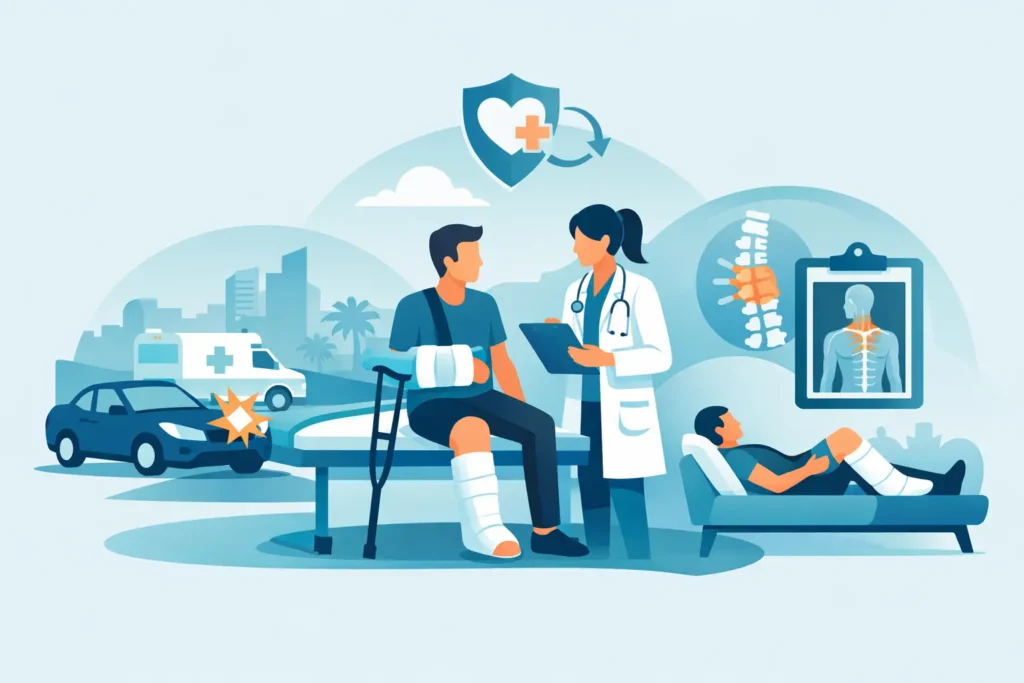
A car accident does not have to look dramatic to leave your body dealing with real injury. Many people walk away feeling “shaken up,” only to notice neck stiffness, headaches, back pain, numbness, fatigue, or trouble sleeping a day or two later. That is why a guide to auto injury recovery should start with one simple truth – delayed symptoms are common, and early care matters.
After a crash, your body absorbs force quickly. Muscles tighten to protect you, joints can become restricted, soft tissues may be strained, and inflammation can build over the next several hours. Even a low-speed collision can affect the spine, shoulders, hips, jaw, or nervous system. When these problems are missed early, they can linger longer than expected and interfere with work, exercise, parenting, and daily comfort.
What auto injury recovery really involves
Recovery is not just about waiting for pain to fade. A thoughtful guide to auto injury recovery looks at how your body is moving, where inflammation is showing up, whether your posture has changed, and how symptoms are affecting your normal routine.
For some people, the main issue is whiplash. For others, it is mid-back tightness, low back pain, shoulder restriction, headaches, or radiating discomfort into the arms or legs. It depends on the direction of impact, your position in the vehicle, preexisting posture patterns, and how your body responded during the crash.
This is one reason cookie-cutter care often falls short. Two people can be in the same accident and need very different treatment plans. One may need more focus on cervical mobility and headache relief. Another may need low back stabilization, soft tissue support, and a gradual return to activity.
The first days after an accident
In the beginning, many people make one of two mistakes. They either ignore symptoms because the accident “wasn’t that bad,” or they rest completely for too long and assume movement will make things worse. Neither approach is ideal in every case.
You do want to take symptoms seriously and get evaluated promptly, especially if you notice neck pain, back pain, headaches, dizziness, numbness, tingling, weakness, or reduced range of motion. You also want to pay attention to any symptom that is worsening rather than improving. Early assessment helps identify what is irritated, what is restricted, and what kind of care is appropriate.
At the same time, total inactivity is not always the best path once serious concerns have been ruled out. Gentle, guided movement often plays an important role in healing. The key is choosing the right type and amount of activity for your injury, not pushing through pain and not staying stuck in a protective pattern longer than necessary.
Why symptoms can show up late
One of the more frustrating parts of auto accident injuries is timing. You may feel functional immediately after the crash because adrenaline is high. Later, when the nervous system settles down, pain and stiffness can become much more obvious.
Inflammation also takes time to build. Small joint restrictions, soft tissue irritation, and muscle guarding may not feel severe at first, but they can create a chain reaction over the next 24 to 72 hours. That is why people often say, “I felt okay yesterday, but today I can barely turn my head.”
This delayed pattern does not mean the injury is minor. It means your body is revealing the full extent of stress after the initial shock has passed.
What a proper evaluation should include
Good auto injury care starts with listening. Your provider should want to know how the crash happened, when symptoms began, what movements aggravate them, and how the injury is affecting sleep, work, driving, exercise, and daily life.
It should also include objective assessment. That may involve posture analysis, orthopedic testing, neurologic screening, range of motion measurements, palpation, and evaluation of spinal and extremity joint function. Re-evaluations matter too, because recovery is not static. Your treatment plan should evolve as inflammation decreases, mobility improves, and strength returns.
A thorough evaluation helps answer practical questions. Is the pain mainly muscular, joint-related, nerve-related, or a mix of all three? Are headaches coming from neck dysfunction? Is low back pain linked to poor movement patterns that developed after the impact? Are you compensating in a way that could create longer-term issues if left unaddressed?
Treatment should reduce pain and restore function
The best care plan after a collision is rarely about one tool alone. Pain relief matters, but function matters just as much. If treatment eases symptoms without helping your body move better, the results may not last.
Hands-on chiropractic care can help restore joint motion in areas that have become restricted after impact. Spinal and extremity adjustments may improve mobility, reduce mechanical stress, and support better movement patterns. When paired with soft tissue work, postural rehab, and targeted exercises, care becomes more complete.
Rehabilitation is especially important as symptoms begin to settle. Tight muscles and guarded movement can linger even after the sharpest pain fades. Guided exercises help retrain stability, coordination, and posture so your body is not stuck compensating weeks or months later.
Some patients also benefit from complementary support such as acupuncture, home exercises, and nutrition guidance that supports tissue healing and inflammation management. It depends on the person, the injury, and how their body is responding. A whole-person approach often makes sense because car accident injuries do not only affect one isolated structure. They can disrupt sleep, energy, stress levels, and overall resilience.
Recovery is not always linear
This part surprises people. You may feel better for several days, then notice soreness after returning to work, sitting longer, or trying to exercise again. That does not always mean you are back at square one.
Recovery usually comes in stages. In the early phase, the goal is to calm pain and inflammation while protecting irritated tissues. In the middle phase, the focus often shifts toward improving mobility and reducing compensation patterns. Later, the work is about strengthening, posture, endurance, and helping you return to regular life with more confidence.
That said, setbacks should not be ignored. If symptoms are intensifying, spreading, or becoming more neurologic in nature, your care plan may need to be adjusted. Ongoing reassessment is what keeps treatment personalized rather than automatic.
What you can do at home to support healing
A strong guide to auto injury recovery includes what happens between appointments. Healing does not only happen on the treatment table. Small daily choices can either support your progress or slow it down.
Start with your posture and routine. Long hours at a desk, slouching on the couch, or sleeping in a poor position can aggravate an already sensitive neck or back. Short movement breaks, proper workstation setup, and sleeping positions that reduce strain can make a real difference.
Follow your prescribed home exercises consistently, even if they seem simple. Early rehab often focuses on gentle, specific movements because the goal is to restore quality of motion before loading the body heavily. More is not always better. The right movement, done regularly, is usually more helpful than doing too much too soon.
It also helps to pay attention to hydration, nutrition, and stress. Your nervous system plays a role in muscle tension, sleep quality, and pain sensitivity. When your body is under stress after an accident, supportive habits can improve your ability to recover.
When to seek care instead of waiting it out
If you have persistent neck pain, back pain, headaches, dizziness, shoulder tightness, tingling, numbness, or pain that interferes with normal activities, it is worth getting evaluated. Waiting may feel easier in the short term, but unresolved restrictions and compensation patterns can become harder to correct over time.
Even if symptoms seem manageable, early care can document your condition, clarify what is actually injured, and give you a plan for healing instead of guesswork. That peace of mind matters. So does having a provider who explains what they are finding and why each phase of care is recommended.
At Align Chiropractic and Wellness, this kind of recovery is approached with individualized assessment, hands-on care, rehab support, and regular re-evaluations so treatment matches the person, not just the injury label.
A guide to auto injury recovery should leave you feeling informed, not overwhelmed
After an accident, most people want two things. They want relief now, and they want confidence that the pain will not keep disrupting their life later. Those goals are connected. When care is personalized, proactive, and focused on how your whole body is functioning, recovery tends to feel clearer and more manageable.
If something still feels off after a crash, listen to that signal. Your body is not being difficult. It is asking for the right kind of support, at the right time, so you can heal well and move forward with more ease.