
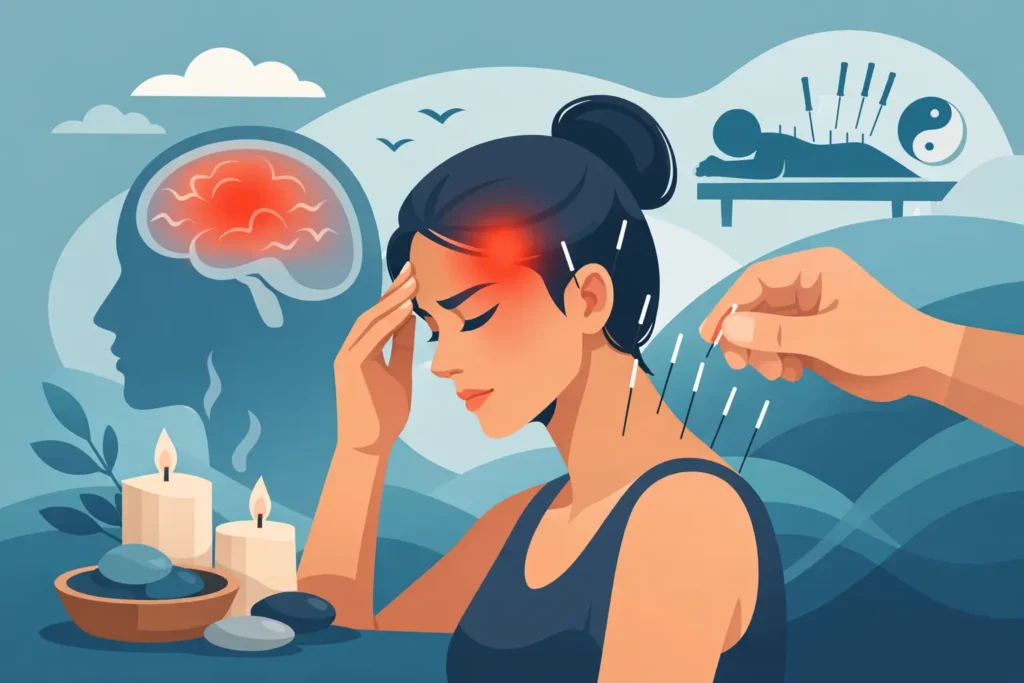
That band-like pressure across your forehead, the ache at the base of your skull, the tight shoulders that seem to climb toward your ears – tension headaches rarely happen in isolation. For many people, acupuncture for tension headaches becomes part of the conversation only after over-the-counter relief stops feeling like a real solution. When headaches keep returning, it makes sense to look at what may be driving them in the first place.
Tension headaches are often connected to muscle tension, stress, posture, jaw clenching, poor ergonomics, and irritation in the neck and upper back. That is why a whole-person approach matters. If the muscles, joints, and nervous system are all contributing, focusing on only one piece may leave the pattern unchanged.
Why tension headaches keep coming back
A tension headache can feel simple, but the causes are often layered. Some people notice them after long hours at a desk. Others get them during high-stress weeks, after poor sleep, or when neck stiffness starts building. In many cases, the pain is not just about the head. It is about what is happening through the shoulders, cervical spine, jaw, and nervous system.
This is where many patients feel frustrated. They may get temporary relief from medication, massage, or rest, but the headaches return because the underlying triggers are still there. Forward head posture, tight suboccipital muscles, restricted neck movement, and stress-related muscle guarding can keep feeding the same cycle.
From a clinical perspective, recurring tension headaches deserve a closer look. A thoughtful assessment can help identify whether the problem is mainly muscular, posture-related, stress-driven, or tied to broader mechanical dysfunction in the spine and surrounding tissues. Often, it is some combination of all three.
How acupuncture for tension headaches may help
Acupuncture for tension headaches is commonly used to help calm irritated tissues, reduce muscle tension, and support a more balanced nervous system response. Very thin needles are placed at specific points based on the patient’s symptoms, exam findings, and overall health picture. Many patients describe the experience as relaxing, especially when their headaches are tied to stress and tightness.
The goal is not simply to chase pain from one visit to the next. Acupuncture may help reduce headache intensity and frequency by addressing some of the patterns that contribute to recurring discomfort. For example, if your headaches tend to show up with neck tightness and shoulder tension, treatment may focus on easing that muscular overload. If stress is a major trigger, acupuncture may also support downregulation of an overworked nervous system.
That said, results can vary. Some patients feel a meaningful shift quickly, while others need a series of visits before the pattern starts to change. It depends on how long the headaches have been present, how often they occur, and what other factors are involved.
What a patient-centered treatment plan should look like
For recurring headaches, one-size-fits-all care usually falls short. A better approach starts with listening carefully to the full story. When do the headaches happen? Where is the pain located? Do you also have neck pain, jaw tension, shoulder tightness, dizziness, or poor sleep? What does your workday look like? How is your posture? Are stress and hydration part of the picture?
At a clinic like Align Chiropractic and Wellness, acupuncture is often most useful when it is part of a personalized plan rather than a standalone quick fix. If an exam shows reduced neck mobility, postural stress, or spinal dysfunction, care may also include hands-on treatment, corrective exercises, and practical home guidance. That matters because even if acupuncture helps settle the immediate pain, your daily habits and mechanics still influence whether those headaches keep returning.
A well-designed plan also includes re-evaluation. Progress should be tracked over time, not guessed at. If headache frequency drops, neck motion improves, and tension patterns ease, that is meaningful. If not, the treatment approach should be adjusted.
What acupuncture sessions are actually like
Some patients are interested in acupuncture but hesitate because they are unsure what to expect. In most cases, the needles used are extremely thin, and many people are surprised by how gentle the treatment feels. Sensations can vary. You may notice mild warmth, heaviness, tingling, or a dull ache around a point, but it should not feel alarming.
The setting matters too. If your body has been stuck in a pattern of tension, part of the value of treatment is creating space for it to shift out of that guarded state. Many patients leave feeling looser, calmer, or mentally clearer, even when the full headache pattern takes time to improve.
It is also normal for recommendations to differ from person to person. Someone with occasional tension headaches during stressful weeks may need a different schedule than someone with chronic headaches and long-standing neck dysfunction. Personalized care is not just a marketing phrase. It is what makes treatment more likely to match the actual problem.
When acupuncture works best for tension headaches
Acupuncture tends to be especially helpful when tension headaches are associated with muscular tightness, stress load, neck stiffness, or repetitive postural strain. That includes people who spend hours at a computer, commute frequently, carry stress in their shoulders, or wake up with jaw and neck tension.
It may also fit well for patients who want a non-drug option or who are trying to reduce how often they rely on medication. For many adults, that is a major reason to seek care. They do not just want another temporary patch. They want a strategy that supports relief and helps them function better at work, at home, and during exercise.
Still, there are limits. Not every headache is a tension headache. Migraine, cervicogenic headache, sinus-related pain, and more serious medical conditions can create overlapping symptoms. That is why an appropriate evaluation comes first. If a headache pattern includes sudden severe pain, neurological symptoms, visual changes, or other red flags, it needs prompt medical attention.
Why combining therapies often makes sense
Tension headaches rarely come from a single source, so treatment often works best when it reflects that reality. If tight muscles are one driver, acupuncture may help. If poor neck mechanics and posture are adding stress, chiropractic care and rehab exercises may be part of the answer. If dehydration, sleep disruption, or daily stress are making the system more reactive, lifestyle support matters too.
This kind of integrative care can be especially valuable for patients who have both neck pain and headaches. In those cases, treating only the head misses the broader pattern. Addressing spinal motion, posture, muscle tension, workstation habits, and home exercise can create more durable change than symptom care alone.
That does not mean every patient needs every service. Good care is selective, not excessive. The right plan should be based on your exam findings, your goals, and how your body responds over time.
Is acupuncture for tension headaches right for you?
If your headaches are frequent, stress-related, tied to neck tension, or interfering with daily life, acupuncture may be worth considering. It can be a practical option for people who want a natural, non-invasive approach and appreciate care that looks beyond the symptom itself.
The key is making sure your treatment is grounded in real assessment and clear reasoning. You deserve to know why a headache may be happening, what factors appear to be contributing, and what your plan is designed to improve. That kind of clarity helps patients feel more confident and more involved in their recovery.
Headaches have a way of shrinking your day. They make work harder, patience shorter, and rest less restorative. But recurring tension does not have to become your normal. With the right combination of evaluation, hands-on care, acupuncture, and practical self-care, many people can move toward fewer headaches and a body that feels less burdened by stress.