
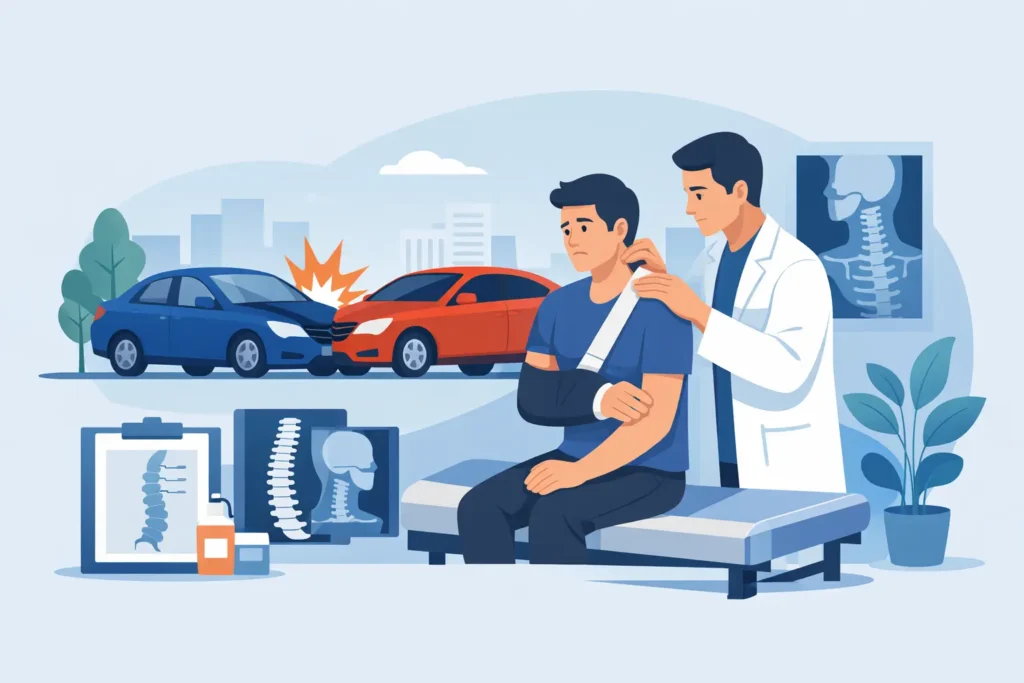
A car accident does not have to look dramatic to leave your body hurting. Many people walk away from a crash thinking they are lucky, only to wake up the next day with neck stiffness, mid-back pain, headaches, or soreness that keeps getting worse. That is often when the search for a chiropractor for car accident injuries begins.
The tricky part is that accident-related pain is not always immediate. Adrenaline can temporarily mask symptoms, and some soft tissue injuries take hours or days to fully show up. If you were recently in a collision, even a low-speed one, it helps to understand what your body may be dealing with and why early evaluation matters.
Why car accident injuries can feel delayed
After an accident, your muscles often tighten to protect injured areas. Ligaments may be strained, joints can lose normal motion, and inflammation starts building. At first, you may only notice mild tension. A day or two later, that tension can turn into sharp pain, reduced range of motion, headaches, or pain that travels into the shoulders, arms, or lower back.
This is especially common with whiplash. During a sudden impact, the head and neck move quickly beyond their normal range. Even when there is no broken bone, the muscles, tendons, ligaments, and joints of the neck can be irritated. The same kind of stress can affect the mid-back, low back, ribs, hips, jaw, and even extremities depending on how the body was positioned during impact.
One person may feel mostly neck pain. Another may notice low back pain, numbness, dizziness, or headaches behind the eyes. It depends on the force of the collision, pre-existing posture problems, prior injuries, seat position, and how the body absorbed the impact.
What a chiropractor for car accident injuries looks for
A thorough evaluation should not start with assumptions. It should start with listening.
When you see a chiropractor for car accident injuries, the first step is understanding how the accident happened, what symptoms began right away, what symptoms developed later, and how those symptoms are affecting daily life. That may include trouble sleeping, pain while turning your head, difficulty sitting at work, pain while lifting a child, or headaches that were not there before the crash.
From there, a clinical exam can help identify what is actually driving the discomfort. Depending on the case, that may include posture assessment, range-of-motion testing, orthopedic and neurological testing, palpation, and functional movement evaluation. The goal is not just to confirm that you hurt. It is to determine which tissues and joints may be involved, how severe the irritation is, and what kind of care is most appropriate.
This is also where personalized care matters. Two people can have the same type of accident and need different treatment plans. One may need a strong focus on restoring spinal motion. Another may need more soft tissue support, postural rehabilitation, home exercises, or co-management if symptoms suggest a more serious injury.
Common symptoms after an auto accident
Some symptoms are obvious, and some are easy to dismiss. Neck pain and headaches are common, but so are shoulder blade tension, tingling into the arm, jaw tightness, low back pain, and soreness between the shoulders. Some people notice they cannot sit comfortably for long. Others feel pain when looking over their shoulder while driving.
You may also feel fatigue, muscle guarding, or a general sense that your body is off. That matters. After an accident, pain is not always isolated to one spot. Compensation patterns can spread strain into nearby areas, especially if the body is already dealing with poor posture, old injuries, or repetitive stress from work.
If symptoms are getting worse, not better, or interfering with normal activities, that is a sign to get evaluated rather than waiting it out.
How chiropractic care may help after a collision
The purpose of care after a car accident is not simply to chase pain. It is to improve how the injured areas move, calm irritated tissues, reduce stress on the nervous system, and support a more complete recovery.
Chiropractic adjustments may be used to help restore joint motion in areas that became restricted during impact. When joints are not moving well, surrounding muscles often tighten and overwork. Improving motion can reduce strain and help the body move more normally again.
That said, adjustments are only part of the picture. In many accident cases, rehabilitation matters just as much. Gentle corrective exercises can help retrain posture, support stability, and reduce the likelihood that pain lingers because the body never fully regains normal function. Home exercise instruction can also be valuable between visits, since recovery depends on what happens outside the treatment room too.
Some patients benefit from additional supportive services such as acupuncture, spinal decompression, or guided lifestyle recommendations when tension, inflammation, or chronic stress are slowing recovery. A more holistic approach can be especially helpful when pain is affecting sleep, energy, and day-to-day resilience.
When to seek care and when to be cautious
Sooner is usually better after an accident, especially if you have neck pain, headaches, back pain, stiffness, or any symptoms that are changing over time. Early assessment can help identify injuries before compensation patterns become harder to unwind.
Still, not every accident injury should be managed the same way. If you have severe pain, loss of consciousness, significant weakness, trouble breathing, fracture concerns, or other urgent symptoms, emergency medical evaluation comes first. Chiropractic care can be part of recovery, but it should be used appropriately and with sound clinical judgment.
This is one reason objective testing and re-evaluation matter. Your treatment plan should be based on findings, not guesswork, and it should be adjusted as your body changes.
What personalized recovery should include
A good recovery plan after an accident should reflect more than the location of your pain. It should consider your work demands, parenting responsibilities, exercise habits, stress level, and health history.
For example, a desk-based professional with forward head posture may need a stronger focus on cervical stability and workstation habits. A parent lifting toddlers may need practical movement strategies and home care that fit real life. An active adult eager to get back to training may need a phased plan that balances healing with progressive activity.
This whole-person approach is often what makes the difference between short-term relief and meaningful improvement. If treatment only reduces pain for a few hours but does not address restricted motion, poor mechanics, and the way your body is compensating, symptoms can keep returning.
At Align Chiropractic and Wellness, this kind of care is built around individual assessment, re-evaluation, hands-on treatment, and practical self-care guidance so patients can heal with a clear plan rather than just hoping time fixes everything.
Choosing the right chiropractor for car accident injuries
Not every office approaches accident care the same way. If you are looking for a chiropractor for car accident injuries, look for someone who takes time to evaluate your case carefully, explains findings in plain language, and creates a treatment plan based on your needs rather than a one-size-fits-all schedule.
It also helps to choose a provider who can address more than one layer of the problem. Accident injuries often involve joint restriction, muscle tension, postural compensation, and nervous system stress all at once. A clinic that combines chiropractic care with rehabilitation and supportive wellness strategies may offer a more complete path forward.
You should feel heard, not rushed. Your symptoms should be tracked over time. And your care should evolve as you improve.
Recovery is not always linear
Some people feel noticeable relief within a few visits. Others improve in stages, especially if they waited a while to get checked or had underlying issues before the accident. That does not mean progress is not happening. It means healing can be uneven.
There may be days when stiffness flares up after a long drive, a workweek at the computer, or a poor night of sleep. That is normal in many cases. What matters is whether your body is steadily regaining motion, function, and tolerance for everyday activities.
Patience matters, but so does active care. The best outcomes usually come from a thoughtful combination of in-office treatment, home exercises, posture awareness, and regular re-evaluation to make sure the plan still fits where you are.
If your body has not felt right since a crash, trust that signal. Getting the right help early can make recovery smoother, more complete, and far less frustrating than trying to push through pain on your own.