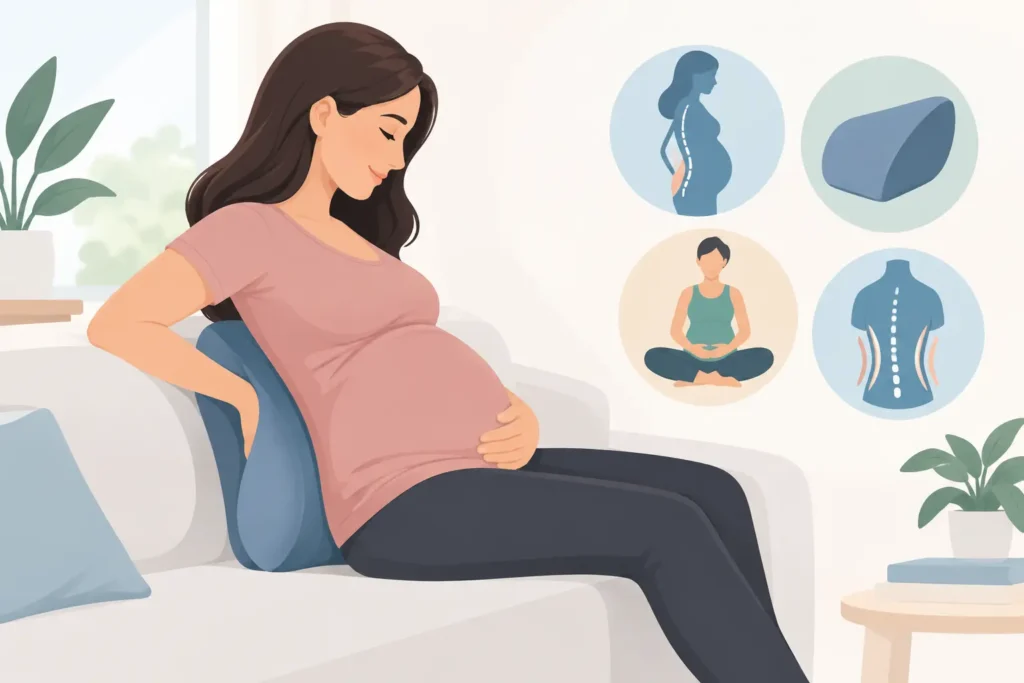
By the end of a busy day, pregnancy-related back pain can make even simple tasks feel demanding. Standing at the kitchen counter, getting out of the car, rolling over in bed, or lifting a toddler may all bring on an ache across the low back, hips, or pelvis. This guide to pregnancy back support can help you understand why that discomfort happens, which daily habits may ease it, and when individualized care can make a meaningful difference.
Pregnancy discomfort is common, but it should not be dismissed as something you simply have to endure. Thoughtful support for your spine, muscles, and changing movement patterns can help you stay more comfortable and confident as your body adapts.
Why Pregnancy Changes Your Back and Pelvis
Your body is doing remarkable work, and the physical changes are significant. As your baby grows, your center of gravity gradually shifts forward. Many people compensate by increasing the curve in their low back and leaning backward through the ribs and shoulders. This can place added strain on the muscles and joints of the lumbar spine, hips, and pelvis.
Hormonal changes also matter. Relaxin and other hormones help prepare the body for birth by increasing ligament flexibility. That flexibility is useful, but it can also leave the pelvic and low-back joints feeling less stable. Muscles that are already working harder to support your changing posture may become tight, fatigued, or sensitive.
Back pain can show up as a dull ache in the low back, sharp discomfort with certain movements, stiffness after sitting, or pain that travels into the buttock or leg. Some people feel more discomfort around the sacroiliac joints, located near the dimples of the low back, while others notice tension through the upper back and neck as breast tissue changes and posture shifts.
The goal is not to force your body into a “perfect” posture. It is to reduce unnecessary strain, improve support, and keep you moving in ways that feel safe and sustainable.
A Practical Guide to Pregnancy Back Support at Home
The most helpful approach is usually a combination of movement, positioning, and support rather than relying on one product or one exercise. What feels best can also change from trimester to trimester.
Use posture as a source of support, not a rigid rule
When standing, think about gently stacking your rib cage over your pelvis instead of leaning backward. Keep your weight distributed through both feet and avoid locking your knees. If you are standing for extended periods, placing one foot on a low stool or step for a few minutes at a time can reduce pressure through the low back.
At a desk, bring your chair close enough that you do not have to reach forward for the keyboard. Support your low back with a small cushion or rolled towel if it feels comfortable, and keep both feet supported on the floor or a footrest. Short movement breaks often help more than trying to sit perfectly for hours.
Make sleep positioning work for your body
Sleep is often where pregnancy back discomfort becomes most frustrating. Side sleeping is commonly recommended later in pregnancy, and a pillow between the knees can help keep the hips and pelvis more neutral. Many people also benefit from supporting the growing abdomen with a small pillow and placing another pillow behind the back to prevent rolling flat.
A full-body pregnancy pillow can be useful, but it is not required. The best arrangement is the one that lets your hips, shoulders, and low back relax. If you wake up stiff, experiment with pillow height and placement for several nights before deciding whether the setup is helping.
Move regularly, even when you are tired
Rest matters, but too much stillness can increase stiffness. Gentle walks, prenatal yoga guided by a qualified instructor, swimming, and mobility exercises can help maintain circulation and reduce muscle tension. The right amount depends on your prior activity level, stage of pregnancy, symptoms, and guidance from your prenatal provider.
Simple movement snacks throughout the day are often more realistic than a long workout. A five-minute walk after sitting, a few gentle hip movements while waiting for dinner to cook, or light stretching before bed can help your back feel less guarded.
Avoid pushing through sharp pain, worsening pelvic pressure, dizziness, or symptoms that do not settle after activity. Exercise during pregnancy should leave you feeling supported, not depleted.
Lift and carry with less strain
Pregnancy changes the way your body manages load. When picking something up, step close to it, bend through your hips and knees as comfortably as you can, and keep the item close to your body. Avoid twisting while carrying a load. Instead, turn with your feet.
If you are caring for another child, look for ways to reduce repeated lifting. Encourage them to climb into the car seat or onto the couch when appropriate, use a stable step stool when needed, and sit down before bringing them onto your lap. Small adjustments can protect your energy and your back over the course of a week.
Do Pregnancy Support Belts Help?
A maternity support belt may provide temporary relief for some people, especially when pelvic pressure, low-back fatigue, or discomfort with walking is limiting daily activity. These belts can gently support the abdomen and may reduce strain around the pelvis by improving how the load is distributed.
They are not a cure for the underlying movement and stability changes of pregnancy, and a belt that is too tight or worn all day may feel restrictive. Fit matters. The belt should feel supportive, not compressive, and it should not interfere with comfortable breathing, circulation, or digestion.
A support belt may be most helpful during activities that trigger symptoms, such as walking, errands, or standing at work. If pain is persistent, worsening, or affecting sleep and mobility, it is worth seeking an assessment rather than relying on a belt alone.
When Back Pain May Need Professional Attention
Some pregnancy discomfort responds well to home strategies. Other symptoms deserve prompt evaluation. Contact your obstetric provider right away for severe or sudden pain, vaginal bleeding, fever, painful urination, regular contractions, loss of fluid, numbness in the groin area, new weakness, or pain accompanied by concerning symptoms.
For ongoing musculoskeletal pain, a provider experienced in prenatal care can assess how your spine, pelvis, hips, posture, and muscles are working together. This is especially valuable when pain is interfering with work, sleep, walking, or caring for your family.
Pregnancy-focused chiropractic care uses gentle, individualized techniques intended to address joint restriction, muscle tension, and postural stress. Care should begin with a thorough health history and assessment, with treatment adapted to your trimester, comfort level, pregnancy history, and recommendations from your prenatal medical team. Rehabilitation exercises and home-care instruction can also help you build practical support between visits.
At Align Chiropractic and Wellness, pregnancy care is centered on listening closely to your symptoms and goals, then creating a plan that supports both relief and function. Regular re-evaluations help ensure that care continues to match your changing body rather than following a one-size-fits-all routine.
Support the Whole Picture
Back support during pregnancy is not only about the low back. Hydration, nourishing meals, manageable stress, sleep quality, footwear, work demands, and recovery time all influence how your body feels. Supportive shoes with stable soles may be more helpful than unsupportive flats or high heels when you are on your feet for long periods. If your work requires standing, sitting, driving, or lifting, a few targeted changes to your routine can reduce repeated strain.
Be patient with your body on difficult days. Pain can make movement feel intimidating, yet gentle, appropriate movement is often part of recovery. The right plan respects your limits while helping you maintain the strength, mobility, and confidence you need for the months ahead.
You deserve to feel heard when pregnancy back pain is affecting your daily life. With the right combination of at-home support, movement, and personalized care, comfort can become a realistic part of your pregnancy experience.