
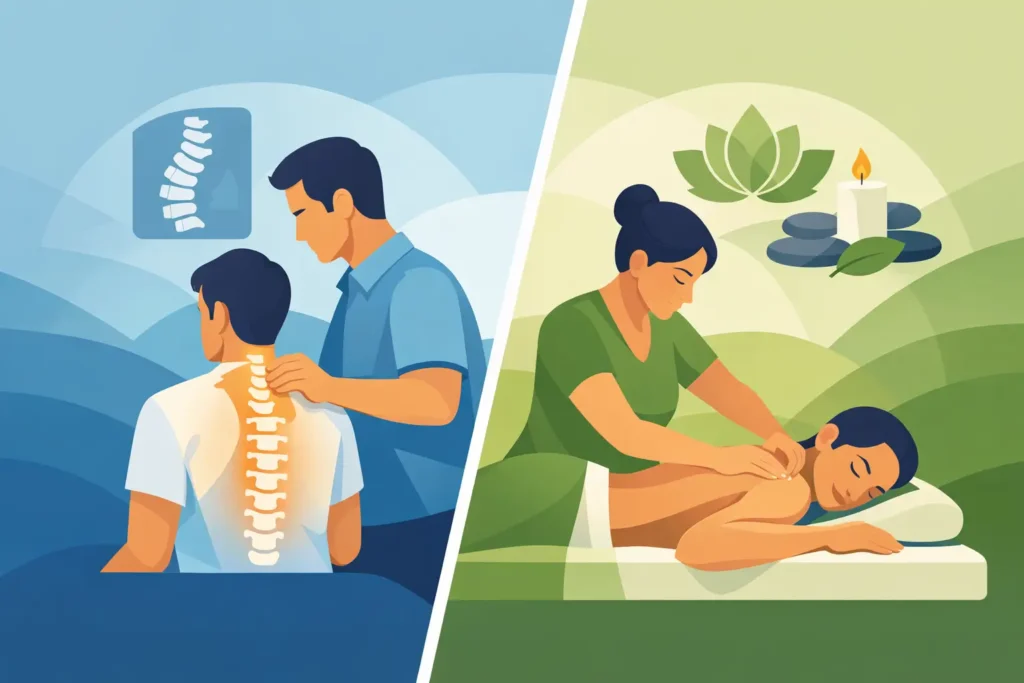
A tight neck after a week at your desk may respond very differently than low back pain that shoots into your leg or headaches that begin at the base of your skull. That is why chiropractic versus massage therapy is not simply a question of which treatment feels better. It is about identifying what may be contributing to your symptoms and choosing care that supports meaningful recovery.
Both approaches can play a valuable role in a wellness plan. Massage therapy generally focuses on soft tissues such as muscles and connective tissue, while chiropractic care evaluates how the spine, joints, movement patterns, posture, and nervous system function may be affecting the way your body feels and moves. For many people, the right answer is not strictly one or the other. It depends on the condition, your goals, and the findings of a thorough assessment.
Chiropractic Versus Massage Therapy: The Core Difference
Massage therapy uses hands-on techniques to work with muscles and other soft tissues. Depending on the style of massage, it may involve gentle strokes, sustained pressure, kneading, or deeper work in areas of tension. Many people seek massage for relaxation, temporary muscle soreness, stress-related tightness, or recovery after physical activity.
Chiropractic care is centered on evaluating and improving musculoskeletal function, particularly in the spine and joints. A chiropractor may assess posture, range of motion, spinal alignment, joint movement, muscle balance, and the way symptoms change with certain activities. Care can include chiropractic adjustments, spinal or extremity adjustments, rehabilitation exercises, decompression, and individualized home-care recommendations.
The distinction matters because a muscle that feels tight is not always the original source of the problem. It may be working overtime to compensate for restricted joint movement, poor posture, an old injury, repetitive work demands, or weakness in another area. Massage may help calm that tightness, while chiropractic care may also address the mechanical pattern that keeps bringing it back.
When Massage Therapy May Be a Good Fit
Massage can be a helpful option when your primary concern is generalized muscle tension or stress. If your shoulders feel knotted after long days of computer work, you are sore after a demanding workout, or you have difficulty relaxing due to muscle tightness, massage may provide welcome relief.
It can also complement an active recovery plan. Improved comfort in tight or overworked muscles may make it easier to move, stretch, sleep, and participate in prescribed exercises. For some patients, regular massage is part of a proactive wellness routine, especially during periods of high stress or increased physical demands.
However, massage alone may not be enough when symptoms are recurring, worsening, or connected to joint restriction and movement dysfunction. Relief that lasts only a day or two is useful information. It may suggest that the muscles are responding to treatment but that an underlying contributor still needs attention.
Massage Is Often Best for Muscle-Dominant Discomfort
Massage may be particularly appropriate for temporary soreness, muscle fatigue, and stress-related tension. It may also feel appealing if you prefer a relaxing session and do not have significant limitations in movement or symptoms that radiate into an arm or leg.
That does not mean massage is only about relaxation. Skilled soft-tissue work can be an important part of recovery. The key is matching it to a clear goal rather than expecting one treatment to solve every type of pain.
When Chiropractic Care May Be the Better Starting Point
Chiropractic care may be a better first step when pain is persistent, affects your daily activities, or seems tied to posture, movement, or a specific injury. For example, recurring neck pain with headaches, low back pain that worsens after sitting, sciatica-like symptoms, limited range of motion, or pain after a car accident deserve a more complete musculoskeletal evaluation.
At Align Chiropractic and Wellness, care begins with listening to your history and assessing the factors that may be contributing to your discomfort. Objective findings help guide a personalized plan instead of relying on a one-size-fits-all approach. Your plan may include adjustments to restore healthier joint motion, postural or spinal rehabilitation exercises, home exercise instruction, and support for habits that affect recovery.
Chiropractic is also often a strong option when the goal is more than short-term pain relief. If you want to bend, lift, exercise, work, or care for your family with greater confidence, treatment should consider how your body functions in those real-life situations. Regular re-evaluations can show whether the plan is improving mobility, reducing symptoms, and helping you make progress toward your goals.
Pregnancy, Auto Injuries, and Radiating Symptoms Need Individualized Care
Pregnancy-related back or pelvic discomfort can involve changes in posture, joint mobility, and muscle demands. Gentle, individualized chiropractic care may help support comfort and mobility during this changing season, while massage may be a helpful complement when provided appropriately.
After an auto accident, neck and back pain may not fully appear until days later. Muscle soreness can certainly be part of the picture, but joint irritation, reduced motion, postural guarding, and other injuries may also be involved. A focused assessment helps determine what type of care is appropriate and whether other medical evaluation is needed.
If pain travels down an arm or leg, is accompanied by numbness or weakness, or significantly limits your ability to move, do not assume it is a simple muscle knot. Start with an assessment that looks beyond the painful area.
Can Chiropractic and Massage Work Together?
Yes. Chiropractic and massage therapy can be complementary when each is used for the right purpose. Soft-tissue work may reduce muscle guarding and improve comfort, while chiropractic adjustments and rehabilitation may address joint motion, posture, and movement patterns. Combined thoughtfully, these approaches can help some patients move more comfortably and participate more fully in their recovery plan.
Still, more care is not automatically better care. The best plan is one that is specific to your condition, tolerance, schedule, and goals. Someone with acute pain after a collision may need a different pace than an active adult managing long-standing posture-related discomfort. Your response to care should guide the next step.
A practical plan also extends beyond the treatment room. Ergonomic changes, movement breaks, strengthening exercises, sleep support, nutrition guidance, and stress management can all influence how well your body recovers. Hands-on care is most effective when it is paired with strategies you can use in everyday life.
How to Choose the Right Care for Your Situation
Start by asking what you want help with. If you are looking for relaxation or relief from uncomplicated muscle soreness, massage may be a reasonable choice. If symptoms are recurrent, connected to movement, caused by an injury, or affecting your work and quality of life, chiropractic evaluation can provide a clearer picture of what is happening.
You should also consider whether the provider is taking time to understand your full history. Pain can be influenced by work posture, old sports injuries, stress, sleep, pregnancy, exercise habits, and previous accidents. A provider who listens carefully and explains their findings gives you a better foundation for making informed decisions about your care.
Seek prompt medical attention for severe or sudden symptoms, such as loss of bowel or bladder control, new significant weakness, unexplained fever, chest pain, severe headache unlike usual headaches, or symptoms after a serious trauma. These concerns require timely medical evaluation rather than routine bodywork.
Your body is not asking you to choose a side in a chiropractic versus massage therapy debate. It is asking for the right kind of support. If pain, stiffness, headaches, or postural strain are keeping you from doing what you love, schedule an individualized assessment and begin building a plan for relief, stronger movement, and long-term wellness.