
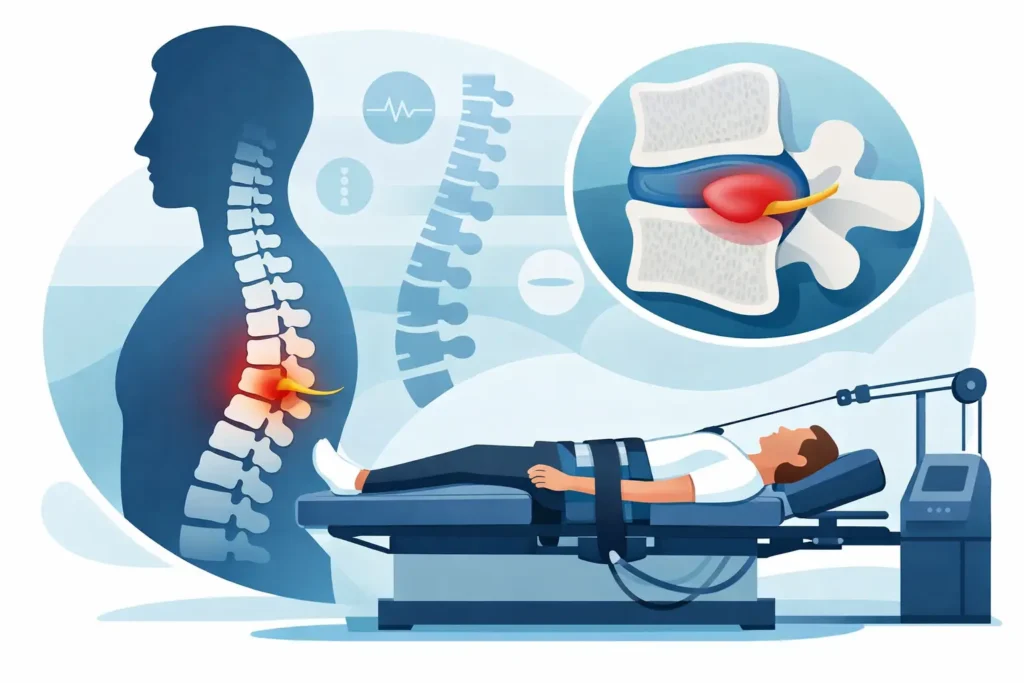
A disc bulge can turn ordinary moments into frustrating ones. Sitting through work, picking up your child, getting out of bed, or driving across San Antonio can all become reminders that something in your spine does not feel right. If you have been wondering, can spinal decompression help disc bulge problems, the honest answer is yes – for the right patient, in the right setting, with the right plan.
That matters because not every bulging disc behaves the same way. Some create local back or neck pain. Others irritate nearby nerves and send symptoms into the arm or leg, causing numbness, tingling, burning, or sciatic pain. The goal is not just to chase the symptom. The goal is to understand why the disc is under stress, how the surrounding joints and muscles are functioning, and what type of care gives your body the best chance to heal.
Can spinal decompression help disc bulge symptoms?
Spinal decompression is a non-surgical treatment designed to reduce pressure within the spine. In a clinical setting, it typically involves a specialized table that gently applies and releases traction in a controlled pattern. That mechanical change can help create more space around the affected spinal segment, reduce stress on irritated nerves, and support fluid movement into the disc.
For some patients, that can mean less pain when sitting, standing, bending, or walking. It may also help reduce radiating symptoms like sciatica or arm pain if the disc bulge is contributing to nerve irritation. The key phrase is may help. Spinal decompression is not a one-size-fits-all fix, and it is not appropriate for every cause of back or neck pain.
A disc bulge is also different from a severe disc herniation, spinal instability, fracture, infection, or certain advanced degenerative changes. That is why a proper exam comes first. Before recommending decompression, a provider should look at your symptoms, movement patterns, posture, orthopedic findings, neurological signs, and health history. In some cases, imaging is also part of the decision-making process.
What a disc bulge actually means
Many people hear the term disc bulge and assume the disc has slipped out of place. That is not really how it works. Spinal discs sit between the vertebrae and act like cushions. Over time, poor posture, repetitive strain, injury, lifting mechanics, prolonged sitting, or degeneration can place uneven stress on the disc. When the outer portion of the disc begins to protrude beyond its normal boundary, that is generally described as a bulge.
Some disc bulges cause no symptoms at all. Others become very symptomatic when they narrow space around a nerve root or increase inflammation in the area. The amount of pain does not always match the size of the bulge. A smaller bulge in a sensitive location can feel worse than a larger one that is not pressing on anything important.
That is one reason individualized care matters so much. The real clinical question is not only what the disc looks like. It is how the disc, joints, muscles, posture, and nervous system are working together.
How spinal decompression may help
When spinal decompression is used appropriately, the goal is to change the mechanical environment around the injured disc. By gently unloading the affected area, treatment may reduce compressive forces that aggravate pain and nerve irritation. Many patients describe this as relief from pressure, tightness, or zinging pain down the leg or arm.
There is also a functional side to this. If a disc bulge has led to guarding, reduced mobility, and compensating patterns, pain can persist because the body stays stuck in a cycle of irritation and tension. Decompression may help interrupt that cycle, making it easier to tolerate movement, rehabilitation exercises, and daily activities.
Still, decompression works best as part of a broader strategy. If someone gets temporary relief on the table but goes right back to slouched sitting, weak core control, poor lifting habits, or repeated strain, the disc may continue to be stressed. Lasting improvement usually requires more than passive care alone.
Who may be a good candidate
People with disc-related back or neck pain often ask whether they are good candidates for decompression. In many cases, the best candidates are those with symptoms that suggest disc involvement, such as pain with sitting, bending, coughing, or prolonged postures, especially when nerve symptoms are also present.
Patients with sciatica, radiating leg pain, tingling, numbness, or pain that worsens with spinal loading may respond well if exam findings support decompression. Those with recurring flare-ups tied to posture, desk work, driving, or lifting can also benefit when treatment is paired with corrective exercises and home care.
On the other hand, some people need a different approach. If pain is coming more from joint arthritis, severe stenosis, instability, fracture, or a condition outside the spine entirely, decompression may not be the right tool. Pregnancy, certain surgical histories, osteoporosis, or other medical concerns can also affect whether treatment is recommended.
This is where objective testing and re-evaluation matter. Good care is not about forcing every patient into the same protocol. It is about matching the treatment to the person.
What treatment usually feels like
Many patients are relieved to hear that spinal decompression is typically gentle. During treatment, you are positioned on a decompression table while the system applies a carefully calculated pull and release pattern to a targeted spinal region. Most people do not feel anything sudden or aggressive. In fact, many find it relaxing.
A session is not usually judged by one dramatic moment. Improvement often happens over a series of visits, especially when the disc has been irritated for weeks or months. Some people feel changes early, while others improve more gradually as inflammation calms down and movement improves.
You may also notice that your provider tracks more than pain levels alone. Range of motion, symptom patterns, sitting tolerance, walking tolerance, sleep quality, and neurological signs all help show whether care is actually moving you forward.
Why decompression works better with a full plan
If a disc bulge developed in a spine that is stiff, imbalanced, and under repeated strain, the most helpful care plan usually addresses those pieces too. That can include chiropractic adjustments when appropriate, postural rehabilitation, core and stability work, mobility exercises, soft tissue support, and practical home recommendations.
For example, a patient with a bulging disc in the low back may also have weak glute support, tight hips, poor desk ergonomics, and a habit of bending from the waist instead of hinging through the hips. If those issues are never addressed, pain may keep coming back even if decompression provides relief.
At Align Chiropractic and Wellness, this kind of whole-person approach is central to care. Treatment is built around what your body is doing now, what your daily demands look like, and what needs to change for improvement to last. That is often the difference between short-term symptom management and real progress.
How long does it take to see results?
It depends on the severity of the condition, how long symptoms have been present, whether nerves are involved, and how consistently the patient follows the plan. A newer disc issue may calm down faster than a long-standing problem with years of postural stress behind it.
Some patients notice reduced pain or easier movement within a few visits. Others need a longer course of care, especially if the disc bulge is part of a bigger pattern of spinal dysfunction. Home exercise compliance, workstation setup, sleep position, hydration, stress, and activity modification can all influence the timeline.
That is why regular re-evaluations are so important. If care is helping, your provider should be able to show it through symptom changes and functional improvements. If it is not helping enough, the plan should be adjusted rather than repeated without purpose.
When to get evaluated sooner
Not every case of back or neck pain should wait. If you have progressive weakness, major numbness, loss of bowel or bladder control, saddle numbness, severe trauma, fever, or unexplained weight loss, those are signs that need prompt medical attention. A bulging disc can be painful, but certain symptoms point to problems that require immediate evaluation.
For more typical disc-related pain, it is still wise to get checked sooner rather than later. The longer you compensate around pain, the more other tissues often become involved. Early guidance can help you avoid the cycle of flare-up, rest, temporary improvement, and reinjury.
If your back or neck pain is starting to shape how you work, sleep, exercise, or care for your family, that is reason enough to take it seriously. You do not need to wait until it becomes unbearable to look for answers.
A disc bulge does not automatically mean surgery, and it does not mean you are stuck this way. With the right assessment and a personalized treatment plan, many people can reduce pain, move better, and feel more confident in their bodies again. If you are asking whether spinal decompression could help your situation, the most useful next step is a thorough evaluation that looks at the whole picture – not just the pain, but the cause behind it.