
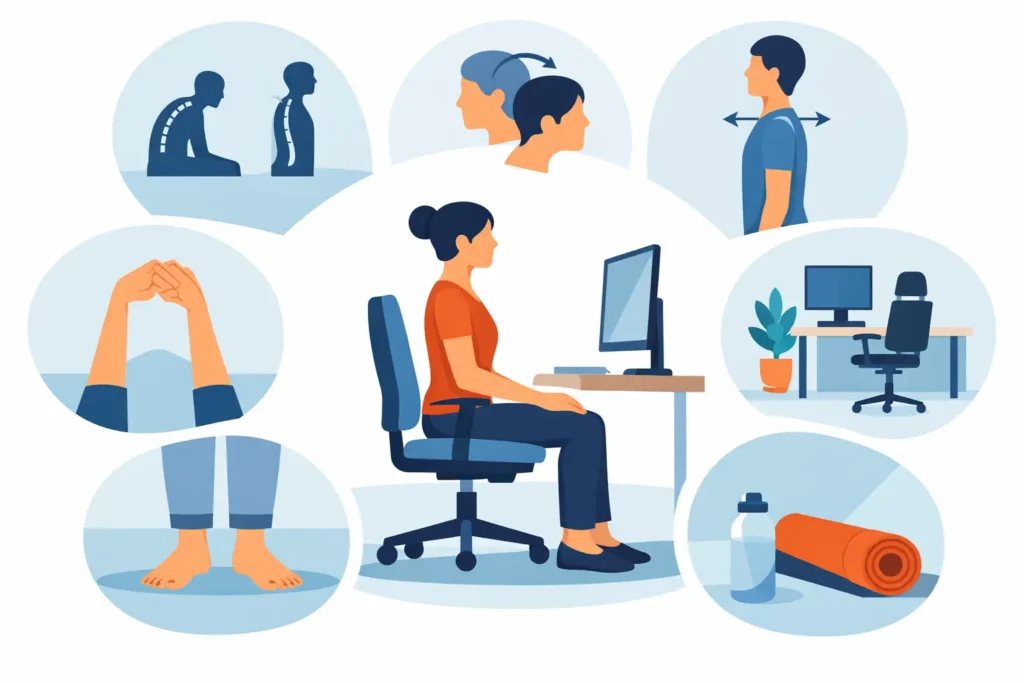
You usually do not notice your posture when it is working well. You notice it when your neck feels tight by 2 p.m., your low back aches after driving across San Antonio, or your shoulders feel heavy after a day at a desk. The most useful posture correction tips are not about forcing yourself to sit perfectly straight all day. They are about reducing stress on your spine, improving body awareness, and building habits your body can actually maintain.
Posture is not a cosmetic issue. It affects how your joints move, how your muscles share the workload, and how much strain builds up over time. When posture is off, one area often compensates for another. That can show up as headaches, shoulder tension, mid-back stiffness, numbness, low back pain, or fatigue that seems to come out of nowhere.
Why posture problems keep coming back
Many people assume bad posture comes from slouching alone. In reality, posture changes for a few different reasons. Long hours at a computer can play a role, but so can old injuries, weak stabilizing muscles, pregnancy-related changes, stress, driving, repetitive work, and even the way you stand when holding a child on one hip.
This is why posture advice can feel frustrating. A generic reminder to “sit up straight” rarely works if your hips are tight, your upper back is stiff, or your deep core muscles are not supporting you well. Sometimes pain changes posture, and sometimes posture contributes to pain. It depends on the person, their daily routine, and what their body is compensating for.
That is also why lasting improvement usually starts with assessment, not guesswork. If one shoulder sits higher, your head drifts forward, or your pelvis tilts unevenly, the right plan should match the pattern. A personalized approach tends to work better than chasing symptoms one area at a time.
Posture correction tips that help in real life
The best posture correction tips are practical enough to use at work, at home, and in the car. Small changes done consistently usually matter more than dramatic fixes.
1. Stop chasing a perfectly upright position
Good posture is not rigid. If you hold yourself stiffly all day, you can create a different kind of tension. A healthier goal is stacked alignment – ears over shoulders, shoulders over ribs, ribs over pelvis – with enough movement throughout the day that no single position becomes stressful.
Think of posture as dynamic support, not military stillness. The body does better with variety.
2. Bring your screen to you
Forward head posture is one of the most common patterns we see in adults who work on computers or spend hours looking down at a phone. If your screen sits too low, your head will follow it. Since the head is relatively heavy, even a small forward shift increases strain through the neck and upper back.
Raise the screen so it is closer to eye level. Keep the keyboard and mouse close enough that your shoulders do not round forward. If you use a laptop all day, an external keyboard can make a big difference because it lets the screen come up without forcing your arms into an awkward position.
3. Support your lower body, not just your back
People often focus on lumbar support and forget what happens below the waist. If your feet do not reach the floor comfortably, or your knees and hips are positioned poorly, the rest of your posture may compensate.
Sit with your feet supported and your knees roughly level with or slightly below your hips. Avoid crossing the same leg all day. If you tend to perch at the edge of a chair, move back and let the chair support you. Better lower body positioning often makes it easier to improve the spine above it.
4. Break the stress cycle every 30 to 60 minutes
Even good posture becomes bad posture if you hold it too long. One of the most effective strategies is to interrupt static positions before your body starts protesting.
Stand up. Walk for a minute. Roll your shoulders. Gently extend your upper back. Take a few slow breaths and reset your rib cage over your pelvis. These short movement breaks are simple, but they reduce accumulated tension and give overloaded muscles a chance to recover.
5. Strengthen what holds you up
Stretching can help, but stretching alone is often not enough. If your posture collapses as soon as you stop thinking about it, weakness may be part of the issue. Common areas that need support include the deep neck stabilizers, mid-back muscles, glutes, and core.
This does not mean you need an intense workout plan. Often, targeted rehabilitation exercises are more useful than general exercise because they train control, endurance, and coordination. The right program depends on your posture pattern. Someone with rounded shoulders may need a very different plan than someone with anterior pelvic tilt or pregnancy-related postural stress.
6. Use your phone differently
Phones encourage repeated bending through the neck and rounding through the upper back. Over time, that position can feed neck pain, tension headaches, and shoulder tightness.
Bring the phone closer to eye level when possible. Switch hands regularly. Use voice-to-text sometimes instead of long periods of typing with your head down. These are small changes, but they reduce one of the most common daily posture stressors.
7. Pay attention to how you stand
Standing posture matters as much as sitting posture. Many people lock their knees, shift weight into one hip, or arch the low back without realizing it. That can overload the lumbar spine and create muscle imbalance over time.
A better standing posture feels balanced rather than forced. Keep weight distributed more evenly through both feet. Let the knees stay soft instead of locked. Gently engage the lower abdomen and avoid flaring the ribs upward. If you stand for long periods, placing one foot on a small step or shifting positions periodically can reduce strain.
8. Address pain, stiffness, and old injuries
If posture changes are hard to maintain, there may be a reason beyond habit. Joint restriction, muscle guarding, disc irritation, old whiplash, pregnancy-related pelvic stress, or compensation after an auto accident can all change the way you move and hold yourself.
This is where hands-on care and guided rehabilitation can be especially helpful. Chiropractic adjustments, soft tissue work, postural rehab, and home exercise instruction can improve mobility and help your body hold a better position with less effort. Re-evaluation matters too, because posture should improve based on objective changes, not just how things look in a mirror.
When posture correction needs more than home tips
Home strategies are a great starting point, but some signs suggest it is time for a more thorough evaluation. If posture issues come with recurring headaches, radiating pain, numbness, sciatica, dizziness, jaw tension, or persistent neck and back pain, it is worth getting checked.
The same is true if you have tried posture correction tips and nothing seems to stick. That usually means there is an underlying driver that needs attention. The body may be compensating around weak areas, restricted joints, inflammation, or a movement pattern that you cannot correct by reminders alone.
A thorough assessment should look at more than where your shoulders sit. It should consider spinal alignment, range of motion, muscle balance, gait, work habits, previous injuries, and any neurological symptoms. For some patients, the right plan may include chiropractic care and rehab. For others, it may also involve acupuncture, decompression, ergonomic changes, or nutrition support to help calm inflammation and support recovery.
Posture correction tips work best when they fit your life
The truth is, the best posture plan is the one you can maintain on a busy Tuesday. If you are a working professional, that may mean adjusting your workstation and setting movement reminders. If you are a parent, it may mean changing how you lift, carry, and feed your child. If you are pregnant, it may mean supporting your pelvis and core differently as your body changes. If you were in a car accident, it may mean restoring normal movement before posture can improve naturally.
There is no single perfect posture for every body, and there is no benefit in blaming yourself for patterns your body developed for a reason. What matters is identifying the source of strain and building a realistic plan to reduce it.
At Align Chiropractic and Wellness, that is how we approach posture-related concerns – with individualized assessment, hands-on care when needed, targeted rehab, and practical home guidance that supports long-term improvement. Better posture is rarely about trying harder. It is usually about getting the right support, then practicing the right habits consistently.
If your body has been asking for attention through tightness, headaches, or recurring back and neck pain, take that as useful information. A few thoughtful changes today can create a very different baseline for how you feel a month from now.