
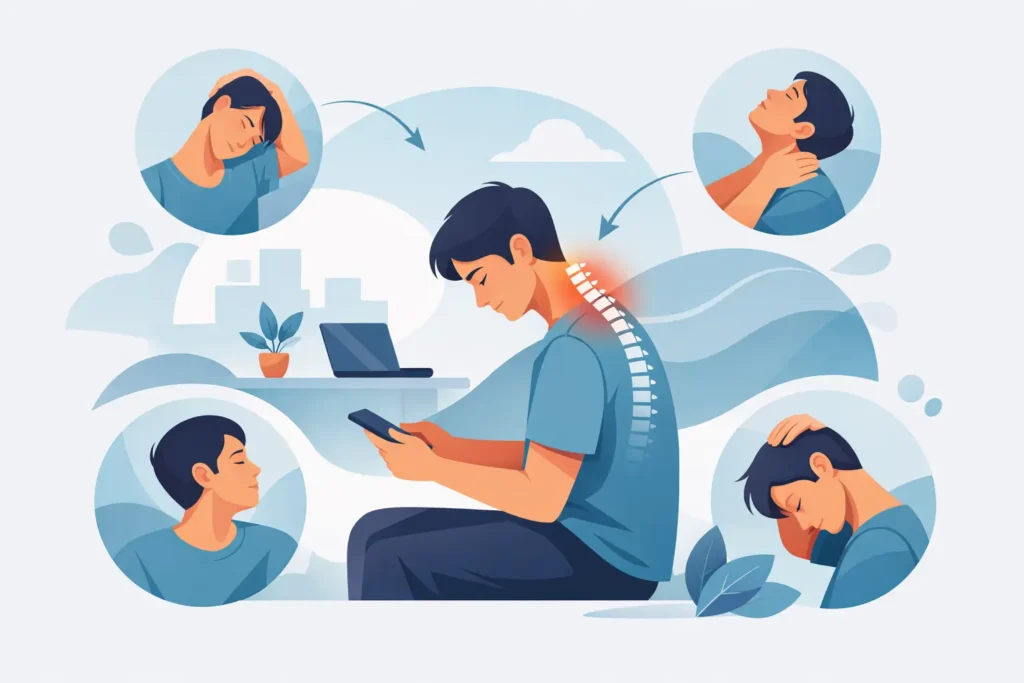
A tight neck after a long workday is one thing. A neck that feels stiff, achy, and wired into your shoulders every single day is something else. If you have been searching for the best stretches for text neck, you are probably feeling more than simple tension – you may also notice headaches, upper back soreness, reduced range of motion, or that heavy feeling between your shoulder blades.
Text neck is a modern posture problem, but the strain it creates is very real. Hours spent looking down at a phone, laptop, or tablet can push the head forward, round the shoulders, and overload the muscles that support the neck and upper spine. Stretching can help, but only when it is done with control and matched to what your body actually needs.
Why text neck happens in the first place
Your head is designed to balance over your spine, not drift inches in front of it. When it moves forward, the muscles in the back of the neck and upper shoulders have to work harder to hold it up. Over time, that can create tightness in the upper trapezius, levator scapulae, chest, and suboccipital muscles, while the deeper support muscles in the front of the neck and upper back often become underactive.
That is why text neck is rarely just a neck issue. It often involves the shoulders, mid-back, jaw, and even breathing mechanics. Some people mainly feel stiffness. Others get headaches, tingling into the arm, or pain that worsens by the end of the day. The right stretches can calm some of that tension, but they work best as part of a bigger plan that also includes posture correction, strengthening, and changes in screen habits.
The best stretches for text neck at home
These stretches are most helpful when they feel gentle and targeted, not forced. You should feel a mild to moderate stretch, never sharp pain, numbness, or dizziness. Move slowly, breathe steadily, and stop if a position increases your symptoms.
Chin tuck
This is one of the most useful starting points because it helps reverse the forward head posture that often drives text neck. Sit or stand tall and look straight ahead. Without tipping your head up or down, gently draw your chin straight back, as if you are trying to make a small double chin. Hold for 3 to 5 seconds, then relax.
This is not a big movement, and that is where many people go wrong. Done correctly, it should feel subtle. Repeat 8 to 10 times. If your neck feels strained, you may be pulling too hard.
Upper trapezius stretch
The upper trapezius is the muscle that often feels like it is carrying your whole day. To stretch it, sit upright and let one arm relax down by your side. With the opposite hand, gently guide your ear toward your shoulder. Keep your shoulders level and avoid twisting.
Hold for 20 to 30 seconds, then switch sides. If you want a little more stretch, the arm on the side being stretched can reach gently toward the floor. This should create length along the side of the neck, not pinching.
Levator scapulae stretch
This muscle runs from the upper shoulder blade to the neck and is a common source of text neck pain. Start seated or standing tall. Turn your head about 45 degrees to one side, then look down toward your armpit. Use your hand to apply very light pressure to the back of the head if needed.
You should feel this more along the back and side of the neck than the upper trap stretch. Hold for 20 to 30 seconds and repeat on the other side. For people who spend hours on a laptop, this stretch is often especially helpful.
Doorway chest stretch
Text neck is not just about what is tight in the neck. Rounded shoulders and a collapsed upper body can keep pulling the neck forward. A doorway chest stretch helps open the front of the shoulders and chest.
Stand in a doorway and place your forearms on each side of the frame with elbows around shoulder height. Step one foot forward until you feel a stretch across the chest. Keep your ribs down and avoid arching your low back.
Hold for 20 to 30 seconds. If your shoulders are sensitive, adjust the arm height. A lower position is sometimes more comfortable than forcing the classic 90-degree angle.
Suboccipital stretch
The small muscles at the base of the skull can get extremely tight from constantly holding the head forward. These muscles are often linked to tension headaches and that deep ache at the top of the neck. To stretch them, sit tall, tuck your chin slightly, and then gently nod your head as if you are saying yes very softly.
Place your hands behind your head only for light support, not pulling. Hold for 15 to 20 seconds. This movement is small, but it can create noticeable relief when done gently.
Cat-cow for the upper spine
If your mid-back is stiff, your neck often has to compensate. Cat-cow helps restore motion through the spine instead of asking the neck to do all the work. Start on hands and knees. As you inhale, let your chest move forward and gently lift your gaze. As you exhale, round your upper back and bring your chin slightly inward.
Move slowly for 8 to 10 repetitions. Focus on the whole spine, especially the upper back between the shoulder blades. If kneeling is uncomfortable, this can also be modified in a chair.
Thread the needle
This stretch adds rotation through the upper back and shoulder girdle, which can reduce tension patterns that feed into the neck. Start on hands and knees. Slide one arm underneath your body, allowing that shoulder and the side of your head to move toward the floor. Keep the movement comfortable and supported.
Hold for 20 to 30 seconds, then switch sides. You should feel a stretch through the back of the shoulder and upper thoracic area. If this position bothers your shoulder, skip it and focus on gentler options.
Side-bending neck stretch with shoulder set
This is a simple upgrade to a basic neck stretch. Sit tall, gently pull your shoulder blades slightly back and down, and then tilt your ear toward your shoulder. Setting the shoulder position first helps you target the neck more effectively rather than collapsing into the stretch.
Hold for 20 seconds on each side. This is a good option during the workday because it does not require much space or equipment.
How often should you do text neck stretches?
For most people, a little consistency works better than one long stretching session. Two to three stretches, done once or twice a day, is often enough to start noticing a difference. If you are very flared up, shorter sessions spread throughout the day may feel better than trying to do everything at once.
It also depends on why your neck is irritated. If your symptoms come mainly from posture and screen time, regular stretching can be helpful. If your pain is related to a disc issue, joint restriction, nerve irritation, or an old injury, stretching alone may only provide partial relief.
What stretching can and cannot fix
Stretching is useful, but it has limits. If you only stretch tight muscles without addressing why they are tight, the relief may be temporary. A forward head posture usually needs more than flexibility. It often requires support for the deeper neck flexors, better shoulder blade control, improved workstation setup, and periodic re-evaluation to see what is actually changing.
That is also why some people feel worse when they stretch aggressively. A muscle can feel tight because it is overworking to protect an unstable area. In that case, more pulling is not always better. The body sometimes needs stability just as much as mobility.
When to get evaluated
If your symptoms keep returning, are getting more intense, or include numbness, tingling, arm pain, frequent headaches, or dizziness, it is worth having your posture and movement assessed. The same is true if your neck pain started after a car accident or if you cannot turn your head normally.
A more complete evaluation can help identify whether your problem is mostly muscular, joint-related, nerve-related, or part of a larger postural pattern. At Align Chiropractic and Wellness, this kind of issue is typically approached through individualized care that may include hands-on treatment, targeted rehabilitation exercises, posture guidance, and home care recommendations based on how your body is moving – not just where it hurts.
The goal is not to chase symptoms from day to day. It is to reduce stress on the neck, improve function, and help your body hold a healthier position with less effort.
Small daily habits matter as much as the best stretches for text neck
Even the best routine will struggle if you spend ten hours a day folded over a screen. Raise your phone closer to eye level when you can. Bring your monitor up so you are not constantly looking down. Take short movement breaks every 30 to 60 minutes. And pay attention to the moments when stress creeps into your shoulders, because tension and posture often feed each other.
If your neck has been asking for help, listen early. Gentle stretching, better mechanics, and the right support can go a long way toward helping you feel clearer, looser, and more at ease in your body again.