
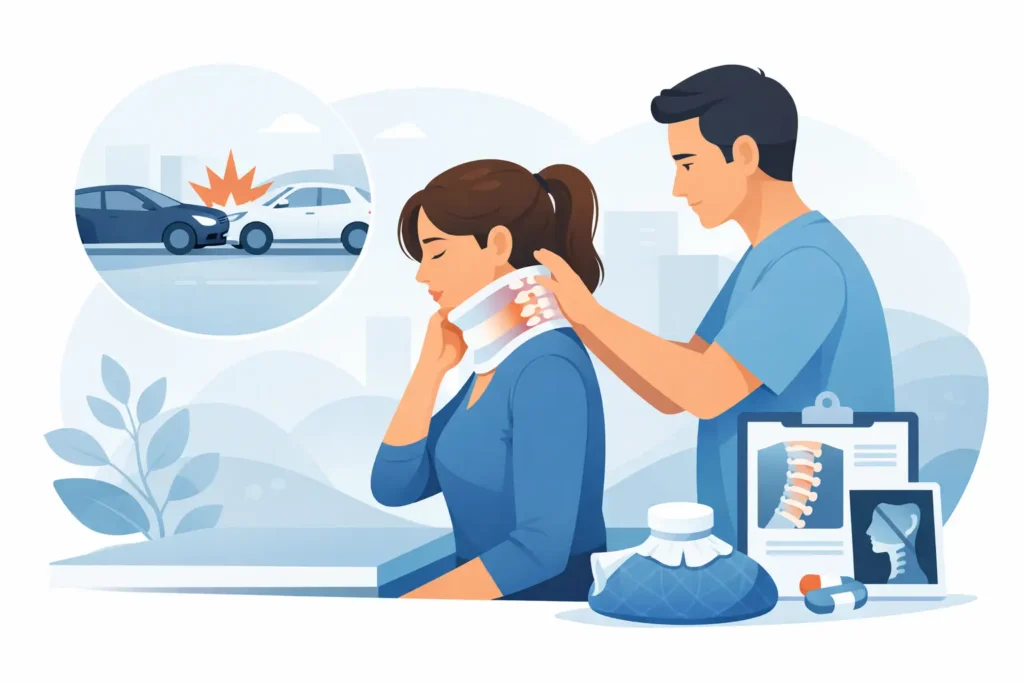
That sore, tight feeling in your neck after a crash can be easy to brush off at first. Many people feel shaken up, deal with the car, talk to insurance, and assume the discomfort will fade on its own. But whiplash treatment after car accident injuries should not be delayed just because symptoms seem mild in the beginning. In many cases, pain, stiffness, headaches, and reduced range of motion build over the next several hours or days.
Whiplash is not just a “stiff neck.” It is a force-related injury that affects muscles, ligaments, joints, nerves, and the way the spine moves and stabilizes. Even a low-speed collision can create enough sudden acceleration and deceleration to strain soft tissues and disrupt normal mechanics in the neck and upper back. That is why early evaluation matters. The goal is not simply to wait for pain to calm down. It is to understand what was injured, how severe it is, and what kind of care will support real healing.
What whiplash actually does to the body
When your head is thrown forward and backward quickly, the cervical spine absorbs force it was never designed to handle all at once. The muscles may tighten to protect the area. Ligaments can become overstretched. Joints may become restricted or irritated. In some cases, the upper back, shoulders, jaw, and even the lower back are involved too.
This is one reason symptoms vary so much from person to person. One patient may mainly notice neck pain and stiffness. Another may deal with headaches, dizziness, shoulder tension, numbness or tingling, trouble sleeping, or pain when turning the head while driving. Stress after an accident can also amplify muscle guarding and nervous system sensitivity, which makes the whole picture more complex than a single sore spot.
A careful exam helps separate simple soreness from more significant dysfunction. It also helps identify when symptoms point to a condition that needs a different level of medical evaluation.
Whiplash treatment after car accident injuries depends on timing
The first few days after a crash often shape the recovery process. If tissues are irritated and movement patterns start to compensate, the body can settle into pain, guarding, and poor posture very quickly. That does not mean every case becomes chronic, but it does mean waiting too long can make recovery slower and more frustrating.
Effective whiplash treatment after car accident injuries usually starts with an assessment of pain levels, range of motion, joint movement, posture, muscle tension, neurological signs, and how symptoms affect daily tasks. That information matters because two people with the same accident history may need very different care plans.
For example, someone with sharp pain and acute inflammation may need a gentler early approach than someone whose main issue is restricted movement and muscle spasm. A parent trying to lift children, a professional sitting at a desk, and an active adult eager to get back to workouts all place different demands on the body. Good care should reflect that.
What a well-rounded treatment plan may include
The best treatment plans are individualized, not one-size-fits-all. In many cases, recovery benefits from a combination of hands-on care, movement-based rehabilitation, and practical support at home.
Chiropractic care may help restore healthier joint motion in the neck, upper back, and related areas that became restricted after impact. When appropriate, adjustments can reduce mechanical stress, improve mobility, and help the body move more normally again. That said, timing and technique matter. An experienced provider will consider inflammation levels, tissue sensitivity, and the patient’s overall presentation before deciding what is appropriate.
Soft tissue therapy is often important as well. Muscles in the neck and shoulders commonly become tight and protective after an accident. Addressing those patterns can help reduce tension, improve circulation, and ease the strain that contributes to headaches and stiffness.
Rehabilitation exercises are another major piece of recovery. This is where many people either improve steadily or stall out. Gentle mobility work, postural retraining, and stability exercises can help the neck and upper back regain control, not just flexibility. That matters because a neck that moves loosely but lacks support may keep getting irritated.
Some patients also benefit from acupuncture, especially when pain, muscle guarding, or stress is keeping the nervous system on high alert. Home exercise instruction, ergonomic guidance, and simple recovery strategies can make a big difference between visits.
Why passive rest is usually not enough
After a car accident, many people assume rest alone is the safest answer. Short-term rest may be helpful in the immediate phase, especially if movement is very painful. But too much rest often leads to more stiffness, weaker support muscles, and greater fear of movement.
Recovery usually goes better when care balances protection with progress. That means calming irritated tissues while gradually restoring normal movement and confidence. If you only chase short-term relief without rebuilding function, symptoms may return when life gets busy again.
This is especially true for people who spend long hours at a desk, commute regularly, or have physically demanding routines. The body has to tolerate real-world stress again. Treatment should prepare you for that, not just make you feel better for a day or two.
Symptoms that should not be ignored
Some whiplash symptoms are straightforward. Others suggest the need for prompt evaluation. Neck pain, headaches, shoulder tension, and limited range of motion are common. So are fatigue and interrupted sleep.
But if symptoms include radiating pain, numbness, tingling, significant dizziness, weakness, vision changes, or worsening headaches, you should be assessed quickly. Severe pain, confusion, or other concerning signs may require immediate medical attention to rule out more serious injury.
A thorough provider does not assume every post-accident symptom is “just whiplash.” They look at the whole picture, monitor changes, and refer out when needed.
The value of re-evaluation during recovery
One of the most overlooked parts of care is reassessment. Early symptoms do not always tell the full story. Sometimes inflammation settles and the real movement restrictions become clearer. Other times, a patient improves quickly in one area but continues to struggle with headaches, posture, or exercise tolerance.
That is why re-evaluations matter. They help measure progress objectively and guide changes in the treatment plan. If a patient is not responding as expected, care should adapt. If they are improving well, the focus can shift from symptom relief to strength, posture, and resilience.
At Align Chiropractic and Wellness, this kind of individualized follow-through is a key part of helping patients recover with confidence instead of guessing their way through healing.
Long-term issues can develop when whiplash is left untreated
Not every untreated whiplash case becomes chronic, but some do. Ongoing neck tension, recurring headaches, reduced mobility, postural strain, and pain with daily activities can linger long after the accident itself. Sometimes people assume they healed because the intense pain faded, but the underlying restriction, weakness, or compensation never fully resolved.
This is where whole-person care becomes valuable. Recovery is not only about the injured tissue. It also involves sleep, stress, inflammation, posture, work setup, and the physical habits that either support healing or keep aggravating the problem. Looking at those factors can help patients move from temporary relief to more durable recovery.
When to seek care
If you were in a car accident and your neck feels off, stiff, painful, or limited, it is worth getting evaluated sooner rather than later. The same goes for headaches that started after the crash, shoulder tightness, pain between the shoulder blades, or symptoms that seem minor but keep worsening.
You do not need to wait until the pain becomes severe to take it seriously. Early care can often reduce the risk of prolonged dysfunction and help you recover with a clearer plan.
The most helpful next step is simple: get your body checked by a provider who will listen carefully, assess thoroughly, and build treatment around your specific injuries and goals. A crash may happen in seconds, but recovery tends to go better when it is approached with patience, precision, and support.