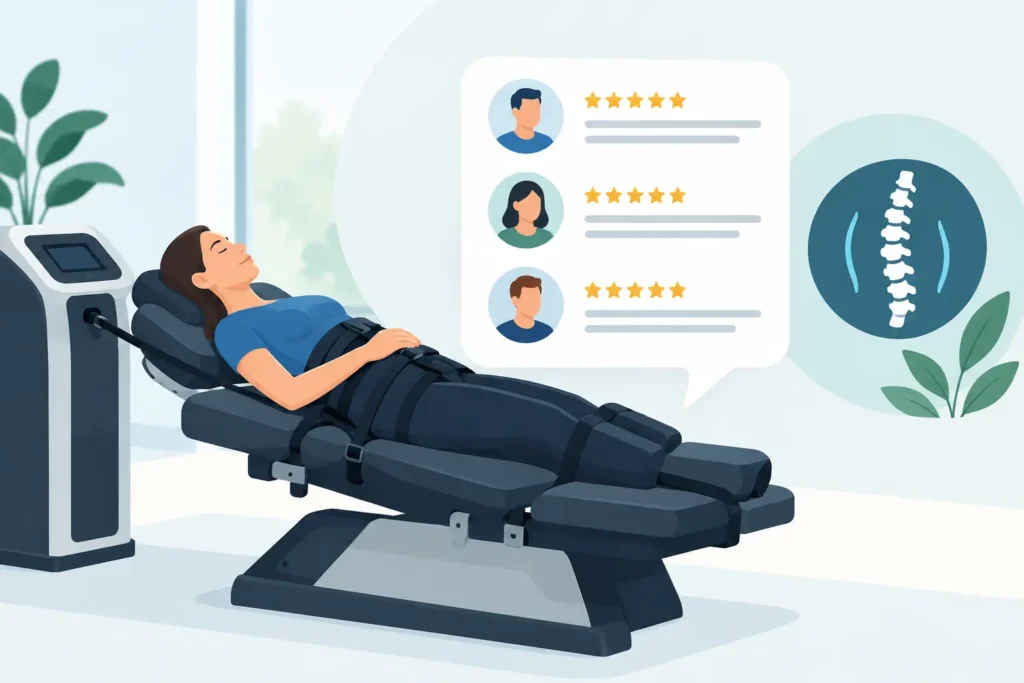
A review that says, “I could finally sit through a workday again,” may be more useful than one that simply says, “Great experience.” When reading decompression therapy reviews, the goal is not to find a promise of instant relief. It is to understand whether a provider listens carefully, explains the plan, tracks progress, and offers care that fits the real-life demands of your back pain, sciatica, or disc-related symptoms.
Spinal decompression can be a valuable non-surgical option for some people dealing with persistent low back pain, radiating leg pain, stiffness, or discomfort that makes it hard to work, exercise, sleep, or keep up with family. But the experience is personal. Reviews can help you ask better questions and choose care thoughtfully rather than relying on marketing claims alone.
What Decompression Therapy Reviews Can Tell You
The most credible reviews tend to describe a journey, not a miracle. A patient may mention that pain became less frequent, that numbness or tingling improved over several visits, or that they could return to walking, driving, or strength training with more confidence. These details matter because musculoskeletal recovery often happens in stages.
Look for comments about the initial evaluation. Before recommending spinal decompression, a provider should understand your symptoms, health history, movement limitations, posture, previous injuries, and daily activities. Depending on your case, this may include orthopedic and neurological testing, imaging review, and objective measurements that create a starting point for care.
Reviews can also reveal whether a clinic communicates clearly. Patients should understand why decompression is being recommended, what the sessions feel like, how often they may be scheduled, and what other parts of a care plan may support recovery. A reassuring experience is not just about being comfortable on the table. It is about feeling heard, informed, and involved in your own progress.
What Spinal Decompression Is Designed to Do
Spinal decompression therapy uses a specialized table to apply controlled traction to the spine. The gentle pulling and releasing motion is intended to reduce pressure within spinal discs and create a more favorable environment for movement and healing. For some patients, it may help relieve symptoms connected with disc irritation, bulging or herniated discs, degenerative disc changes, and certain forms of sciatic pain.
The treatment itself is generally calm and non-invasive. You remain clothed and are secured comfortably with supportive straps while the table moves through a programmed cycle. Most patients describe a stretching or gentle pulling sensation, not sharp pain. If something feels uncomfortable, the provider should adjust the settings and talk with you about what you are feeling.
Still, decompression is not the same as a one-size-fits-all back pain solution. Low back pain can involve discs, joints, muscles, nerves, posture, old injuries, stress, and movement habits. A person whose primary issue is spinal stenosis, instability, fracture risk, infection, cancer, or another serious medical concern may need a different approach or medical referral. A responsible provider screens for these situations before beginning care.
How to Read Reviews Without Being Misled
Star ratings are a quick snapshot, but the written comments are where the useful information lives. A five-star review is more meaningful when it explains what changed and how the clinic supported that change.
Pay attention to whether patients mention individualized care. A plan for an active adult with a recent disc flare-up should not necessarily look like a plan for a parent with years of postural strain or someone recovering after an auto accident. The right frequency and combination of services depend on the diagnosis, severity of symptoms, health history, and functional goals.
It is also helpful when reviews mention re-evaluations. Progress should be measured over time, not assumed. Your provider may monitor pain patterns, range of motion, strength, posture, nerve-related symptoms, and your ability to return to important activities. If treatment is not producing meaningful improvement, the plan should be reconsidered.
Be cautious with reviews that make absolute claims, such as guaranteed cures or permanent results after a single visit. Good care does not depend on exaggerated promises. It depends on appropriate assessment, a clear plan, consistent communication, and practical steps that support your body between appointments.
Signs of a Patient-Centered Experience
The best reviews often point to simple but meaningful behaviors: staff members who make scheduling manageable, providers who explain findings in plain language, and a clinic that takes concerns seriously rather than rushing people through care. These qualities are particularly valuable when you have been living with pain long enough to feel frustrated or discouraged.
You may also see patients mention home exercises, posture guidance, nutrition support, or recommendations for modifying work, sleep, and activity. These details show that the focus extends beyond temporary symptom relief. For many people, recovery improves when in-office care is paired with habits that reduce repeated strain.
Questions to Ask Before Starting Decompression Therapy
A consultation should give you more than a price quote. It should help you decide whether decompression makes sense for your condition and goals. Ask what findings suggest that you are a candidate, how your progress will be evaluated, and what changes would indicate the need to modify the plan.
You can also ask whether decompression will be combined with chiropractic adjustments, rehabilitation exercises, soft tissue work, acupuncture, or other supportive care. Combination care is not automatically better, but it can be appropriate when your symptoms involve more than disc pressure alone. For example, someone with sciatica may also need to improve hip mobility, core stability, or movement patterns that continue to irritate the area.
Discuss the expected commitment honestly. Some patients feel a shift in comfort early, while others need a series of visits before they notice consistent functional improvement. Your provider should explain the recommended schedule, financial considerations, and what you can do at home without pressuring you to commit before you understand the reasoning.
Why Results Depend on More Than the Table
A decompression table can be a useful tool, but it is only one part of a thoughtful care plan. If long hours at a desk, poor lifting mechanics, weak postural muscles, interrupted sleep, or repeated physical strain are contributing to your symptoms, those factors deserve attention too.
This is where whole-person care can make a difference. At Align Chiropractic and Wellness, care plans are built around objective assessment, hands-on treatment when appropriate, rehabilitation, and guidance that helps patients carry progress into their everyday routines. The aim is not merely to help you feel better for a day. It is to support more comfortable movement and a stronger foundation for long-term wellness.
For some people, that means learning a few targeted exercises. For others, it may mean adapting a workstation, pacing a return to exercise, improving sleep positioning, or addressing the stress that causes constant muscle tension. The best plan is the one that addresses your needs without adding unnecessary complexity.
When It Is Time to Schedule an Evaluation
If back pain or sciatica is affecting your ability to sit, stand, sleep, exercise, or work, you do not have to guess your way through options. An evaluation can clarify whether spinal decompression is appropriate and what other forms of care may help you move forward.
Seek prompt medical attention for severe or worsening weakness, loss of bowel or bladder control, numbness in the groin area, fever with back pain, or pain following a major trauma. These symptoms need timely medical assessment rather than routine conservative treatment.
The most helpful reviews do not replace a professional evaluation, but they can help you recognize what respectful, individualized care should look like. Choose a provider who is willing to listen to your story, assess the full picture, explain your options clearly, and help you take the next realistic step toward feeling more like yourself.