
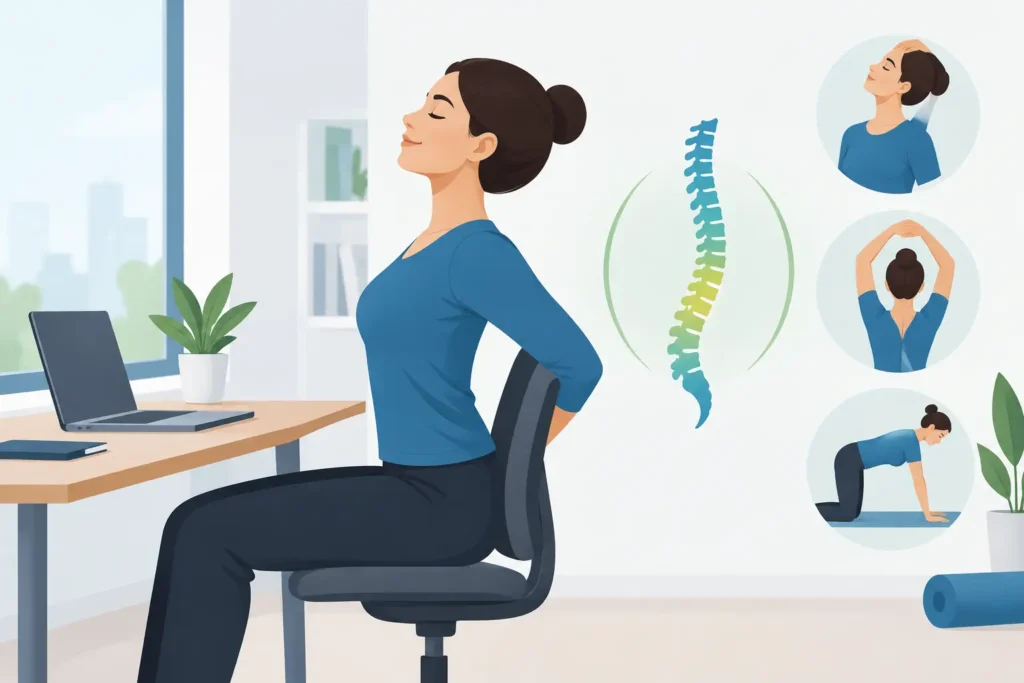
The ache that shows up at 4 p.m. is rarely just about the last hour at your desk. It is often the result of many small exposures: leaning toward a screen, holding tension in your shoulders, looking down at a phone, skipping movement breaks, and then trying to power through discomfort. Spine rehab after desk work helps address the movement, muscle, and postural patterns behind that cycle so relief is not limited to the moment you stand up.
For many San Antonio professionals, desk-related pain is complicated by real life. You may move from a computer to a commute, from a commute to parenting, exercise, errands, or another screen. A thoughtful rehabilitation plan should fit that reality. It should help you feel better now while building the strength, mobility, and habits that support your spine when the workday gets demanding.
Why Desk Work Can Create More Than Temporary Stiffness
Desk work does not automatically damage your spine. The bigger concern is prolonged, repetitive positioning with too little movement variety. Your body is built to change positions, walk, reach, rotate, and carry load. When one posture dominates for hours, certain tissues may become irritated while others become underused.
A forward head position can increase strain through the neck and upper back. Rounded shoulders may make the chest and front of the shoulders feel tight while the muscles that support the shoulder blades are less active. Slouching or perching on the edge of a chair can also change how your low back, hips, and core share the work of sitting.
These patterns may contribute to neck pain, upper-back tension, low-back discomfort, headaches, reduced range of motion, or tingling symptoms into an arm or leg. Stress matters, too. When deadlines are high, many people brace their shoulders, clench their jaw, and breathe more shallowly without realizing it. The nervous system can begin to associate work with tension and discomfort.
Still, posture is not a moral failing, and there is no single perfect position to hold all day. The best posture is usually the next posture. Rehabilitation is not about forcing your body into a rigid shape. It is about improving your ability to move, tolerate daily demands, and recover when you have been still for too long.
What Spine Rehab After Desk Work Should Address
A useful plan begins with an individual assessment, not a generic list of stretches. Two people can both report low-back pain after sitting, yet have very different movement restrictions, work habits, injury histories, sleep patterns, and goals. One may need more hip mobility and trunk endurance. Another may be dealing with neck-driven headaches, an old auto accident injury, or pain that increases during a long commute.
At Align Chiropractic and Wellness, care can include an evaluation of posture, spinal motion, joint function, muscle balance, movement patterns, and the daily activities that aggravate or relieve symptoms. Objective findings and regular re-evaluations help guide the plan rather than relying only on how you feel on one particular day.
Restore comfortable movement first
When the spine and surrounding muscles are irritated, the first goal is often to restore motion without provoking symptoms. Chiropractic adjustments may help improve joint motion and reduce mechanical restriction. For some patients, spinal decompression may be considered when symptoms and examination findings suggest it is appropriate. Acupuncture may also be part of an integrative approach to managing pain and muscle tension.
The right treatment depends on your condition. Hands-on care can be valuable, but it works best as part of a larger plan that helps you take an active role in recovery. If discomfort returns every time you sit at your desk, your body likely needs more than a brief reset.
Build support through targeted rehabilitation
Postural rehabilitation exercises are designed to improve how your body supports itself during daily activity. This may include training the deep neck muscles, improving shoulder blade control, restoring upper-back mobility, building core endurance, and strengthening the hips. These are not necessarily intense workouts. Often, precise and consistent movements provide more value than doing too much too soon.
For example, someone whose neck tightens during video calls may benefit from exercises that encourage better upper-back extension, neck control, and shoulder-blade strength. Someone with a low-back ache after sitting may need to improve hip motion and learn how to use the trunk and hips more effectively when standing, bending, and lifting.
A rehabilitation plan should progress as your capacity improves. Early exercises may focus on awareness and gentle mobility. Later, the emphasis may shift toward endurance, resistance, and movements that resemble the demands of your work and home life. That progression helps turn temporary symptom relief into a more durable change.
Improve the environment without chasing perfection
Ergonomics can make a meaningful difference, especially when your workstation encourages a less strained setup. Keep your screen at a height that does not require you to continually bend your neck downward. Position your keyboard and mouse close enough that you are not reaching through your shoulders. Let your feet rest on the floor or on a stable support, and use a chair that allows you to sit back comfortably.
But an ergonomic chair is not a substitute for movement. Even a well-arranged workstation becomes uncomfortable if you stay in one position for several hours. Rather than trying to buy your way out of pain, consider your setup one helpful piece of a broader rehabilitation strategy.
Small Workday Changes That Support Recovery
A home exercise program does not need to take an hour to be useful. The most effective routine is often the one you can repeat consistently. Your provider may recommend specific movements based on your exam, but these practical changes can support most desk-based routines:
- Change positions regularly. Stand for a call, walk to refill your water, or take a short lap around the office every 30 to 60 minutes.
- Let your eyes leave the screen. Looking across the room or outside can reduce the tendency to keep your head and neck fixed forward.
- Use transition moments. A few controlled shoulder rolls, gentle upper-back movements, or a brief walk after meetings can interrupt accumulated tension.
- Protect your evening recovery. A short walk, comfortable mobility work, adequate hydration, and consistent sleep can help your body recover from a long day of sitting.
The frequency of these habits matters more than doing a large amount once or twice a week. Think of movement breaks as changing the input your spine receives throughout the day. They are not a punishment for sitting. They are a way to give your body the variety it needs.
When Desk Pain Needs a Closer Look
Do not assume every symptom is simply poor posture. Neck or back pain that persists, keeps returning, limits work or exercise, or travels into an arm or leg deserves a professional assessment. The same is true for recurring headaches, numbness, weakness, or pain that follows a fall, a sports injury, or an auto accident.
Seek urgent medical attention for new bowel or bladder changes, numbness in the groin area, significant or worsening weakness, fever with severe back pain, or symptoms after major trauma. These concerns require prompt evaluation.
For less urgent but persistent symptoms, a personalized examination can clarify what is contributing to your discomfort and what type of care is appropriate. There is no benefit in guessing your way through exercises if a specific movement pattern, joint restriction, or injury needs attention.
A Better Goal Than Sitting Perfectly
Many patients come in hoping to find the one stretch, chair, or posture cue that will end their pain. Those tools can help, but lasting progress usually comes from a combination of care: improving mobility where you are restricted, building strength where you need support, adjusting daily habits, and monitoring your response over time.
Your work may require a desk, but it does not have to require living with daily stiffness or a worsening pain pattern. With an individualized plan and steady follow-through, your spine can become more adaptable to the demands of your schedule. If desk work is interfering with how you feel at work, at home, or during the activities you enjoy, scheduling an evaluation can be a practical first step toward moving with greater comfort and confidence.