
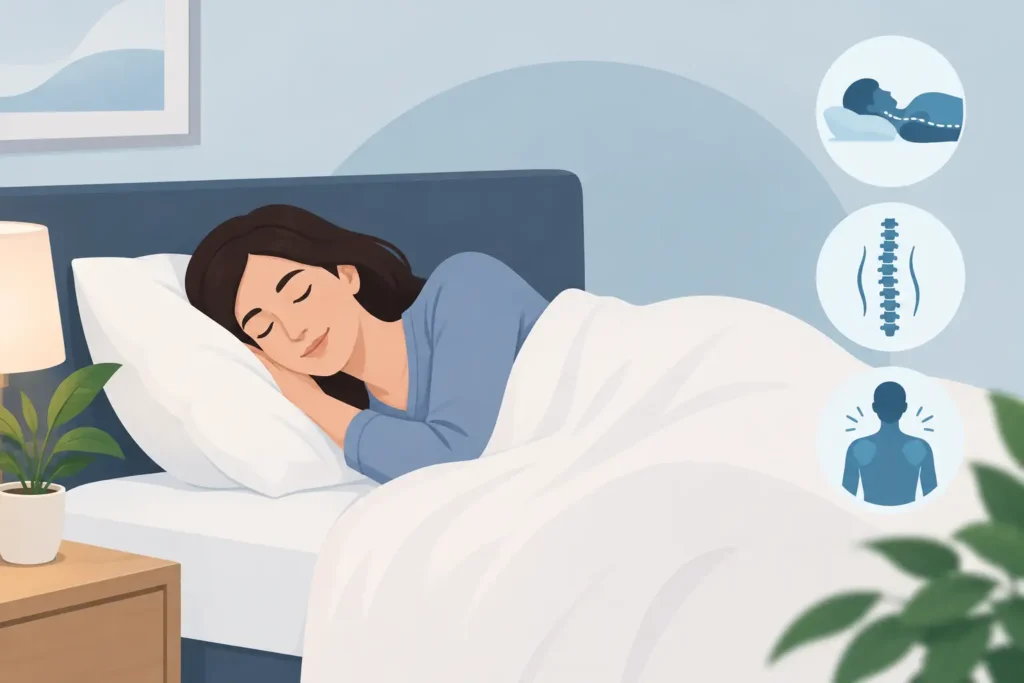
Waking up with a stiff neck, aching low back, numb arm, or sore hip can make the first hour of your day feel harder than it should. Learning how to improve sleep posture is not about forcing yourself into one perfect position. It is about helping your spine, muscles, and joints stay supported for the many hours you spend in bed – and identifying when ongoing pain needs a more personalized evaluation.
Your daytime posture matters, but sleep posture is where the body gets a long stretch of stillness. If your neck is bent too far, your low back is twisting, or your shoulder carries your body weight night after night, irritated tissues may not get the recovery time they need. Small, intentional adjustments to your position, pillow, and mattress can make a meaningful difference.
Start With Neutral Alignment, Not a “Perfect” Position
A healthy sleep position generally keeps your head, rib cage, pelvis, and legs in a comfortable, relatively neutral line. Neutral does not mean perfectly straight or rigid. Your spine has natural curves, and the goal is to support those curves without exaggerating them.
For example, a pillow that is too high can push your head forward or sideways. A mattress that sags can allow your hips to drop lower than your shoulders. Either issue may leave your muscles working through the night to compensate.
The best position depends on your symptoms, body shape, injuries, pregnancy status, and personal comfort. A side sleeper with shoulder pain may need a different setup than someone whose main concern is sciatica or low back stiffness. Give a new change several nights before judging it, unless it clearly increases pain, tingling, numbness, or discomfort.
How to Improve Sleep Posture in Every Common Position
Side sleeping: support the spaces between your body and the mattress
Side sleeping is often comfortable for many adults, but it can strain the neck, shoulder, hips, and low back when the setup is off. Your head should stay level with the rest of your spine, rather than dropping down toward the mattress or being pushed up toward the ceiling.
Choose a pillow with enough height to fill the gap between your shoulder and head. The right height varies based on shoulder width and mattress firmness. On a firmer mattress, many people need a slightly thicker pillow because the shoulder does not sink in as much.
Place a supportive pillow between your knees so the top leg does not pull your pelvis forward or twist your low back. If you tend to curl tightly into a ball, try gently lengthening your body instead. A slight bend in the knees is fine, but extreme curling may make it harder to maintain comfortable spinal alignment.
If your lower shoulder becomes painful or numb, avoid sleeping directly on the arm. Hugging a pillow in front of your chest can support the upper arm and reduce the tendency for the shoulder to roll forward.
Back sleeping: protect the natural curve of the low back
Back sleeping distributes body weight evenly, but some people wake with low back tension because the legs lie flat and pull the pelvis forward. A small pillow under the knees can reduce strain by allowing the hips and knees to bend slightly.
Your head pillow should support the curve of your neck without tipping your chin toward your chest. Thick stacks of pillows are a common source of morning neck pain. If you use a contoured cervical pillow, make sure it feels supportive rather than overly aggressive. More support is not always better if it forces your neck into an uncomfortable position.
Back sleeping may not be ideal for everyone. People who snore heavily, have diagnosed sleep apnea, or feel short of breath on their back should discuss sleep positioning and treatment recommendations with a qualified healthcare provider.
Stomach sleeping: reduce rotation when you can
Stomach sleeping is often the most challenging position for the neck because it requires turning the head to one side for extended periods. That rotation can aggravate neck stiffness, headaches, upper back tension, and shoulder discomfort, especially if you already spend your days looking down at screens or working at a desk.
If stomach sleeping is your preferred position, do not expect yourself to change overnight. Start by using a very thin head pillow, or no head pillow if that is comfortable, to reduce neck extension. A thin pillow under the pelvis may also lessen the pull on the low back.
Over time, many stomach sleepers find it easier to transition to a partial side-sleeping position by hugging a body pillow or placing a pillow behind their back for support. The goal is progress, not a rigid rule that creates more restless nights.
Choose Pillows for Support, Not Just Softness
A pillow should fill space and maintain alignment, not simply feel plush when you first lie down. This is why a pillow that feels wonderful in the store may not work after six hours of sleep.
Pay attention to your waking symptoms. Neck stiffness, headaches that begin at the base of the skull, tingling in an arm, or a shoulder that feels pinched may mean your pillow height or firmness is not right. Flattened, lumpy, or old pillows lose their ability to provide consistent support.
A body pillow can be especially helpful for side sleepers, pregnant patients, and people with hip or low back discomfort. It gives the arms and top leg somewhere to rest, which can limit rolling and twisting. During pregnancy, side sleeping with support between the knees and under the abdomen may improve comfort as the body changes.
Consider What Your Mattress Is Telling You
A mattress does not need to be extremely firm to support good posture. In fact, a surface that is too firm may create pressure at the shoulders and hips, causing you to tense or shift throughout the night. A mattress that is too soft, however, can allow the midsection or hips to sink too deeply.
Look for consistent support rather than a specific label such as firm, medium, or soft. If you wake up feeling better somewhere else, notice what is different about that sleep surface. If your mattress is visibly sagging, has deep body impressions, or leaves you waking stiff most mornings, it may be contributing to the problem.
Before replacing a mattress, a supportive mattress topper may be worth considering, depending on whether your current surface feels too hard or lacks cushioning. A topper cannot correct major sagging, but it can change pressure distribution for some sleepers.
Make Your Evening Routine Work With Your Sleep Posture
Sleep posture is easier to maintain when your body is not already guarded and tense. Long hours of sitting, repetitive lifting, phone use, stress, and limited movement can leave the neck, shoulders, and hips feeling restricted before you ever get into bed.
A brief evening routine can help. Gentle walking, relaxed diaphragmatic breathing, or mobility exercises prescribed for your needs may reduce stiffness and help your body settle into a more comfortable position. Avoid aggressive stretching that causes pain or trying to force a tight area to release.
It also helps to set up your bed before you are exhausted. Place your knee pillow, body pillow, or lumbar support where you need it so you are not trying to arrange everything after you have already started drifting off. Consistency gives your body a chance to adapt.
When Morning Pain Needs More Than a New Pillow
A pillow or mattress adjustment can be useful, but persistent symptoms are not always a sleep-setup problem. Ongoing neck or back pain may be connected to spinal joint irritation, muscle imbalance, disc-related conditions, prior injuries, nerve involvement, or movement patterns during the day.
Consider a professional assessment if pain lasts more than a few weeks, regularly disrupts sleep, travels into an arm or leg, or comes with numbness, weakness, worsening headaches, or changes in balance. After an auto accident, new neck or back symptoms should also be evaluated rather than assumed to be ordinary soreness.
At Align Chiropractic and Wellness, individualized care can include objective assessments, chiropractic and extremity adjustments, postural rehabilitation, home exercise instruction, and other supportive approaches based on your needs and goals. Re-evaluations matter because the right plan should change as your body responds and your function improves.
Better sleep posture is built one comfortable adjustment at a time. Notice what your body is telling you in the morning, make one thoughtful change, and give yourself the support to recover instead of simply pushing through another sore day.