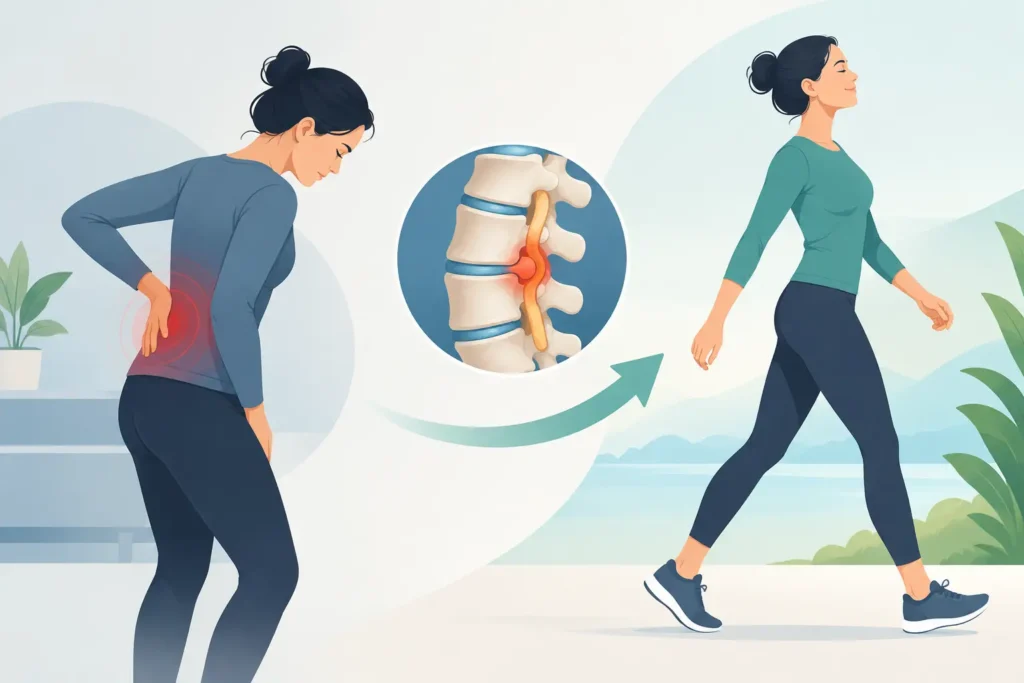
A sudden reach for a laundry basket, a long drive, or one too many hours at a desk can turn ordinary low back stiffness into pain that changes the way a person moves through the day. This lumbar disc case study illustrates how a thoughtful, individualized plan can support someone with disc-related low back symptoms without relying on a one-size-fits-all approach.
The patient story below is a representative example, created to explain the clinical process. Every patient has a different history, examination, response to care, and recovery timeline. Disc symptoms can range from manageable irritation to a condition requiring medical or surgical evaluation, which is why a careful assessment comes first.
The Patient: Back Pain That Would Not Settle Down
Our representative patient was a 42-year-old working parent who spent much of the day alternating between computer work, commuting, and helping with active children at home. After several weeks of intermittent low back tightness, they bent forward while lifting a box and felt a sharp pain across the lower back.
Within a few days, the discomfort began traveling into one buttock and down the back of the thigh. Sitting became difficult, getting out of the car required bracing, and sleep was interrupted by pain when changing positions. The patient had tried rest, heat, and over-the-counter pain relief, which provided temporary comfort but did not restore normal movement.
The goal was not simply to make the pain quieter for a few hours. The patient wanted to sit through work meetings, pick up their child without fear, return to walking for exercise, and understand what could help prevent another setback.
What a Lumbar Disc Issue Can Feel Like
The lumbar discs are cushions between the bones of the lower spine. They help distribute load and allow movement. With repetitive strain, prolonged sitting, awkward lifting, injury, or normal age-related changes, a disc can become irritated. In some cases, disc material may bulge or herniate and irritate a nearby nerve root.
Symptoms do not always match an imaging report. Some people have disc changes on an MRI and no pain at all, while another person may have significant symptoms with less dramatic imaging findings. That is why effective care considers the whole clinical picture: where symptoms occur, what movements aggravate them, how the nerves are functioning, work demands, posture, sleep, stress, and overall health.
Disc-related symptoms may include low back pain, stiffness, pain into the buttock or leg, tingling, numbness, or weakness. Symptoms that are rapidly worsening, severe weakness, loss of bowel or bladder control, or numbness in the groin area need urgent medical attention. These are not symptoms to manage at home or wait out.
Assessment: Looking Beyond the Painful Spot
At the initial visit, the focus was on listening before treating. The patient described the onset of pain, prior episodes, daily habits, exercise history, and positions that either eased or worsened symptoms. Sitting and bending forward increased leg symptoms, while short, frequent walks felt somewhat better.
The examination included posture assessment, range-of-motion testing, orthopedic testing, muscle and joint evaluation, and a neurological screen. The provider checked strength, sensation, reflexes, gait, and the patient’s ability to tolerate basic movements such as standing, sitting, bending, and transitioning from a chair.
The findings suggested a mechanical low back condition with disc-related nerve irritation, rather than an emergency presentation. The patient had discomfort and reduced mobility, but no progressive neurological deficits or red-flag symptoms. This distinction guided the care plan. If examination findings had suggested a more serious concern, the appropriate next step would have been referral for medical imaging or specialist evaluation.
The Care Plan: Reduce Irritation, Then Rebuild Capacity
Early care focused on helping the patient move more comfortably and avoid repeatedly aggravating the sensitive tissues. The plan included gentle chiropractic adjustments where appropriate, soft-tissue support, and carefully selected spinal decompression sessions. Decompression may help some patients tolerate movement more comfortably by applying controlled traction to the lumbar spine, but it is not the right choice for every diagnosis or every stage of recovery.
Just as important, the patient was not told to stay in bed. Extended bed rest can lead to more stiffness, deconditioning, and fear of movement. Instead, they were encouraged to take short walks throughout the day, avoid prolonged slouched sitting, and use movement breaks during computer work and driving.
Home recommendations were intentionally simple at first. The patient practiced a few positions and gentle exercises chosen based on the examination response. These were not generic internet exercises. An exercise that helps one person with back pain can flare symptoms for another, especially when leg pain or nerve irritation is present.
The initial plan also addressed daily mechanics. The patient learned to hinge at the hips when reaching toward the floor, keep frequently used objects within easy reach, and break large tasks into smaller intervals. A supportive sleep position and better workstation setup helped reduce unnecessary strain between visits.
Why Re-evaluations Matter
A care plan should change as the patient changes. At regular re-evaluations, the provider compared pain patterns, range of motion, neurological findings, functional tolerance, and the patient’s own goals. Was the pain still traveling down the leg? Could the patient sit longer before symptoms started? Were they walking more naturally? Could they get dressed or load groceries with less guarding?
These objective and functional markers are more useful than treating on autopilot. They also help determine whether care should progress, be modified, or be coordinated with another healthcare provider.
Progress: From Guarding Every Movement to Trusting the Body Again
During the first phase of care, the patient noticed that getting out of bed and standing from a chair required less bracing. The leg symptoms became less frequent and no longer traveled as far down the thigh. This was encouraging, but it was not a signal to immediately return to heavy lifting or intense workouts.
As symptoms calmed and movement improved, rehabilitation became a larger part of the plan. The patient progressed to exercises that supported core control, hip mobility, glute strength, posture, and endurance. The goal was not to create a perfectly rigid spine. It was to help the body manage everyday loads with more control and less compensation.
By the later phase of care, the patient could sit through a work block with planned breaks, walk comfortably, and handle light household tasks with better confidence. They also understood their early warning signs: rising stiffness after long sitting, increased symptoms with repeated bending, and the need to adjust activity before a small flare became a larger problem.
Not every recovery follows this timeline. Some people improve quickly; others need more time, especially if symptoms have been present for months, there has been a prior injury, work requires physical labor, or sleep and stress are working against recovery. Consistency, not perfection, usually makes the difference.
What This Case Study Shows
This lumbar disc case study is not about a single technique being the answer. It shows the value of a complete process: screen for serious concerns, identify movement patterns that aggravate symptoms, provide hands-on care when appropriate, build a practical rehabilitation plan, and teach the patient how to care for their back outside the office.
It also shows why pain relief and recovery are related but not identical. A person may feel better before they are ready for every activity they want to resume. Returning to lifting, running, sports, or physically demanding work should be based on function and tolerance, not only on whether pain has temporarily disappeared.
For San Antonio adults balancing work, family, and an active life, back pain can feel like it takes away independence. At Align Chiropractic and Wellness, care is centered on understanding what your body is telling you and creating a plan that fits your needs, goals, and daily responsibilities.
If low back pain, sciatica-like symptoms, or recurring stiffness is limiting how you live, a thorough assessment can provide clarity and a practical next step. The right plan begins with being heard, moving safely, and giving your body the consistent support it needs to regain confidence.