
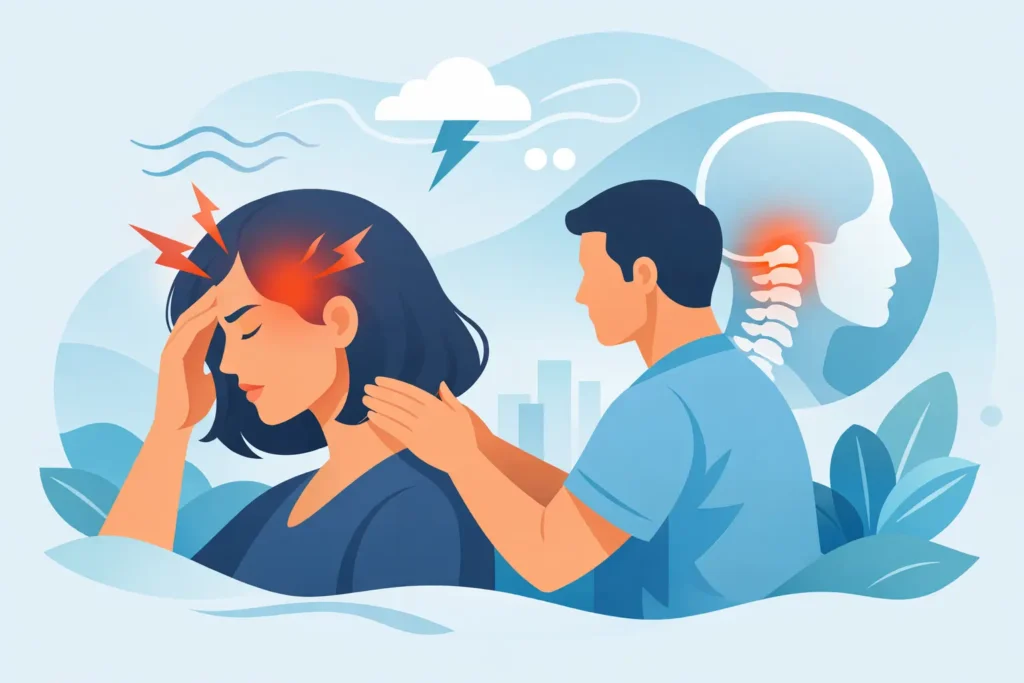
A headache that keeps coming back can wear down your patience, focus, and energy long before the pain itself fades. If you have ever wondered, can chiropractic help headaches, the honest answer is yes – for some people and some types of headaches, it can be a very helpful part of care.
That does not mean every headache starts in the spine, and it does not mean a quick adjustment is the answer for everyone. Headaches have different causes, and the best care starts with identifying what is driving yours. For many adults, especially those with neck tension, poor posture, desk-related strain, old injuries, or stress-related muscle tightness, chiropractic care may help reduce both the frequency and intensity of headaches by addressing mechanical problems that contribute to the pain.
Can chiropractic help headaches caused by neck tension?
In many cases, yes. One of the most common headache patterns seen in a chiropractic office is the tension or cervicogenic headache. These headaches are often connected to restricted movement in the neck, tight muscles in the upper shoulders, forward head posture, jaw tension, or irritation in the joints and soft tissues that refer pain upward into the head.
People often describe this kind of headache as a dull ache, pressure at the base of the skull, pain behind the eyes, or a band-like feeling around the head. It may be worse after a long workday, time on a phone, poor sleep position, or driving. If your headache regularly shows up with neck stiffness or upper back tension, that pattern matters.
Chiropractic care focuses on improving motion in the spine and reducing stress on the surrounding muscles and joints. When a doctor identifies stiffness, postural strain, or dysfunction in the cervical spine, treatment may help reduce one of the underlying triggers rather than simply covering the pain for a few hours.
What types of headaches may respond to chiropractic care?
The best results are usually seen when headaches have a strong musculoskeletal component. Tension headaches and cervicogenic headaches are the clearest examples. These are often influenced by posture, repetitive strain, muscle tightness, spinal joint restriction, and stress held in the neck and shoulders.
Some people with migraines also report improvement when chiropractic care helps lower neck tension, improve movement, and reduce physical stress on the body. That said, migraines are more complex. They can involve neurological, hormonal, dietary, sleep, and environmental triggers. Chiropractic care may be one piece of a broader plan, but it is not a one-size-fits-all solution.
Headaches that stem from dehydration, infection, sinus pressure, uncontrolled blood pressure, medication effects, or other medical conditions need a different approach. This is why a proper evaluation matters so much. Effective care depends on knowing what kind of headache you are dealing with before starting treatment.
How chiropractic care for headaches works
Headache care should never begin with guesswork. A thorough visit typically starts with a health history, a discussion of your symptoms, and an examination that looks at posture, spinal motion, muscle tension, movement patterns, and areas of irritation or imbalance. The goal is to understand whether the neck, upper back, jaw, posture, or nervous system stress may be contributing to your symptoms.
If chiropractic treatment is appropriate, care may include spinal adjustments, targeted work to restricted joints, soft tissue techniques, postural recommendations, and rehab exercises designed to support better alignment and movement. Home care often matters just as much as what happens in the office. The way you sit, sleep, lift, work, and recover can either calm the problem down or keep feeding it.
At Align Chiropractic and Wellness, headache care is viewed through a whole-person lens. That means looking beyond the pain itself and asking what is loading the system. Sometimes the issue is a desk setup. Sometimes it is stress and muscle guarding. Sometimes it is an old injury that never healed well, weak postural muscles, or daily habits that keep the neck under constant strain.
Why posture matters more than most people realize
Many headache sufferers do not think of posture as a cause because it seems too simple. But posture is really about repeated load over time. When your head drifts forward in front of your shoulders for hours each day, the muscles at the base of the skull, neck, and upper back have to work harder than they should.
Over time, that added stress can create tightness, joint irritation, and referred pain into the head. This is especially common in people who work at computers, spend long periods on phones, commute often, or carry stress in their shoulders. A headache that starts in the afternoon or after screen time often has a postural component.
This is one reason headache care should not stop at symptom relief. If the underlying mechanical stress stays the same, the headache often comes back. A more effective plan may include adjustments, mobility work, strengthening, ergonomic changes, and simple home exercises that improve how the body handles daily demands.
Can chiropractic help headaches after an accident or injury?
It often can, especially when headaches begin after a car accident, whiplash, sports injury, or sudden strain. Trauma can affect the joints, muscles, ligaments, and nerves in the neck, even when imaging does not show a major injury. Headaches after an accident are common and may be related to inflammation, muscle guarding, joint restriction, or altered movement patterns.
This is another area where individualized care matters. Some people need gentle treatment early on, while others benefit from a combination of chiropractic adjustments, soft tissue work, rehabilitation exercises, and regular re-evaluations to monitor progress. Pushing too hard too soon is not the goal. The goal is to help the body recover in a measured, safe way.
When chiropractic is not the right first step
A patient-centered clinic should be clear about limits. Chiropractic can be helpful, but not every headache belongs in a chiropractic treatment plan. Some headaches require prompt medical evaluation, especially if they are sudden and severe, different from your usual pattern, paired with fainting, confusion, weakness, slurred speech, fever, chest pain, recent head trauma, or vision loss.
Headaches that are getting rapidly worse or are accompanied by unusual neurological symptoms should never be brushed off as simple tension. Good care means recognizing when a referral or co-management is the right move.
Even when headaches are musculoskeletal, results vary. Some people feel relief quickly. Others need a more gradual process because the problem has been building for months or years. Age, work demands, stress, sleep, injury history, and consistency with home care all play a role.
What to expect if you seek care for headaches
The most useful first step is a focused evaluation, not a promise. You should expect your provider to listen carefully, ask detailed questions, and look for patterns that connect your headaches to movement, posture, muscle tension, or previous injury. Objective findings matter because they help shape a care plan that fits your body and your goals.
If care is recommended, it should be personalized. That may mean a short period of more frequent visits followed by re-evaluation and a plan to taper as your condition improves. It may also mean combining chiropractic treatment with rehabilitation exercises, stress management strategies, acupuncture, or lifestyle support if those pieces are contributing factors.
The goal is not simply to chase each headache as it appears. The goal is to reduce the reasons your body keeps producing it.
A more complete answer to can chiropractic help headaches
Yes, chiropractic can help headaches when the pain is tied to neck dysfunction, postural stress, muscle tension, or injury-related mechanical problems. It is often most effective when care is individualized, supported by a thorough exam, and combined with practical changes that improve how your body moves and recovers.
If headaches have become part of your normal routine, that is a sign to look deeper. You deserve more than temporary relief and guesswork. With the right evaluation and a care plan built around your specific triggers, it may be possible to ease the strain behind your headaches and move through your days with more comfort, focus, and energy.