
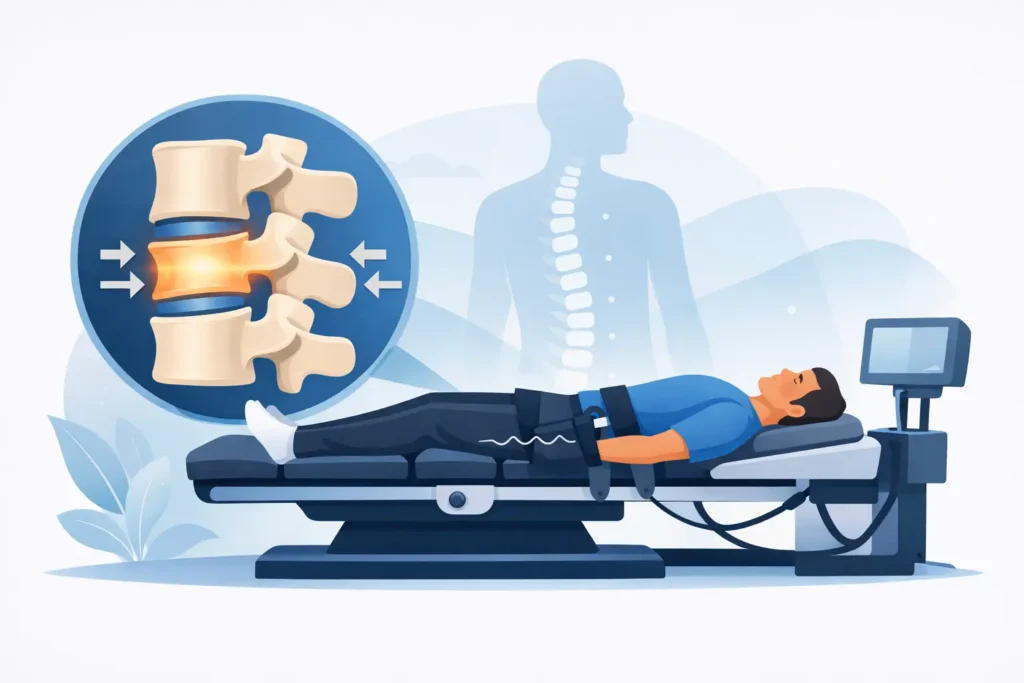
When a disc in your low back or neck is under too much pressure, even simple movements can start to feel complicated. Sitting at work, getting out of the car, picking up your child, or trying to sleep through the night can all become reminders that something is not moving or healing the way it should. That is usually when people start asking how spinal decompression works and whether it could help them avoid a more invasive path.
Spinal decompression is a non-surgical treatment designed to reduce pressure on the spine, especially on the discs and nearby nerves. It is commonly used for certain types of back pain, neck pain, sciatica, disc bulges, disc herniations, and symptoms that travel into the arms or legs. The goal is not to force the body into a quick fix. The goal is to create better conditions for the irritated tissue to calm down and begin healing.
How spinal decompression works in the body
Your spine is made up of bones, joints, ligaments, muscles, and discs that all need to work together. The discs sit between the vertebrae and act like cushions. When a disc is irritated, compressed, bulging, or injured, it can place stress on nearby nerves and surrounding soft tissue. That can lead to pain, stiffness, numbness, tingling, or weakness.
Spinal decompression works by applying a controlled, gentle stretching force to the spine. This is typically done on a specialized table that is programmed to target a specific region, such as the lumbar spine or cervical spine. Unlike a general stretch at home, the movement is precise and measured. The table alternates between phases of traction and relaxation, which helps reduce compressive forces in the affected area.
As pressure is reduced, the space around the disc and nerve roots may improve. Many providers describe this as creating negative intradiscal pressure, which may encourage the disc material to move away from irritated nerves. It may also support the movement of water, oxygen, and nutrients back into the disc. Since discs have a limited blood supply, improving that internal exchange matters. Healing often depends on lowering irritation while giving the tissue a better environment to recover.
That said, spinal decompression is not magic, and it is not the right answer for every type of pain. Results depend on the diagnosis, the severity of the condition, the patient’s overall health, and how consistently the full care plan is followed.
What spinal decompression is trying to change
When people hear the word decompression, they often think only about taking pressure off a pinched nerve. That is part of it, but there is usually more going on. A painful spine often involves several overlapping issues at once, including disc stress, muscle guarding, joint restriction, poor posture, weakness, and altered movement patterns.
Decompression is meant to address one important part of that puzzle: mechanical pressure. If a disc is overloaded day after day, the body may respond with inflammation, muscle tension, and protective movement patterns that keep the problem going. Reducing that load can help settle the cycle.
This is also why the best outcomes usually come from a broader plan rather than decompression alone. If someone goes back to prolonged sitting, poor lifting mechanics, weak core support, and no corrective exercises, the same stress can return quickly. Lasting improvement often depends on combining pain relief with rehabilitation and better daily habits.
Who may benefit from spinal decompression
Spinal decompression is often recommended for people with disc-related symptoms, but a proper evaluation matters. In a clinical setting, providers look at history, orthopedic and neurological findings, posture, movement, and imaging when appropriate before deciding if decompression makes sense.
Patients who may benefit include those with herniated or bulging discs, degenerative disc changes, sciatica, radiating arm pain, or chronic back or neck pain that has not improved with rest alone. Some people notice pain when sitting, bending, coughing, or standing for too long. Others feel burning, tingling, or numbness into an arm or leg, which can point to nerve involvement.
There are also cases where spinal decompression may not be appropriate. Certain fractures, instability, severe osteoporosis, infections, some surgical histories, and other medical concerns can change the plan. Pregnancy can also affect whether this treatment is used and how. That is why individualized assessment matters so much. Safe care starts with knowing exactly what you are treating.
What a session usually feels like
Most patients are relieved to learn that spinal decompression is generally gentle. During treatment, you lie on a decompression table while the provider positions you based on the area being treated. The system then applies a gradual pull and release pattern according to the settings chosen for your condition.
You should not feel a sharp or alarming pain during the session. Many people describe the sensation as a steady stretch or a sense of pressure easing. Some patients feel immediate relief, while others notice change more gradually over a series of visits. A little post-treatment soreness can happen, especially early on, because the body is adapting to a new mechanical input. That is not unusual, but it should be monitored.
A session is only one part of the process. The provider may also recommend home exercises, postural changes, hydration, activity modifications, or supportive therapies to improve the response. In a patient-centered setting like Align Chiropractic and Wellness, decompression is typically integrated into a care plan that follows your symptoms, exam findings, and progress over time.
How spinal decompression works best with other care
If your spine has been under stress for months or years, treatment usually needs to do more than reduce discomfort for a day or two. The body needs help relearning better movement, improving stability, and reducing the patterns that caused overload in the first place.
That is where chiropractic adjustments, mobility work, postural rehabilitation, and home exercise instruction can make a major difference. If joints above or below the irritated disc are not moving well, they can place added strain on the problem area. If the muscles that support your posture are weak or uncoordinated, the spine may keep absorbing force in the wrong places. If inflammation, stress, or poor recovery habits are part of the picture, those need attention too.
A holistic plan looks at the whole person, not just the disc. That means considering work setup, sleep positions, exercise habits, injury history, pregnancy-related changes, auto accident trauma, and the daily demands of family life. For many patients, that broader approach is what turns temporary relief into meaningful progress.
When results happen and what affects them
One of the most common questions is how quickly spinal decompression works. The honest answer is that it depends. Some patients feel less leg pain or less back pressure within a few visits. Others improve more slowly, especially if the condition has been present for a long time or includes significant inflammation and compensation patterns.
Consistency matters. So does the accuracy of the diagnosis. A person with a true disc issue and nerve irritation may respond very differently than someone whose pain is driven mainly by instability, arthritis, or muscular strain. Age, activity level, work demands, and adherence to home recommendations also influence the outcome.
Progress is not always perfectly linear. Sometimes symptoms centralize before they fully decrease, meaning leg pain may retreat toward the back before the pain settles down overall. That can actually be a positive sign, but it needs to be interpreted in context by a provider who is tracking your response carefully.
Is spinal decompression a cure
It is better to think of spinal decompression as a tool rather than a cure-all. For the right patient, it can be a very helpful tool. It may reduce pain, improve tolerance for movement, and support disc recovery. But if the underlying drivers of spinal stress are not addressed, symptoms can return.
This is why regular re-evaluations matter. Good care should not be based on guesswork or endless passive treatment. It should be based on objective findings, measurable progress, and a plan that changes as your body changes. If a treatment is helping, that should show up in your pain levels, mobility, function, and daily life.
If you have been dealing with back pain, neck pain, sciatica, or disc-related symptoms, the best next step is not to self-diagnose from the internet. It is to get a clear evaluation from a provider who will listen, test, explain, and build a plan around your specific needs. The right treatment should help you move with less fear, heal with more confidence, and get back to living your life with greater ease.